


Whether you're starting from scratch or upgrading an existing patio, the right pergola idea can turn a plain backyard into a space you actually want to spend time in. This guide covers 35 real pergola ideas across every style, size, and budget, with photos of actual installations and practical advice you can use today.
We organized this by use case and style so you can jump straight to the section that fits your space. Every idea includes real cost context, material recommendations, and tips from homeowners who have already built these setups.
Table of Contents
- Modern Pergola Ideas
- Pergola Ideas for Small Spaces
- Poolside Pergola Ideas
- Outdoor Kitchen Pergola Ideas
- Pergola Ideas with Lighting
- Attached Pergola Ideas
- Freestanding Pergola Ideas
- Pergola Ideas for Decks
- Pergola Ideas on a Budget
- Luxury Pergola Ideas
- Pergola Ideas with Curtains and Screens
- Pergola Ideas with Fire Features
- Rustic and Farmhouse Pergola Ideas
- Rooftop and Balcony Pergola Ideas
- How to Choose the Right Pergola Style
- FAQ
1. Modern Pergola Ideas


Modern pergola ideas lean heavily on clean geometry, minimal ornamentation, and materials that look sharp without constant upkeep. The defining feature of a modern pergola is restraint. Thick, squared-off posts. Flat-profile louvers that sit flush rather than curved. Color palettes that stick to black, matte white, or dark bronze. The goal is a structure that looks like it was designed by an architect, not pulled off a shelf at a big-box store.
Aluminum is the material of choice for modern pergola designs because it holds precise lines over time. Wood warps, sags, and grays. Vinyl yellows. But a commercial-grade aluminum pergola keeps its profile and color for decades, especially when finished with a multi-stage powder coating process. The flat-bottom louver design gives you a clean ceiling view from underneath, which is something curved-louver systems simply cannot match.
For a truly modern look, pair a black-on-black pergola frame with concrete or porcelain tile flooring, low-profile outdoor furniture, and minimal landscaping. The structure itself becomes the focal point. This is the look that shows up in design magazines and luxury home listings, and it is absolutely achievable with a louvered pergola kit that you install yourself in a single day.
Pro tip: If you want the modern look but live in a warm-toned neighborhood (stucco, stone, warm siding), go with a bronze frame and stone-colored louvers. It reads as modern without clashing with the architecture around it.

2. Pergola Ideas for Small Spaces


A small backyard does not mean you have to skip the pergola. In fact, a well-placed compact pergola often has more visual impact in a tight space than a large one in a sprawling yard. Sizes like 8x8, 8x10, and 10x10 are designed specifically for patios, townhouse yards, and urban courtyards where every square foot matters.
The key to making a small pergola work is placement. Position it to define a specific zone: a dining area for four, a reading nook, or a morning coffee spot. When the structure has a clear purpose, it feels intentional rather than cramped. A 10x10 pergola, for example, comfortably covers a four-person dining set with room to spare. An 8x10 fits perfectly along a house wall, creating a shaded corridor between the back door and the yard.
Small pergola ideas also work well for container gardens and vertical planting. The posts become natural supports for climbing vines, hanging planters, or string lights. And because the structure is compact, the installation footprint is minimal, often just four post bases on an existing concrete pad.
Pro tip: For small spaces, choose a pergola with a flat ceiling design and avoid bulky crown molding profiles. The cleaner the lines, the less visual weight the structure carries, which makes a small patio feel more open rather than boxed in. An aluminum pergola kit in the 8x8 to 10x10 range typically starts around $6,000 to $8,000, making it one of the most approachable entry points into the category.
3. Poolside Pergola Ideas
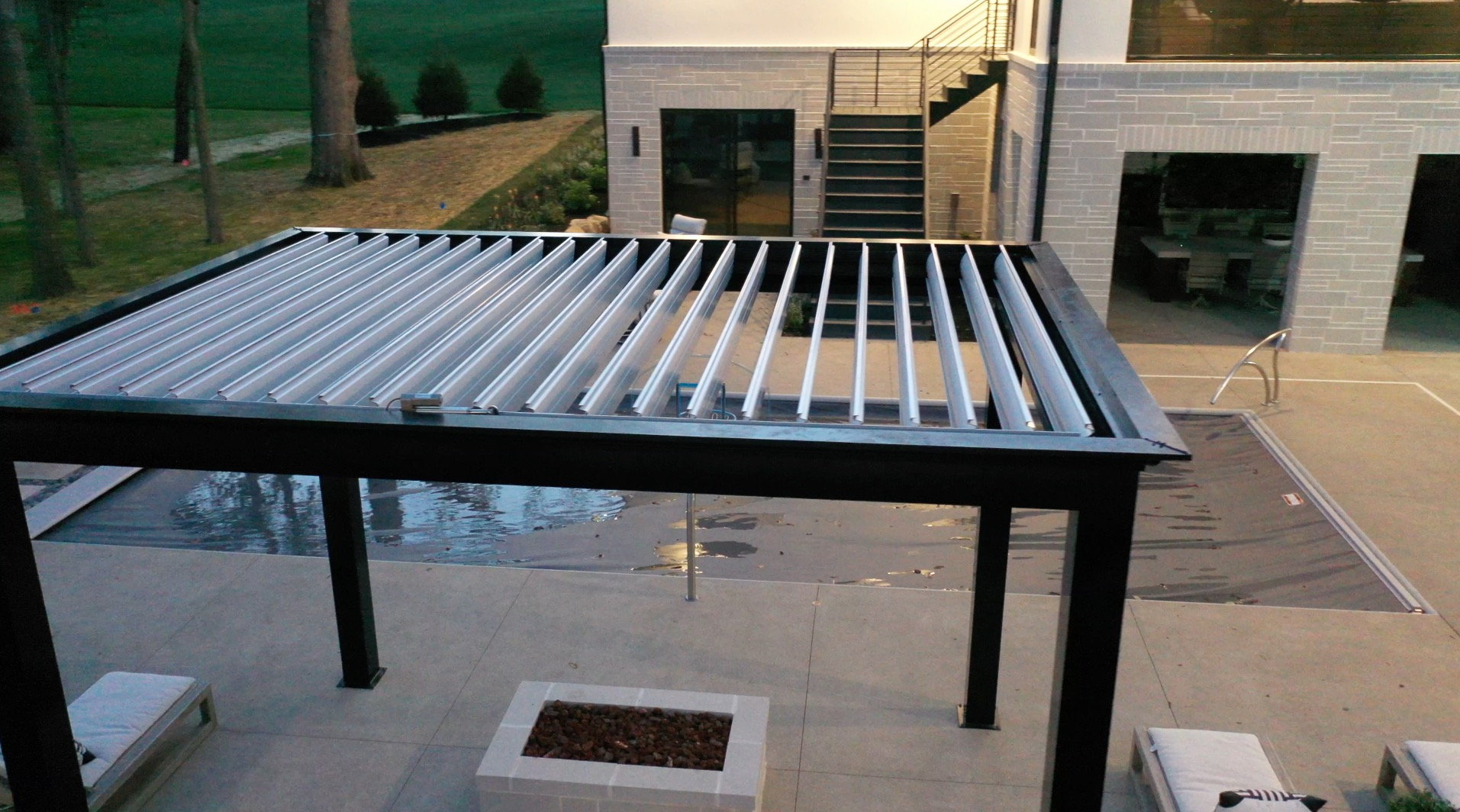

Pools and pergolas go together naturally. A poolside pergola gives you a shaded spot to dry off, eat lunch, or keep an eye on the kids without baking in direct sun. The most common setup is a pergola placed along one edge of the pool deck, covering a row of lounge chairs or an outdoor dining area. Larger pool decks can support a freestanding unit centered behind the pool, creating a cabana-style zone.
Material choice matters more near a pool than anywhere else on your property. Chlorinated water, constant splash exposure, and high humidity will destroy a wood pergola in a few years. Pressure-treated lumber warps. Cedar grays and splits. Even composite materials can absorb moisture over time. Aluminum, on the other hand, is completely immune to moisture damage. It will not rot, swell, warp, or corrode from pool chemicals. That is why every serious poolside pergola installation should start with aluminum as the baseline material.
For poolside pergola ideas, think about how you use the space seasonally. A louvered roof gives you the option to open the louvers for full sun during a swim and close them for shade when you are lounging. On a rainy day, closed louvers with integrated gutter systems channel water away from your seating area, keeping the furniture dry while the pool fills naturally.
Pro tip: If your pool deck is concrete, make sure your pergola manufacturer provides engineered anchor bolts rated for the structural loads. A 10x13 aluminum pergola weighs around 1,800 lbs, so it is not going anywhere in a storm. That weight is your friend near a pool, where lighter structures can become projectiles in high winds. Look for a wind-rated pergola with ratings of up to 200 mph for coastal and hurricane-prone areas.
4. Outdoor Kitchen Pergola Ideas

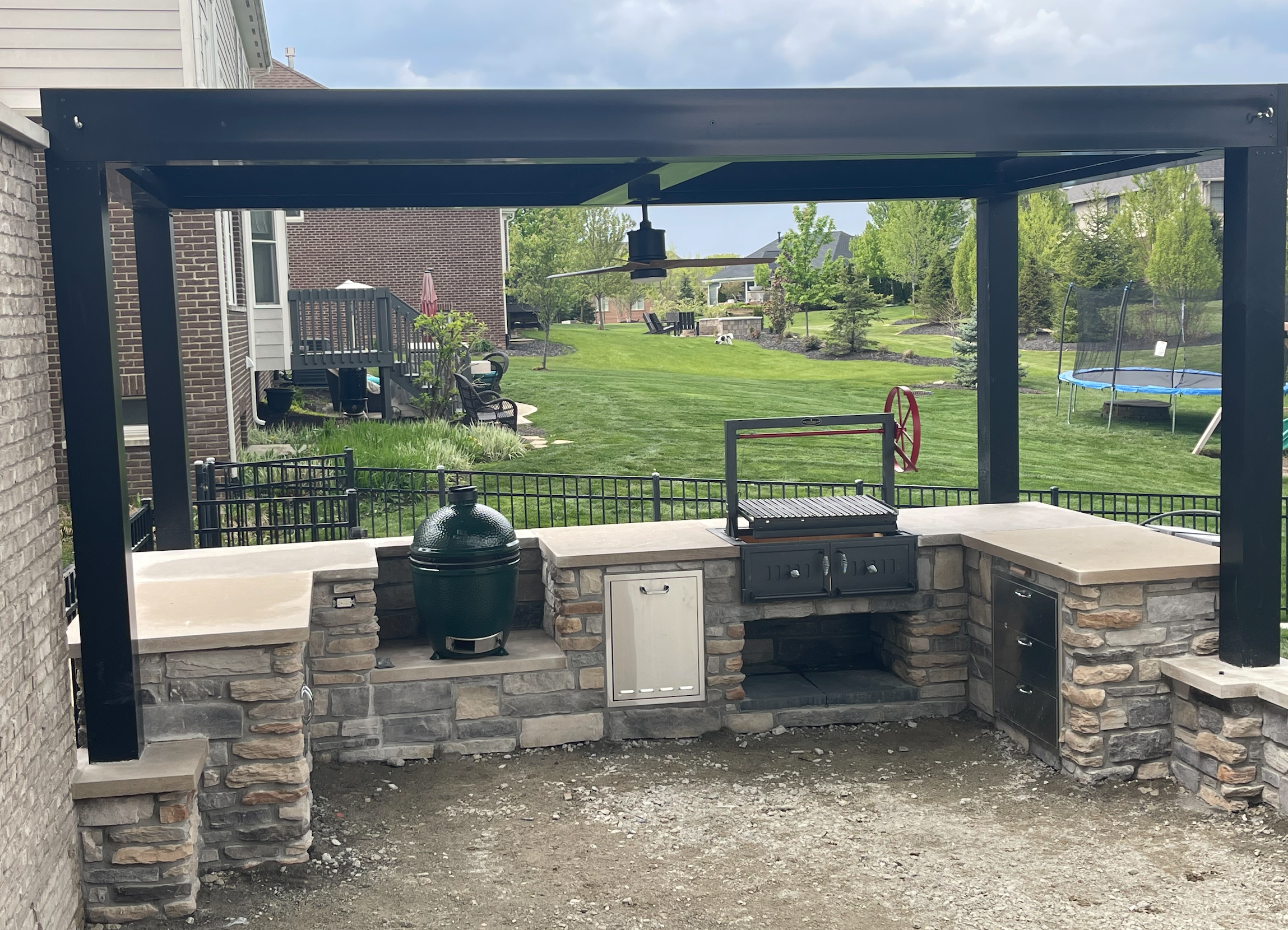
An outdoor kitchen without overhead coverage is like a kitchen without a ceiling. It works on a perfect evening, but the first rain or blazing midday sun sends everyone inside. A pergola over your outdoor kitchen gives you the coverage to cook and entertain in almost any weather, and a louvered roof specifically gives you the control to manage airflow and smoke.
When you grill under a pergola with adjustable louvers, you can open them to let heat and smoke rise straight up. Once the cooking is done, close the louvers to shade your dining guests or block a passing rain shower. This is a huge advantage over fixed-roof structures like solid patio covers, where smoke gets trapped underneath and stains the ceiling over time. The pergola design ideas that work best for outdoor kitchens pair a 12x16 or larger footprint with an island or L-shaped counter arrangement beneath.
Most outdoor kitchen pergola setups include a built-in grill, a countertop with bar seating on one side, and a sink or small refrigerator. The pergola posts help define the kitchen zone and give you natural mounting points for lights, fans, or even a mounted TV for game-day cooking. If you run electricity to the posts during installation, you can wire everything through the pergola frame's hollow channels rather than running exposed conduit across your patio.
Pro tip: Position your grill station toward the outer edge of the pergola rather than directly in the center. This lets most of the smoke and grease vent away from the louvers and reduces buildup on the underside of the roof. A quick annual hose-down is all the maintenance aluminum louvers need, even over a heavily used outdoor kitchen.
5. Pergola Ideas with Lighting
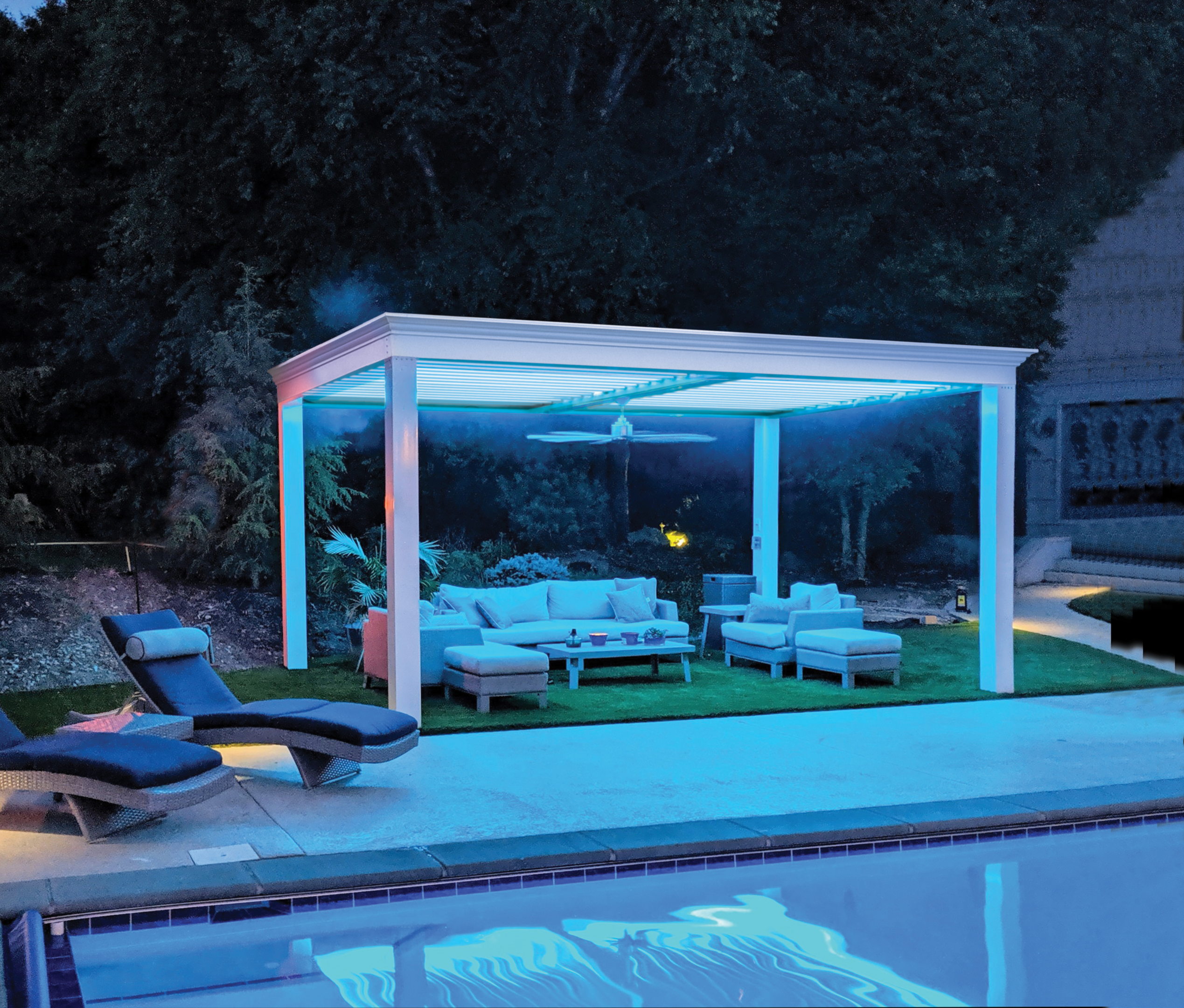
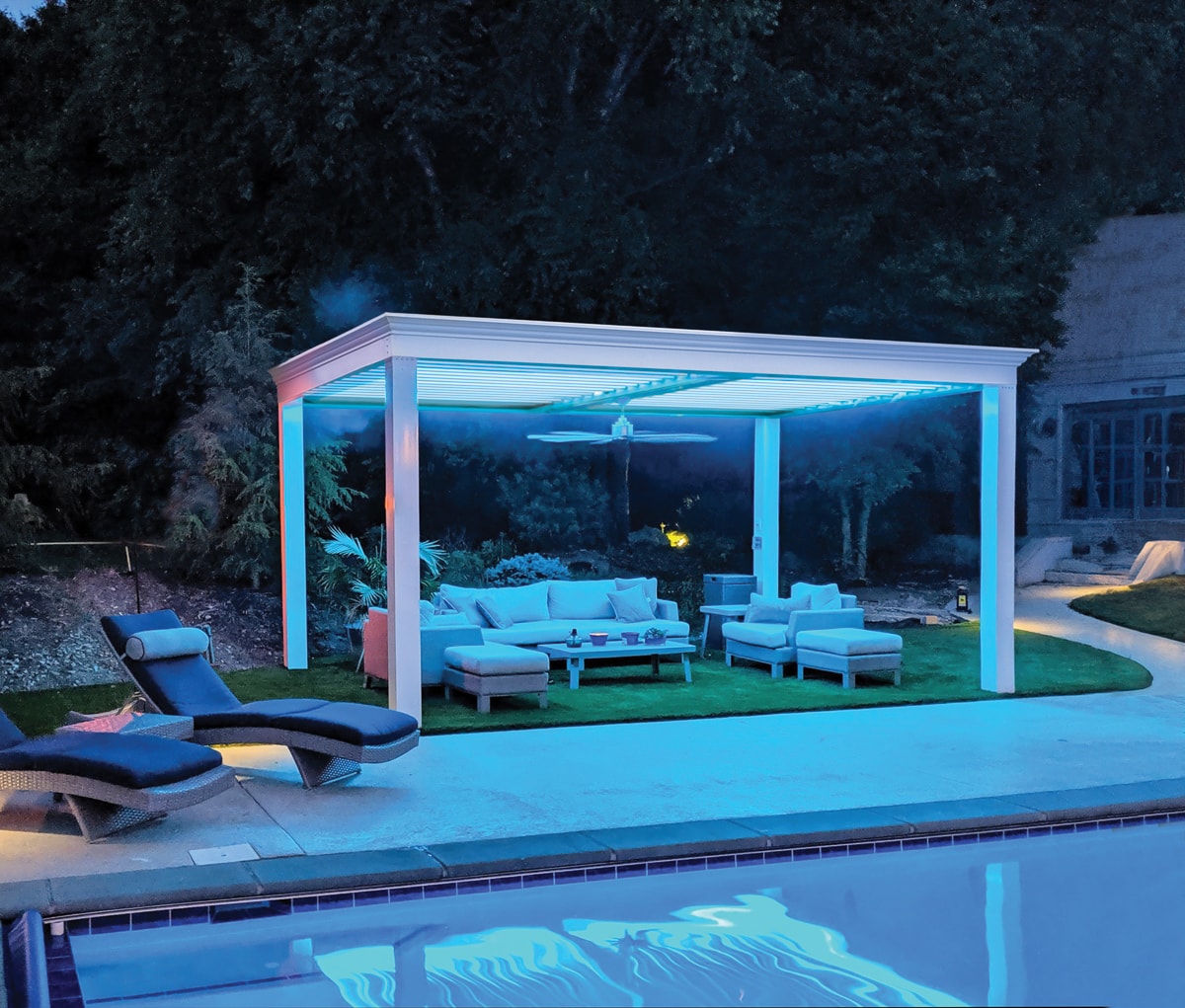
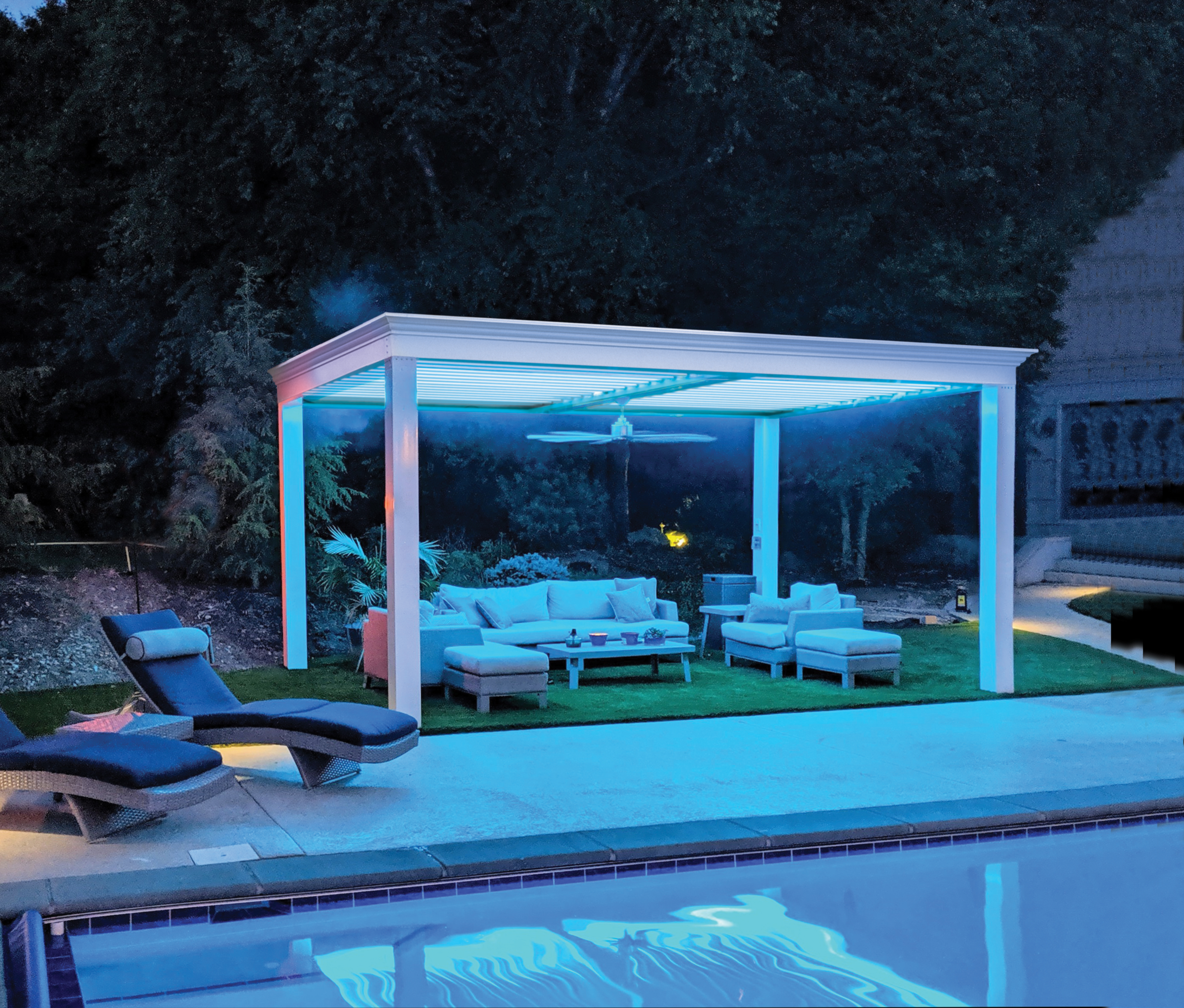
Lighting is what turns a pergola from a daytime shade structure into a nighttime destination. The right pergola lighting ideas can make your outdoor space usable from dinner through dessert and well into the evening. The most popular options are string lights (draped post-to-post in a zigzag or parallel pattern), recessed LED strips (mounted along the louver channels or beams), pendant lights (hung from the crossbeams for a more formal look), and lanterns or sconces (attached to the posts).
String lights are the easiest and cheapest starting point. They cost $20 to $50, install in minutes, and create a warm, casual glow that works for everything from a Tuesday night dinner to a weekend party. For a more polished look, recessed LEDs integrated into the pergola frame give you dimmable, clean light without visible bulbs or cords. Many aluminum pergola frames include wiring channels inside the posts and beams, so you can run electrical to lights, fans, and outlets without any exposed conduit.
The style of lighting you choose should match how you use the space. Task lighting (brighter, focused) works best over cooking and prep areas. Ambient lighting (softer, warmer) suits dining and lounge zones. And accent lighting (spotlights aimed at landscaping or architectural features) adds depth to the overall scene when viewed from inside the house.
Pro tip: If you are installing a motorized pergola, have an electrician run a dedicated 20-amp circuit to the pergola location during the concrete pour phase. This gives you enough power for the louver motor, lights, a fan, and a couple of outlets, all through hidden wiring inside the frame. Planning the electrical before installation saves thousands compared to adding it after the fact.
6. Attached Pergola Ideas
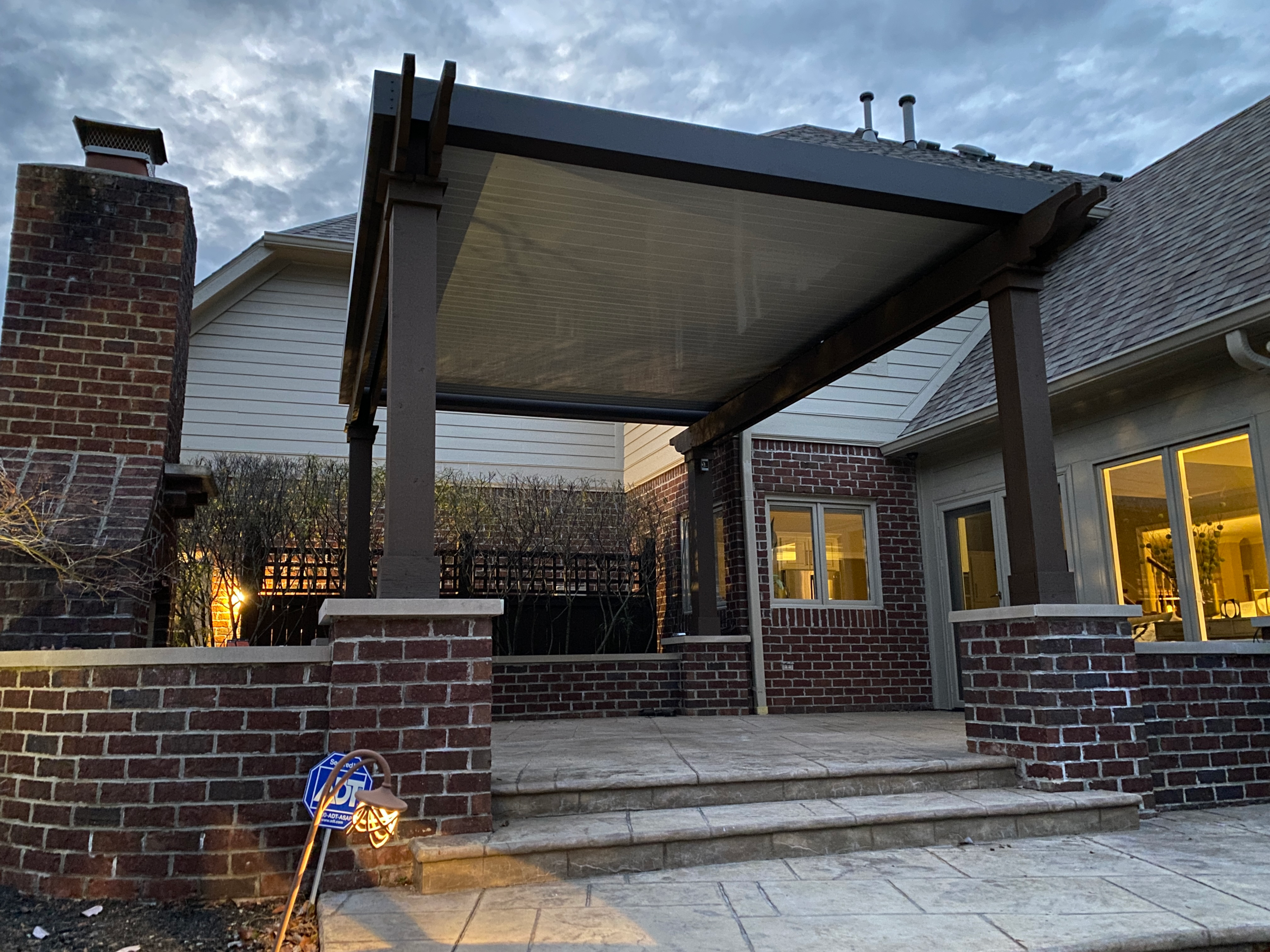
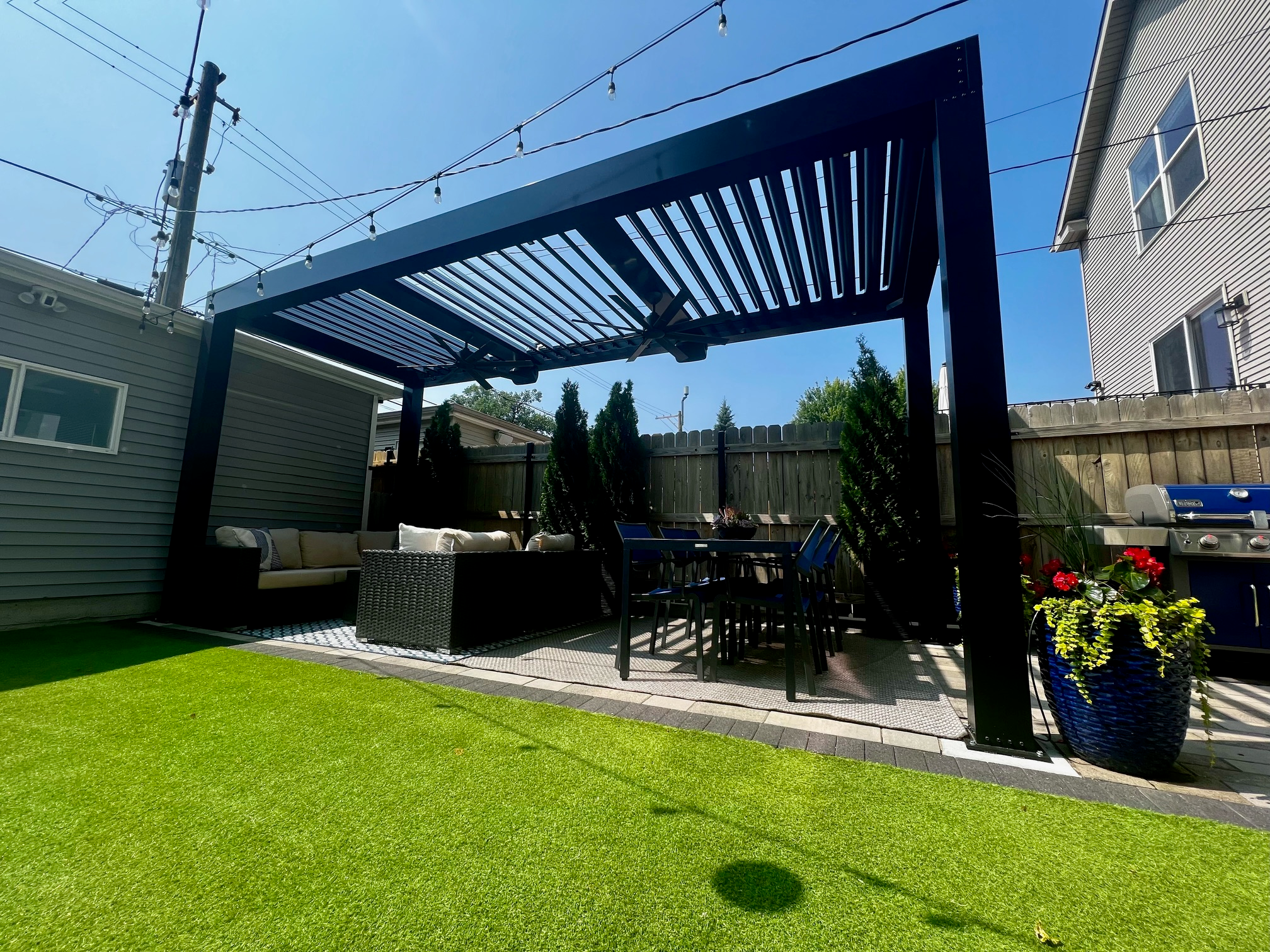
An attached pergola mounts directly to the side of your house, creating a covered extension of your indoor living area. One side of the roof connects to the fascia board or wall with a mounting ledger, while two posts support the opposite side. The result is a covered patio that feels like a natural continuation of the house rather than a separate structure in the yard.
This is one of the most popular pergola ideas for homeowners who want to step right from the kitchen or living room into a shaded outdoor space. Attached pergolas save floor space because you only need two posts instead of four, which means more room for furniture, foot traffic, and entertaining beneath the structure. They also benefit from the house wall acting as a windbreak on one side.
The main consideration with attached pergola designs is the connection point. The ledger board must be bolted into the house framing (not just into siding), and a proper flashing system must be installed to prevent water from running behind the siding. Most patio cover ideas start with an attached configuration because it is the most space-efficient layout and keeps the pergola close to indoor amenities like the kitchen, bathroom, and electrical panel.
Pro tip: Before ordering an attached pergola, check your home's roof overhang. If your eaves extend more than 18 inches past the wall, you may need a taller wall mount or an extended bracket to clear the overhang. Your pergola supplier should be able to advise on mounting height and bracket options based on photos of your specific roofline.
7. Freestanding Pergola Ideas


A freestanding pergola stands on its own four posts, independent of any building. This gives you complete flexibility on placement. Set it in the center of your yard as a destination point, position it on a concrete pad away from the house, or anchor it on a paver patio at the far end of the property. Freestanding pergolas are the most versatile configuration and work in nearly any backyard layout.
The four-post design means freestanding pergolas are inherently more stable than wall-mounted versions because the load is distributed evenly across all four corners. This matters in areas with high wind or heavy snow, where structural integrity is not optional. A commercial-grade freestanding unit rated for up to 200 mph winds (closed position) and 65 psf snow loads is not going to budge in a storm.
Freestanding pergola ideas work especially well as standalone outdoor rooms. Picture a 12x16 pergola on a gravel pad with a fire pit in the center, surrounded by deep-seating furniture. Or a 10x13 unit on a concrete slab next to the garden, set up as an al fresco dining room that is completely separate from the house. The physical separation creates a sense of destination, making the walk from the back door to the pergola feel like stepping into a different space entirely.
Pro tip: Freestanding pergolas need proper footings. On concrete, that means anchor bolts rated for the structure's weight. On soil, you will need concrete piers or footings poured below the frost line. Most localities require footings 36 to 48 inches deep, depending on your climate zone. Check with your local building department for specific requirements.
8. Pergola Ideas for Decks
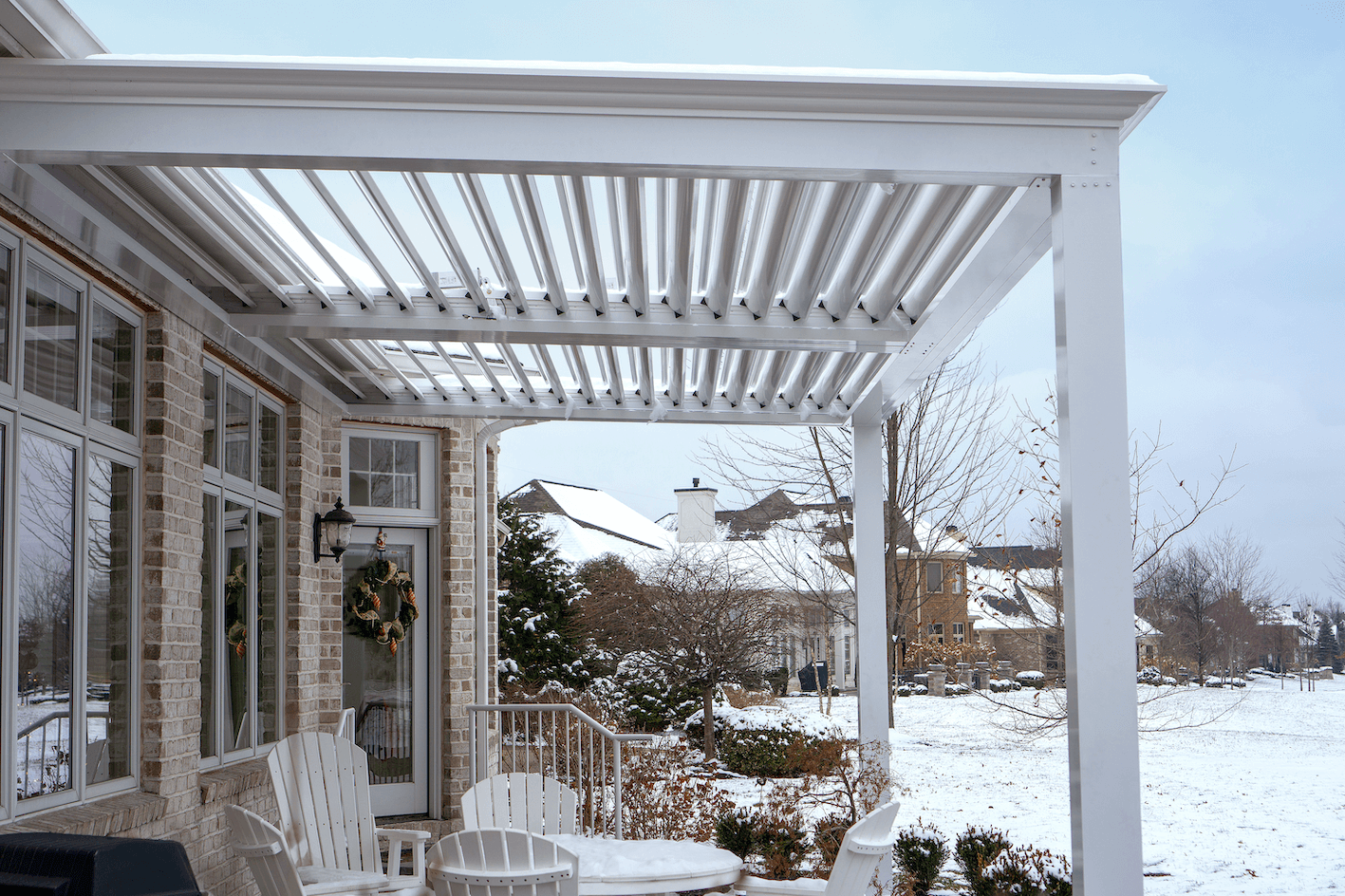
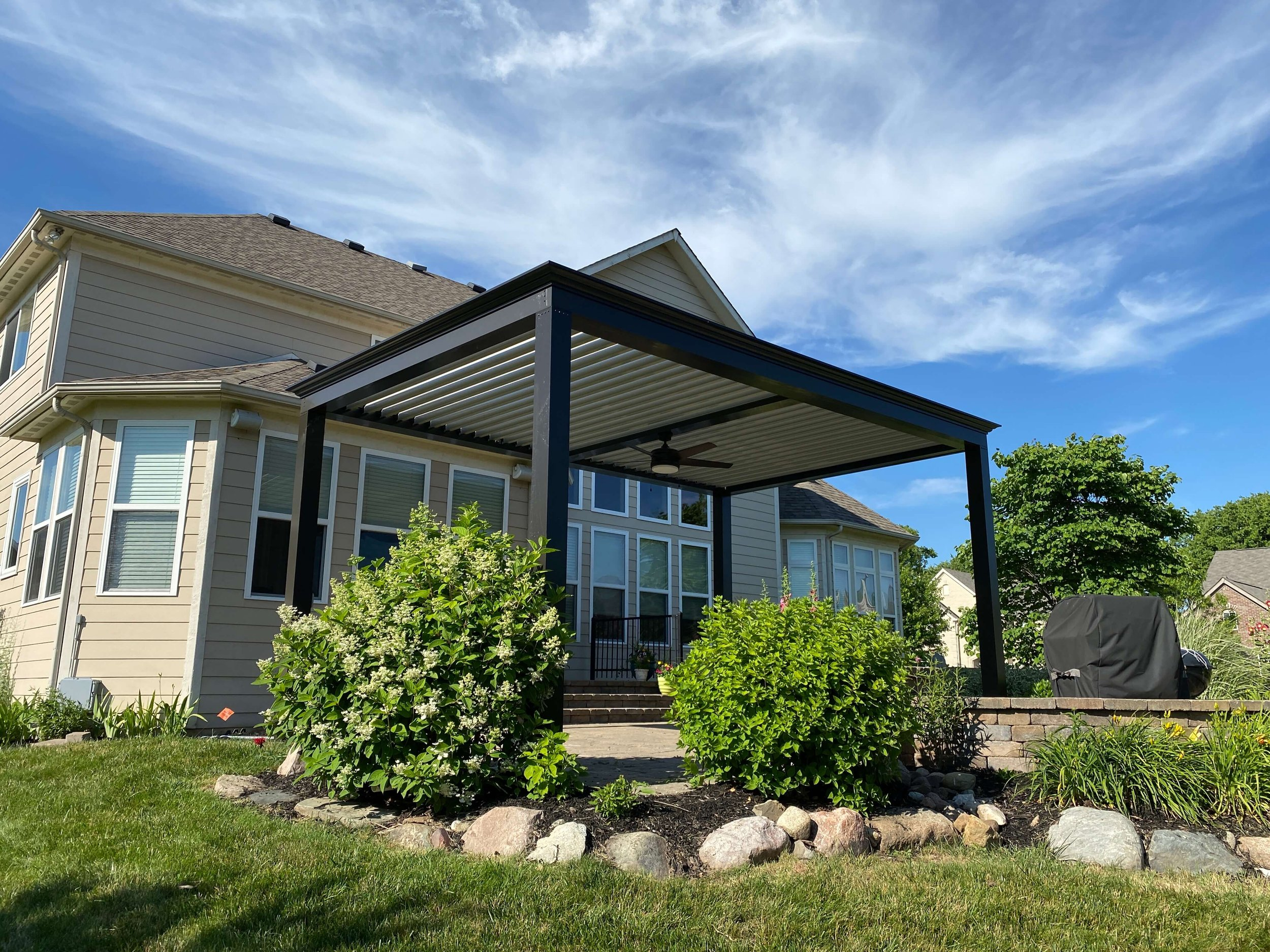
Mounting a pergola on a deck is one of the most common backyard pergola ideas, but it comes with specific structural considerations that ground-level installations do not. The deck must be able to support the weight of the pergola, the louver system, and any snow or wind loads the structure will face. For a 10x13 aluminum pergola weighing 1,800 lbs, that means the deck framing beneath each post location needs to be reinforced or you need to run the post bases down through the deck to footings in the ground below.
The best approach is to bolt the pergola post bases through the deck boards and into the deck framing (joists or beams) using structural lag bolts. If your deck is elevated more than a few feet off the ground, your engineer or contractor may recommend running steel posts from the pergola base plates down to concrete footings below the deck, essentially bypassing the deck framing entirely and transferring loads directly to the ground.
Deck-mounted pergola ideas are popular because most decks are already attached to the house at a convenient height for step-out access from a sliding door or French doors. A pergola turns a bare deck into a covered outdoor room, and a louvered roof lets you manage sun and rain without blocking the view on clear days.
Pro tip: If your deck is older or you are unsure about its load capacity, have a structural engineer review it before ordering a pergola. This is a $300 to $500 investment that can save you from a much more expensive repair. Most reputable pergola companies will ask for deck details during the ordering process and can advise on reinforcement needs.
9. Pergola Ideas on a Budget

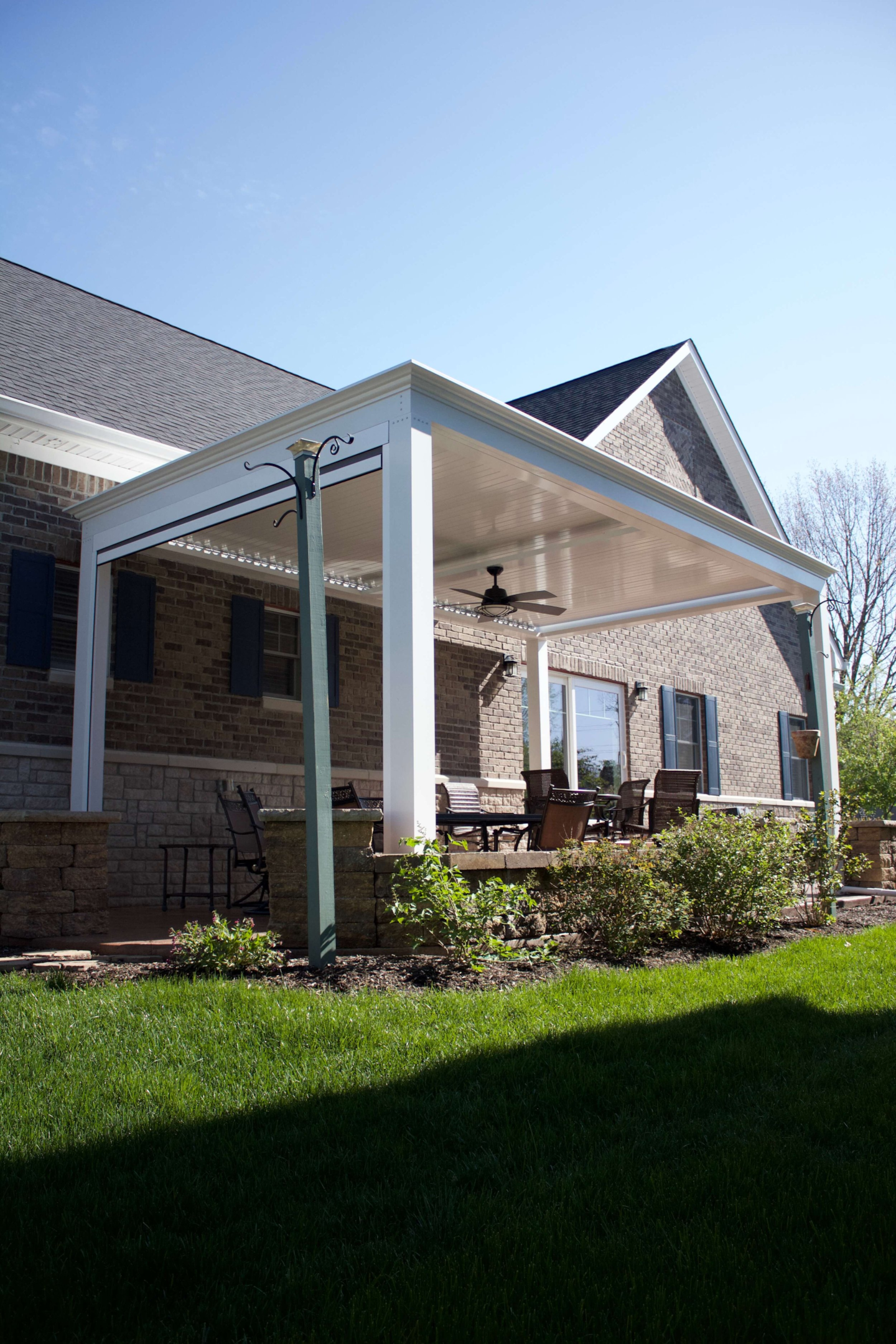
Not every pergola project needs to be a $20,000 investment. If you are working with a tighter budget, there are real options that still give you a quality outdoor structure. The biggest lever you have is size. An 8x8 or 10x10 pergola costs significantly less than a 12x20, and for many backyards, the smaller size is actually the better fit.
Here is a realistic cost breakdown for pergola ideas at different price points. Wood pergola kits (pine, pressure-treated) start around $800 to $2,000 but require staining every 1 to 2 years and will eventually rot. Vinyl pergola kits run $2,000 to $4,000 and need less maintenance but offer limited structural integrity and no adjustable roof. Aluminum pergola kits with motorized louvers start around $5,500 for a compact 8x8 and represent the entry point for a commercial-grade, lifetime-warranty structure.
The honest tradeoff with budget pergola ideas is longevity. A $1,500 wood pergola kit will look good for 2 to 3 years before it needs serious maintenance. Within 7 to 10 years, you are likely looking at a full replacement. A $6,000 aluminum pergola kit with a lifetime warranty is a larger upfront cost, but you are never paying for it again. Over 20 years, the aluminum kit is actually the cheaper option. For a full breakdown of costs across all materials, see our pergola cost guide.
Pro tip: If the budget is tight, start small and expand later. Many aluminum pergola systems are modular, meaning you can start with a single 10x10 unit and add a second connected unit later to create a larger coverage area. This lets you spread the investment over two seasons while getting immediate use from the first section.
10. Luxury Pergola Ideas


This is where pergola ideas get serious. Luxury pergola installations are the centerpiece of high-end outdoor living spaces, and they combine commercial-grade materials, motorized functionality, and meticulous design into a single structure. We are talking about 12x16, 12x19, and 12x20 footprints that cover entire outdoor living rooms, kitchens, and entertaining areas.
What separates a luxury pergola from a standard one is the engineering. A truly premium aluminum pergola weighs 1,800 lbs or more for a 10x13 unit, with posts and beams thick enough to handle up to 200 mph winds (closed) and up to 65 psf of snow load. The louvers rotate up to 130 degrees with a motorized system operated by remote control or smart home integration. Integrated gutter systems inside the beams channel rainwater down through the posts and away from your seating area, so you never see a drip. And the powder coating is not a single-layer spray. It is a multi-stage process (like The Luxury Pergola's ElectroLayer finish) that resists fading, scratching, and chalking for the life of the structure.
Luxury pergola ideas often include connected "Super Pergola" configurations where two or more units are joined side by side to cover massive areas, 24x20, 36x20, or even larger. These installations are common in homes with expansive pool decks, resort-style backyards, or commercial applications like restaurant patios and hotel courtyards. To design your custom pergola, start with your exact dimensions and choose your frame and louver color combination.
Pro tip: The biggest mistake homeowners make with luxury pergola projects is undersizing. If you are investing $15,000 or more in a pergola, go at least one size larger than you think you need. A 12x16 feels dramatically different than a 10x13 once it is built, and the incremental cost per square foot decreases as the size goes up. You will never regret having more covered space.

11. Pergola Ideas with Curtains and Screens
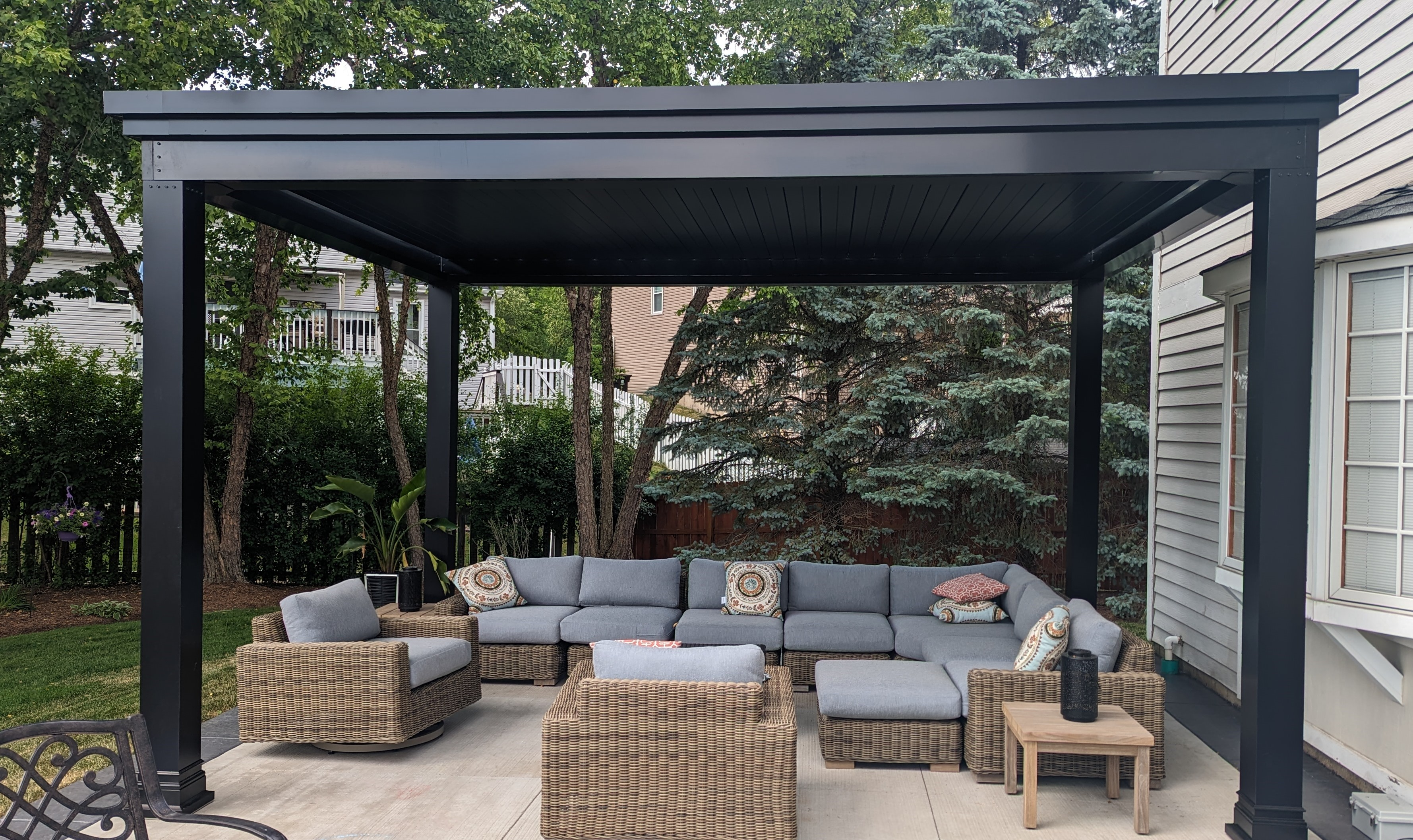
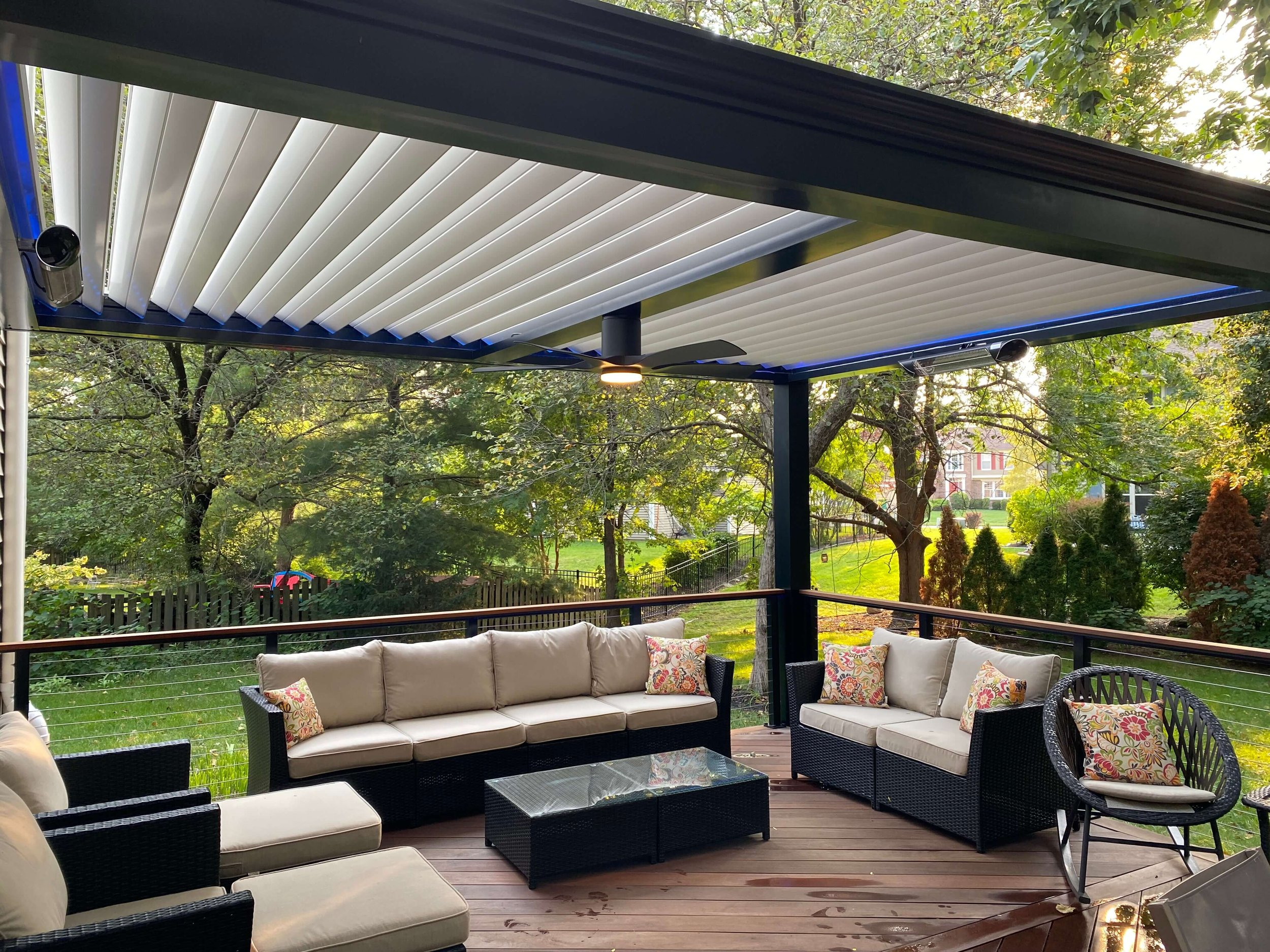
Adding curtains or screens to a pergola turns it from an open shade structure into a semi-enclosed outdoor room. This is one of the most requested pergola design ideas among homeowners who want more privacy, wind protection, or relief from insects. The options range from simple fabric curtains hung on tension rods to motorized retractable screens that disappear into the pergola beams when not in use.
Fabric curtains are the easiest and most affordable option. Outdoor-rated fabrics like Sunbrella are UV-resistant, water-resistant, and available in dozens of colors. You can hang them from curtain rods mounted to the inside of the pergola beams and tie them back with clips or rope when you want an open-air feel. The look is relaxed and resort-like, perfect for poolside pergolas or backyard lounge areas.
Retractable insect screens are the more functional option, especially in areas where mosquitoes, flies, or no-see-ums make evening entertaining uncomfortable. These screens mount inside the pergola frame and roll down with a pull cord or motorized remote. When retracted, they are nearly invisible. When deployed, they create a bug-free zone that still lets air flow through. Some homeowners add screens on two or three sides and leave the fourth open for entry.
Pro tip: If you plan to add screens or curtains, mention it when ordering your pergola. Many aluminum pergola systems offer accessory beams, which are extra mounting rails that attach to the inside of the main beams specifically for hanging curtains, screens, or shade sails. Adding these during the initial install is far easier than retrofitting later.
12. Pergola Ideas with Fire Features
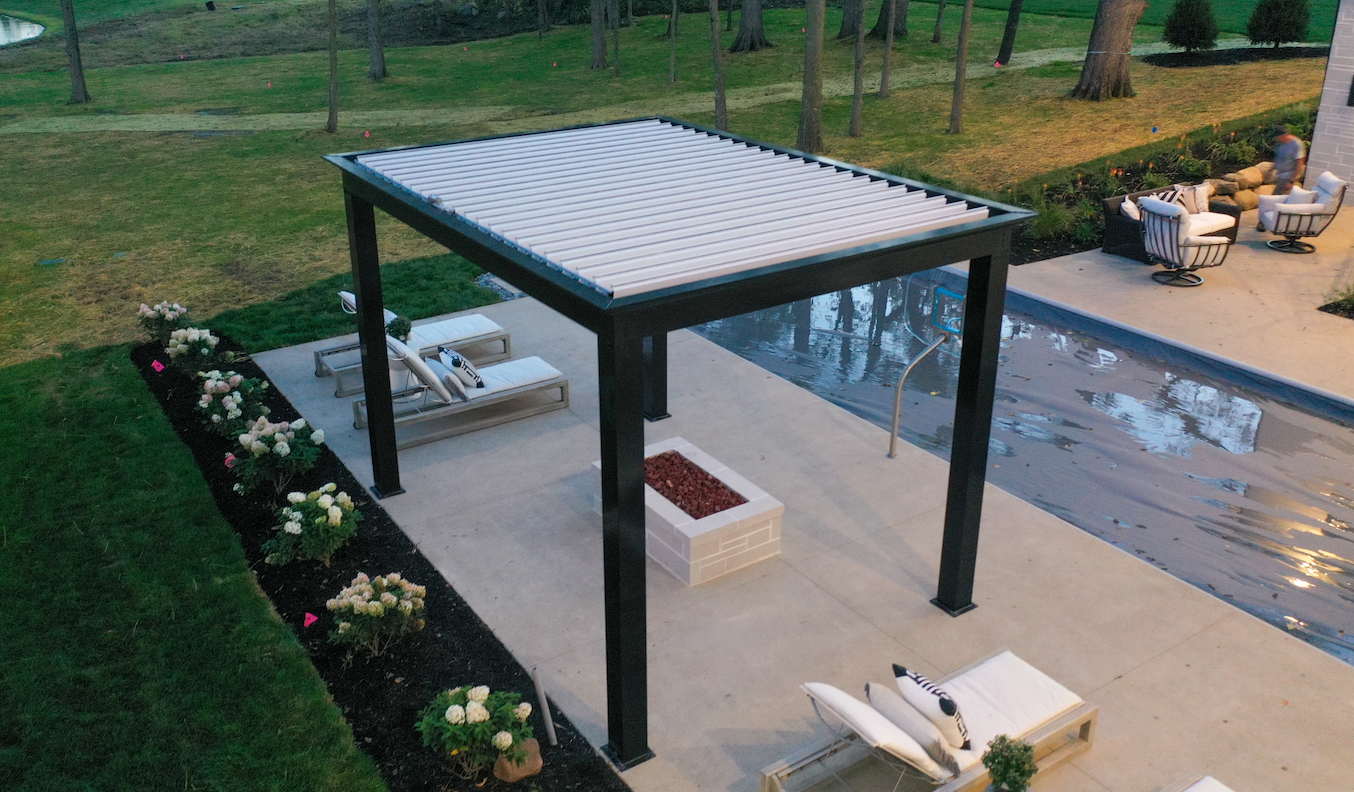
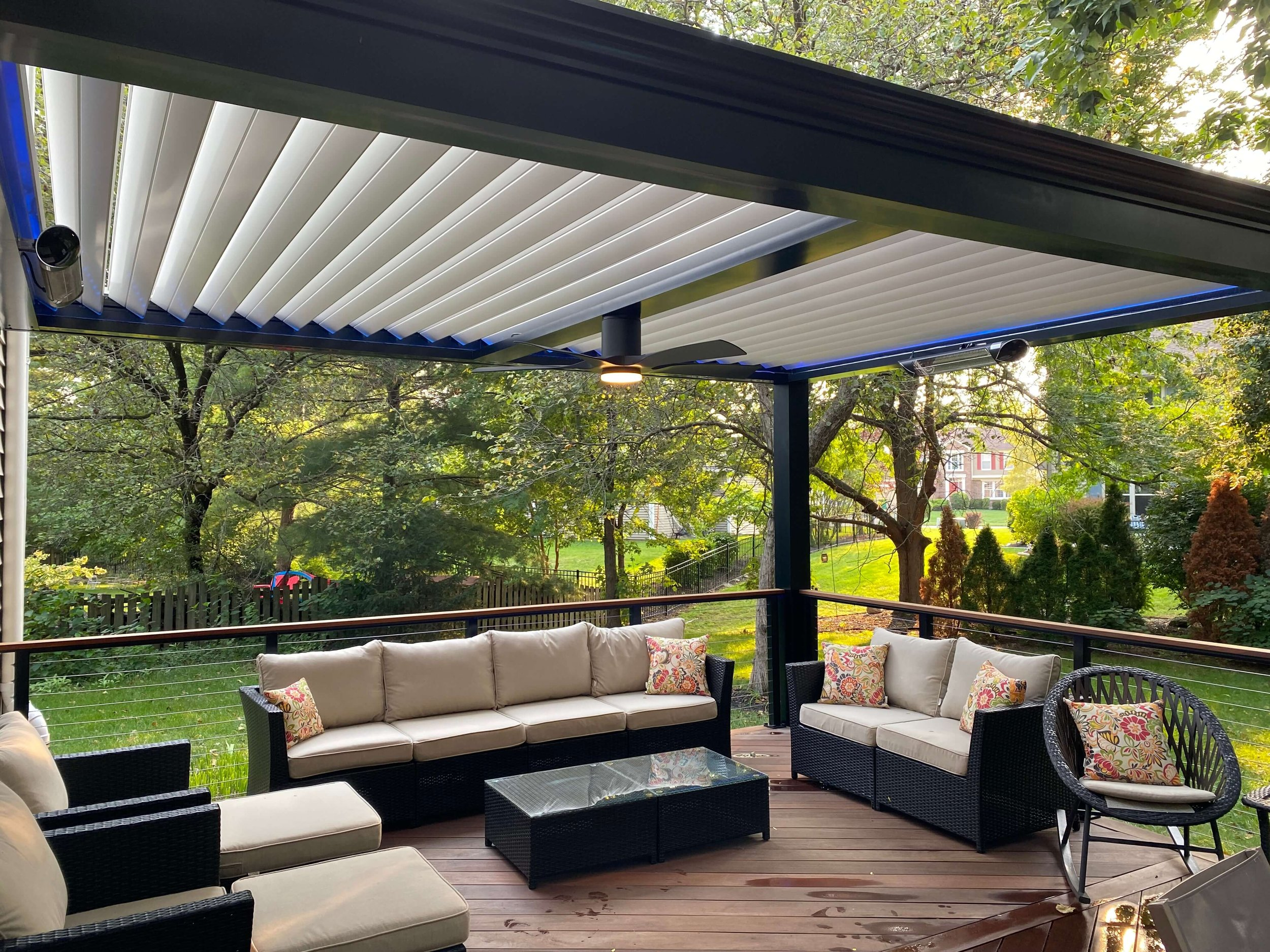
A fire feature under or near a pergola extends your outdoor season by months. In cooler climates, a fire pit or fireplace under a pergola lets you use the space from early spring through late fall, and in mild climates, straight through winter. The combination of overhead protection from a louvered roof and the warmth of a fire creates one of the most inviting outdoor living setups you can build.
The most important consideration with fire features under a pergola is ventilation. This is where adjustable louvered roofs have a massive advantage over solid-roof structures. When you have a fire going, open the louvers above the fire zone to let heat and smoke rise naturally. The rest of the louvers can stay closed to block wind or light rain. Once the fire dies down, close everything up. A solid patio cover or a traditional non-adjustable pergola cannot do this, which means heat and smoke pool underneath and eventually stain or damage the ceiling.
Fire tables (gas-fueled tables with a built-in flame element) are the safest and most practical option directly under a pergola because they produce clean flames with minimal smoke. Fire pits work well too, especially gas-burning models. Wood-burning fire pits generate more heat and more smoke, so position them slightly outside the pergola footprint or directly under an open louver section. Built-in fireplaces are best placed at the edge of the pergola structure, with the chimney venting outside the roofline.
Pro tip: Keep any open flame at least 10 feet from the nearest pergola post, or directly beneath louvers that you can open fully. Aluminum has a melting point above 1,200 degrees Fahrenheit, so the structure itself is safe, but concentrated heat can affect the powder coating finish over time if the flame source is too close. Gas fire tables positioned at seating height (18 to 24 inches) are the ideal fire feature for under-pergola use.
13. Rustic and Farmhouse Pergola Ideas
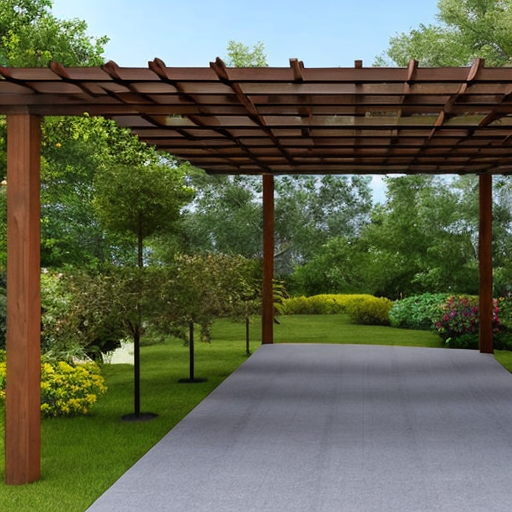
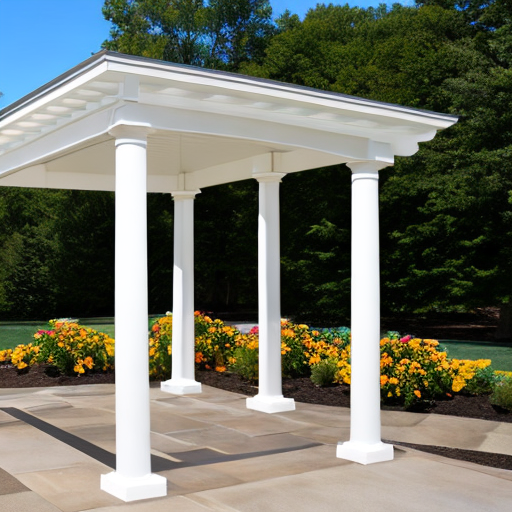
Rustic and farmhouse-style pergola ideas are all about warmth, natural textures, and a lived-in feel. Think thick timber posts wrapped in climbing vines, cross-beams with a hand-hewn look, lantern-style lighting, and a color palette that pulls from the natural landscape. These pergolas pair well with stone patios, reclaimed wood furniture, and lush garden surroundings.
Traditionally, achieving the farmhouse pergola look meant building with real wood, and that came with serious tradeoffs. Cedar and redwood are beautiful in year one, but they require annual staining, can crack in dry heat, and will eventually rot in humid climates. Pressure-treated pine is cheaper but warps badly and turns a dull gray-green. And none of these materials offer adjustable louvers, rain protection, or motorized anything.
The modern approach to rustic pergola design ideas is to use aluminum that is powder-coated to look like wood. A bronze frame with stone-colored louvers, for example, reads as warm and natural from a distance while delivering zero maintenance, lifetime durability, and full weather protection. You get the farmhouse aesthetic without the farmhouse workload. Pair it with wood-look porcelain tile, wicker furniture, and linen-style curtains, and the result is a rustic outdoor room that will look the same 10 years from now as it does on install day.
Pro tip: If you love the rustic look but want modern performance, consider wrapping the base of your aluminum pergola posts with stone veneer or reclaimed wood cladding. This gives you the visual warmth of natural materials at ground level while the structural aluminum frame and motorized louver roof do the heavy lifting above. It is the best of both worlds. For a full comparison, see pergola vs gazebo to understand how different structures fit different aesthetic goals.
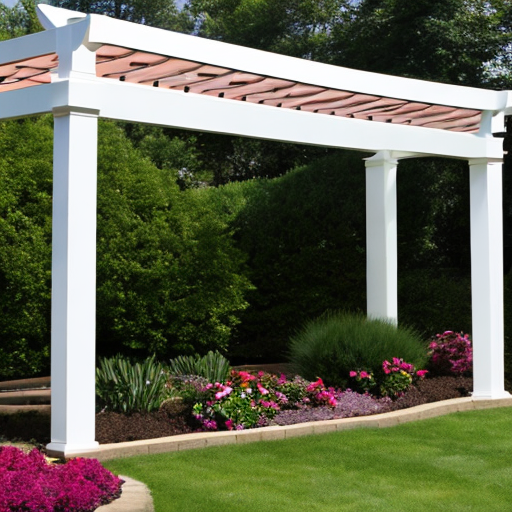
14. Rooftop and Balcony Pergola Ideas

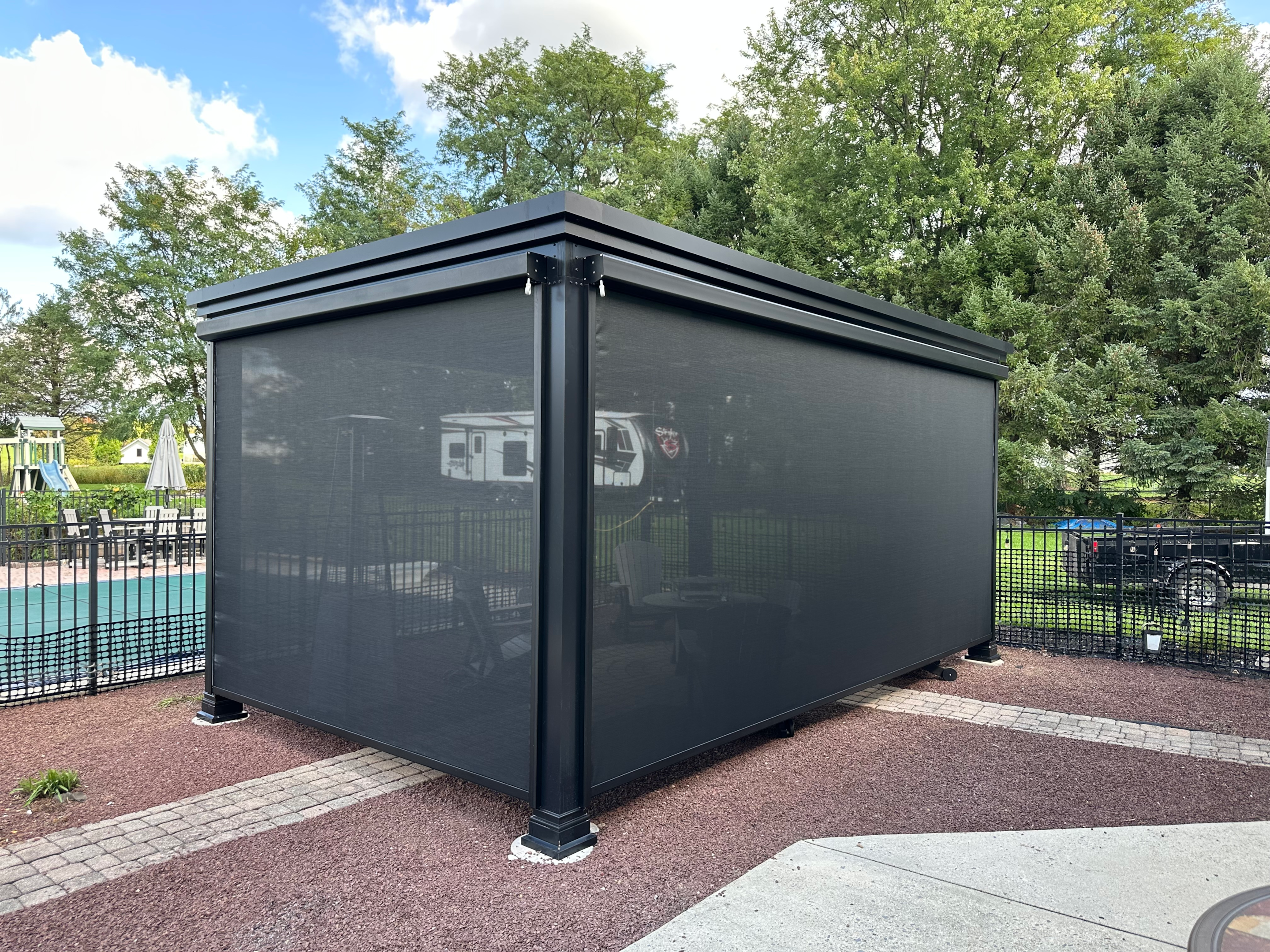
Rooftop decks, terraces, and upper-story balconies are some of the most underutilized outdoor spaces in urban and suburban homes. The challenge is that they are fully exposed to sun, wind, and weather with no natural tree cover or neighboring structures to provide shade. A pergola solves this, but the installation requirements are different from a ground-level patio.
Weight is the first consideration. Rooftop structures must be as light as possible to stay within the building's load-bearing capacity. This is where aluminum outperforms every other pergola material. An aluminum pergola weighs a fraction of what a comparable wood or steel structure would weigh, while still delivering structural ratings that handle high winds and snow. For rooftop installations, this weight advantage is not a nice-to-have. It is a requirement.
Wind exposure is the second consideration. Rooftops are typically more exposed to wind than ground-level patios, which are sheltered by fences, trees, and neighboring structures. A pergola rated for up to 200 mph winds (in the closed position) gives you a serious safety margin on a rooftop, where gusts can be 20 to 40 percent stronger than at ground level. Always specify wind ratings when shopping for a rooftop pergola, and make sure the manufacturer provides engineered anchor details for your specific rooftop surface (concrete, pavers over membrane, wood decking, etc.).
Pro tip: Rooftop pergola ideas work best when the structure is centered on the usable deck area rather than pushed to one edge. This creates balanced shade coverage and gives you room to walk around all four sides of the pergola for furniture arrangement and entertaining. If your rooftop has a parapet wall, the posts can often be anchored to the wall cap with custom brackets rather than penetrating the roof membrane.
15. How to Choose the Right Pergola Style for Your Space

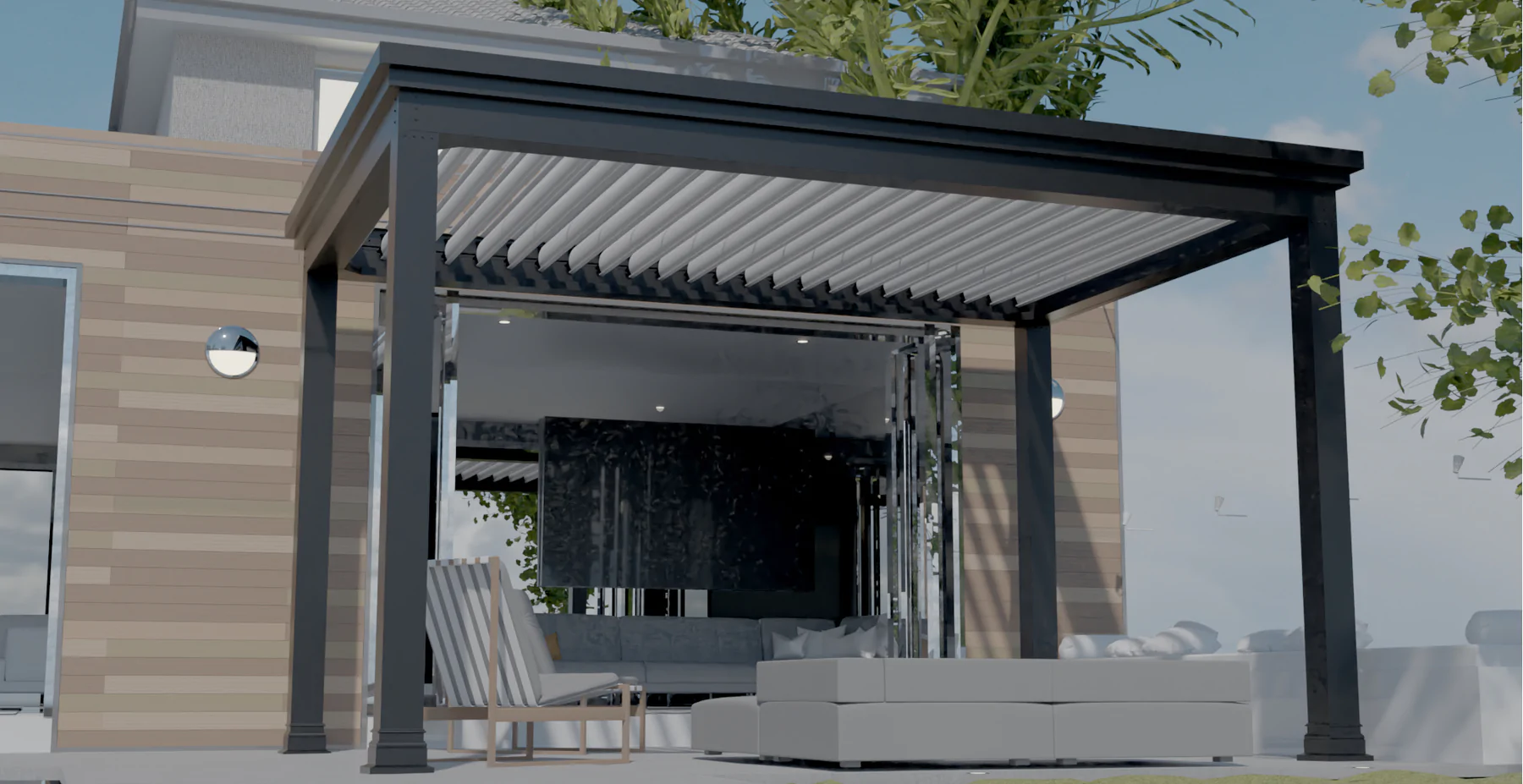
With so many pergola ideas to choose from, it helps to have a framework for narrowing down the right one. The four main factors are your space, your climate, your budget, and your intended use. Here is how to work through each one.
Space: Measure your available footprint and subtract 2 feet from each side for a comfortable buffer. If you have a 14x18 patio, a 12x16 pergola is the right fit. For small spaces under 100 square feet, stick with 8x8 or 8x10. For large entertaining areas, 12x16 and up. If you want coverage over multiple zones (kitchen plus dining, for example), consider a connected Super Pergola setup with two units joined together.
Climate: Your weather drives your material and feature choices. High-wind coastal areas need aluminum with engineered wind ratings (not decorative wood). Heavy snow regions need verified psf snow load ratings (65 psf handles roughly 5 feet of snow). Hot, sunny climates benefit most from adjustable louvers that can close to block direct sun and reduce temperatures up to 20 degrees underneath. Rainy climates need integrated gutter systems so water channels away rather than dripping through.
Budget: Set a total budget that includes the pergola, site prep (concrete pad, footings), electrical, and any accessories (lights, fans, curtains). A rough rule of thumb: the pergola itself is about 60 to 70 percent of the total project cost. So a $10,000 pergola will likely become a $14,000 to $16,000 total project once you add electrical, footings, and finishing touches.
Use case: How will you use the space most? Dining needs task lighting and a footprint big enough for a table plus clearance for chairs. Lounging needs deeper shade and softer lighting. Cooking needs ventilation (open louvers) and grease-resistant materials (aluminum, not fabric). Entertaining needs a larger footprint with flexible furniture arrangements. Match your primary use case to the pergola size, style, and features that serve it best.
If you want help narrowing it down, explore the best pergola kits available today for a side-by-side comparison of the leading options across all price points and materials.
Frequently Asked Questions About Pergola Ideas
How much do pergola kits cost?
Pergola kit prices vary widely depending on material, size, and features. Basic wood pergola kits start around $800 to $2,000 for small sizes. Vinyl kits range from $2,000 to $5,000. Aluminum pergola kits with motorized adjustable louvers, which represent the highest quality tier, start around $5,500 for an 8x8 and range up to $25,000 or more for larger custom configurations like 12x20 units. The average customer investing in a premium aluminum louvered pergola spends between $8,000 and $15,000 for the kit, with total installed project costs (including site prep and electrical) running $12,000 to $22,000. For a full breakdown, read the pergola cost guide.
What is the best pergola material?
Aluminum is the best pergola material for durability, maintenance, and long-term value. It does not rot, warp, rust, fade, or require staining. Commercial-grade aluminum pergolas weigh 4 to 10 times more than imported competitors and carry structural ratings for wind (up to 200 mph) and snow (up to 65 psf) that wood and vinyl cannot match. Wood looks beautiful initially but demands annual maintenance and will deteriorate in 7 to 15 years. Vinyl resists moisture but yellows in UV exposure and lacks structural strength. For most homeowners, aluminum with a quality powder coat finish is the clear winner.
Can you build a pergola yourself?
Yes. Most pergola kits are designed for DIY installation. A quality aluminum aluminum pergola kit arrives with pre-cut, pre-drilled components, all hardware, and step-by-step instructions. Two to three adults can complete the installation in about one day (6 to 10 hours) using standard tools like a drill, level, ladder, and socket wrench set. No welding, cutting, or special equipment is required. Phone support from the manufacturer during installation is also standard with reputable brands.
Do pergolas add value to your home?
Yes. Outdoor living improvements, including pergolas, consistently rank among the highest-ROI home upgrades. The National Association of Realtors estimates that well-executed outdoor living projects recoup 60 to 80 percent of their cost at resale. A pergola specifically adds value by increasing usable outdoor square footage, improving curb appeal, and making the property more attractive to buyers who prioritize outdoor entertaining. A permanent, engineered aluminum structure with a lifetime warranty adds more value than a temporary shade sail or a deteriorating wood frame.
What size pergola do I need?
Size depends on your intended use. For a small seating area or bistro setup, 8x8 to 8x10 is sufficient. For a four-person dining table with chairs, 10x10 to 10x13 gives comfortable clearance. For a full outdoor living room with a sectional sofa, 12x16 or larger. For outdoor kitchen coverage, 12x16 to 12x20 to accommodate counters, the grill, and seating. A good rule of thumb: measure the area you want to shade, then add 2 feet to each dimension for a comfortable overhang beyond your furniture footprint.
Are aluminum pergolas better than wood?
In almost every measurable category, yes. Aluminum pergolas are stronger (higher wind and snow ratings), lighter (easier to install), more durable (lifetime warranty vs. 5 to 15 years for wood), lower maintenance (no staining, sealing, or rot repair), and offer features that wood cannot (motorized adjustable louvers, integrated gutter systems, hidden wiring channels). The only advantage wood holds is the initial aesthetic for homeowners who specifically want a natural timber look, and modern powder-coat finishes on aluminum can closely replicate that appearance without the maintenance burden.
Do pergolas provide rain protection?
It depends on the type. A traditional open-beam pergola with no roof panels provides zero rain protection. It is purely a shade and aesthetic structure. A louvered pergola with adjustable roof louvers provides full rain protection when the louvers are closed, channeling water through an integrated gutter system inside the beams and out through the posts. This is the key advantage of a louvered roof over a traditional open-top pergola: you get sun when you want it and rain protection when you need it, all controlled by a remote.
What is the best pergola for a small backyard?
For small backyards, an 8x8 or 10x10 pergola with a clean, flat-ceiling design works best. These sizes provide enough coverage for a dining set or seating area without overwhelming the space. Choose a wall-attached configuration if possible to minimize the number of posts (two instead of four), which keeps the floor plan open. Lighter colors (white, stone) make a small space feel more open, while dark colors (black, bronze) create a bold architectural statement.
How long does it take to install a pergola kit?
A quality aluminum pergola kit can be installed in one day by 2 to 3 adults, typically 6 to 10 hours from start to finish. This assumes the site is already prepared (concrete pad poured, footings set, anchor bolt locations marked). Site preparation, if needed, can add 1 to 3 days depending on whether you are pouring a new concrete pad, drilling footings, or reinforcing a deck. Professional installation through a certified installer network typically takes the same day, with site prep handled in advance.
Do you need a permit for a pergola?
Permit requirements vary by municipality. In many areas, pergolas under a certain size (often 120 to 200 square feet) are exempt from building permits. Larger pergolas, attached pergolas (since they modify the house structure), and pergolas in HOA-governed communities almost always require a permit or architectural review. Check with your local building department before you order. Most reputable pergola manufacturers provide engineering documents, including stamped structural plans, that satisfy permit requirements. This paperwork is standard with commercial-grade aluminum pergola kits and simplifies the permitting process significantly.
Ready to Choose Your Pergola?
Browse sizes from 8x8 to 12x20, pick your color combination, and get a delivered price in minutes. Every kit includes free shipping, a lifetime warranty, and same-day phone support.

