

15 Patio Cover Ideas That Actually Look Good and Last
You have a patio. You’d like to use it more. Except that it’s unbearably hot and sunny at 2 PM, your dinner party gets rained out, and that big concrete slab goes unused for six months of the year.
That’s why we’ve compiled some of our favorite patio cover ideas. Patio covers can transform a seldom-used patio into a frequently used patio. But which patio cover is the best one? That depends on your budget, the weather where you live, and how important appearance is to you.
In this article, we'll share 15 covered patio designs that include a $50 umbrella and a $20,000 motorized louvered roof. We'll give you the low down on the price, the pros, and the cons of each. Nothing else. Just the essential details to help you choose the perfect patio cover for your lifestyle.
Table of Contents
- Louvered Pergola Covers
- Solid Roof Pergola Covers
- Retractable Awnings
- Shade Sails
- Lattice Pergola Covers
- Insulated Patio Panels
- Natural Vine Pergola Covers
- Outdoor Curtains and Drapes
- Patio Umbrellas
- Polycarbonate Roof Panels
- Fabric Pergola Covers
- Metal Roofing Panels
- Glass Patio Covers
- Bamboo and Reed Patio Covers
- Combination Covers
1. Louvered Pergola Covers

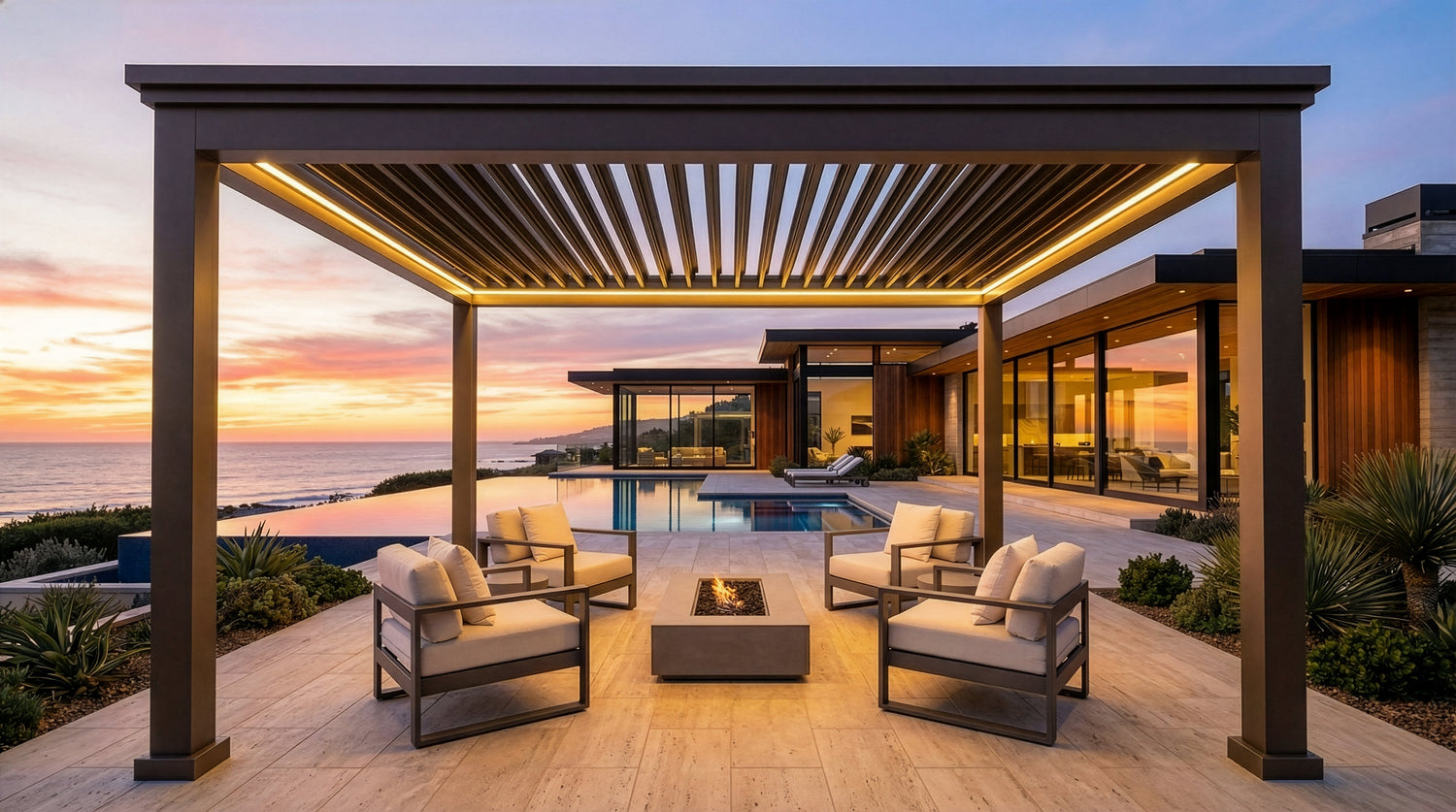
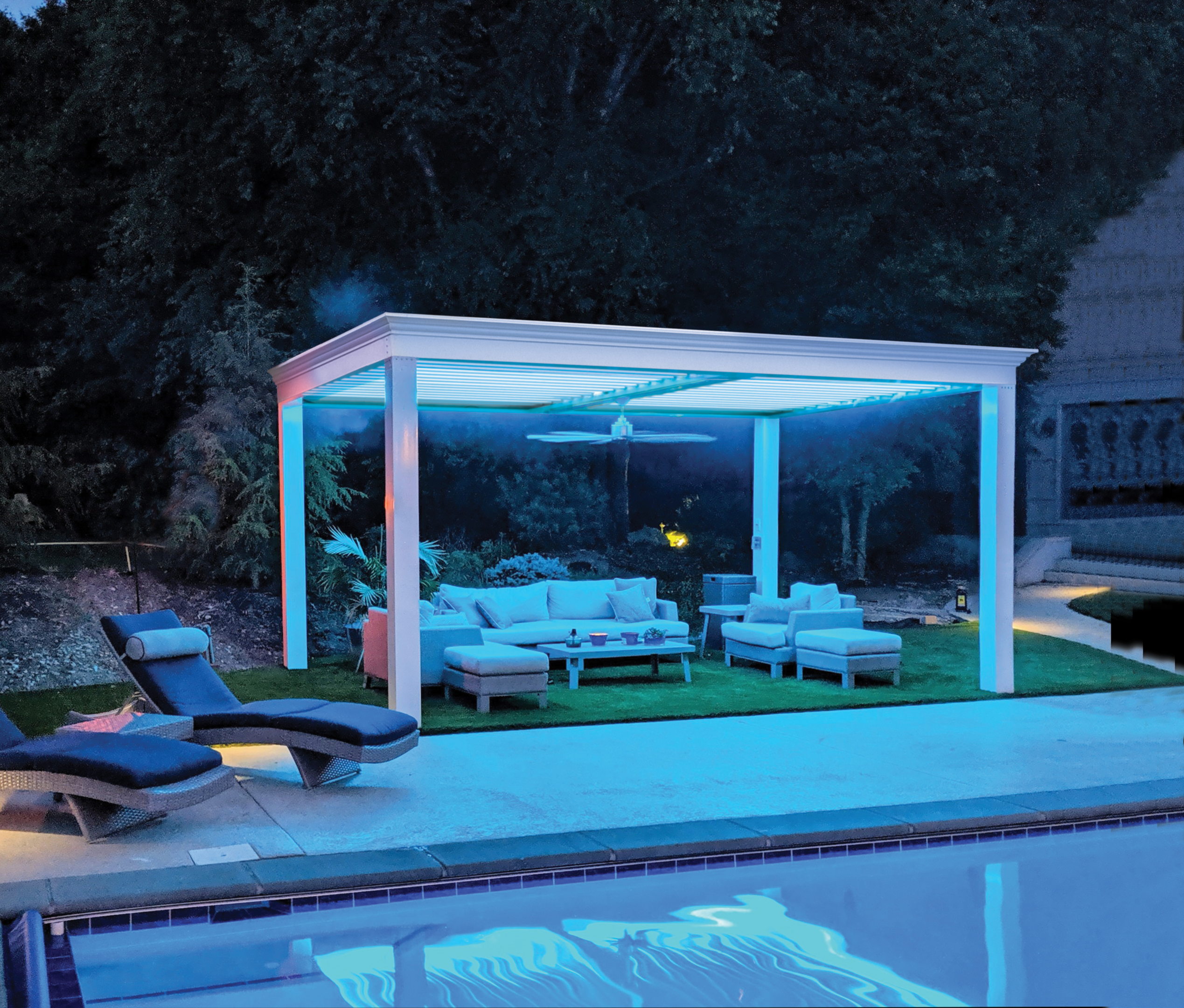
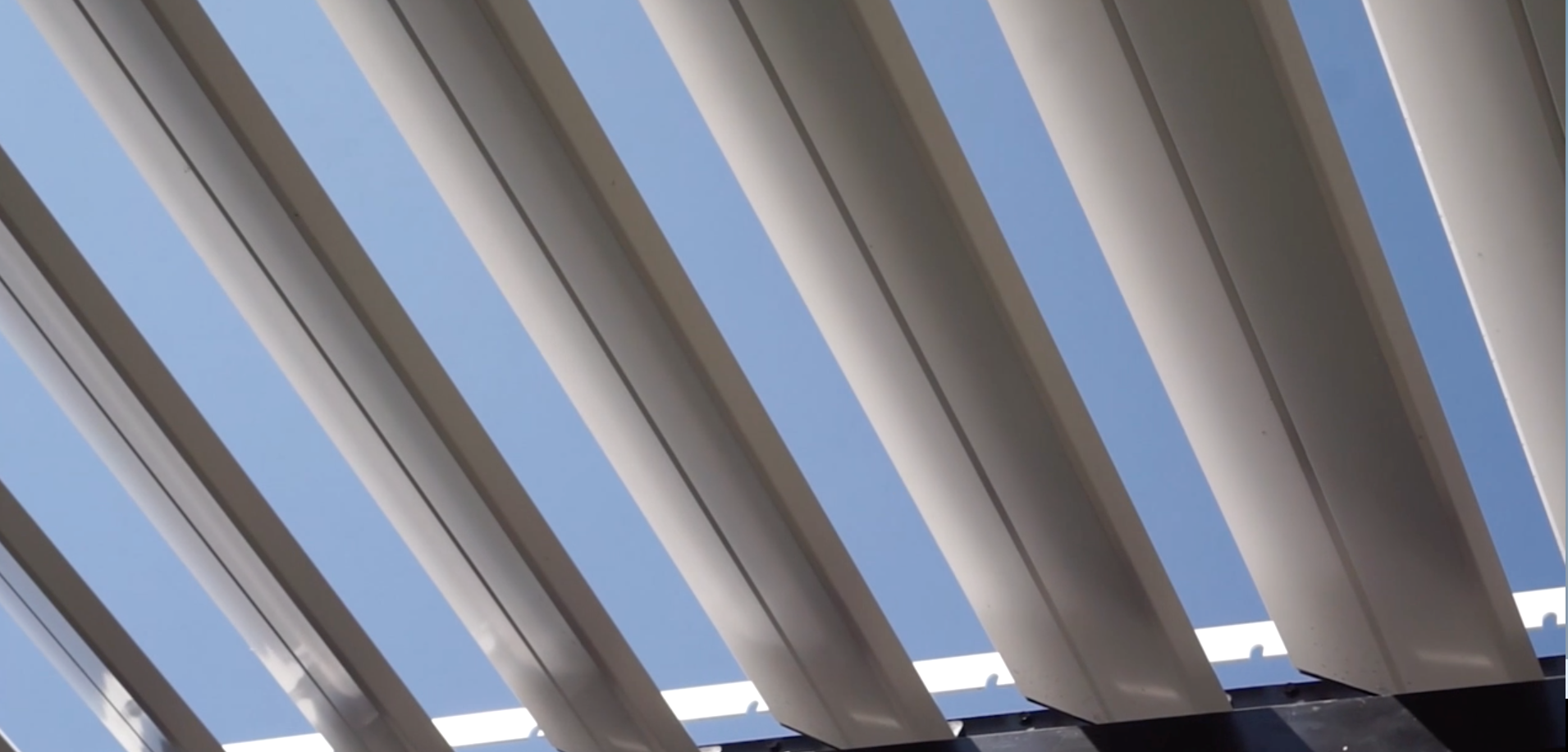
A louvered pergola cover is a motorized roof system with aluminum slats (louvers) that rotate open and closed at the press of a button. Open the louvers and you get full sunlight and airflow. Close them and you have a waterproof ceiling that blocks rain, snow, and harsh UV. It is the only patio cover on this list that gives you both options without lifting a finger.
This is our top pick for covered patio ideas because it solves the core problem with every other option: you do not have to choose between sun and protection. A louvered pergola does both.
The Luxury Pergola is a good example of what a quality louvered system looks like. Their units weigh up to 1,800 lbs for a 10x13 structure (compared to 250-450 lbs for cheaper imported options), handle up to 200+ mph winds when closed, and support up to 65 psf of snow load. The flat-ceiling design hides the louver mechanisms for a clean, modern look from underneath.
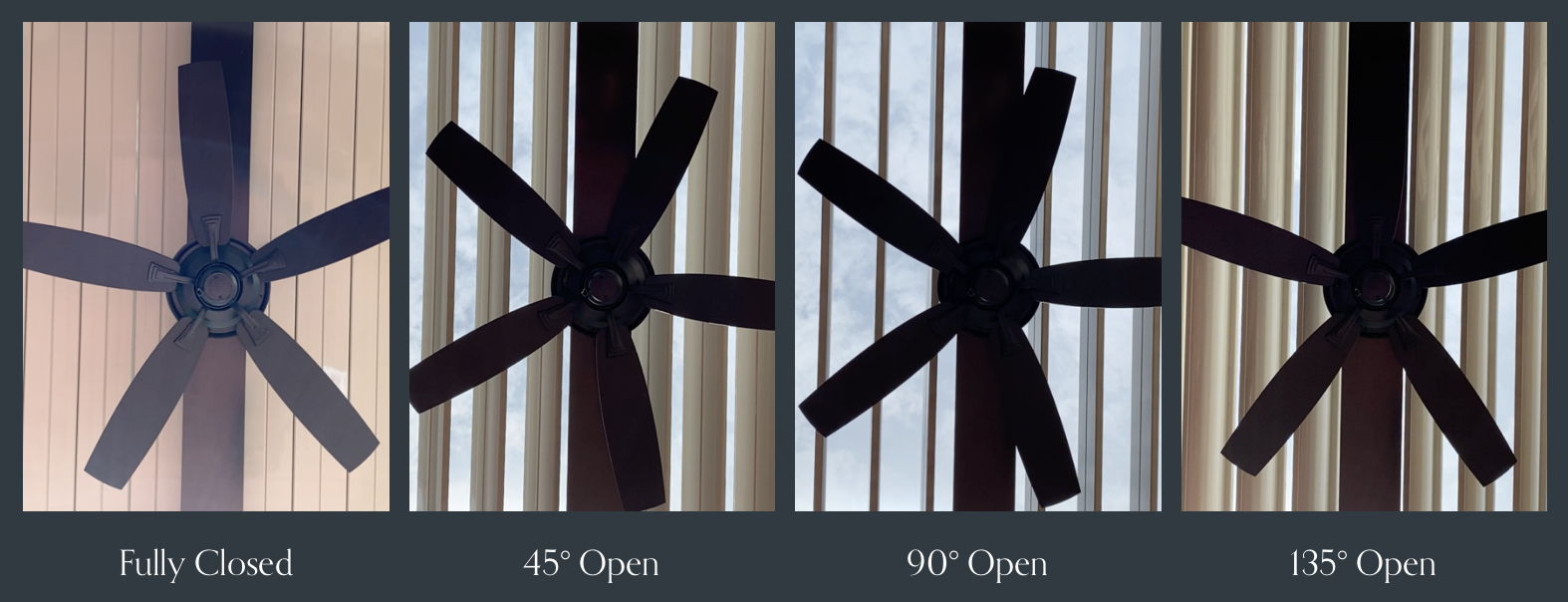
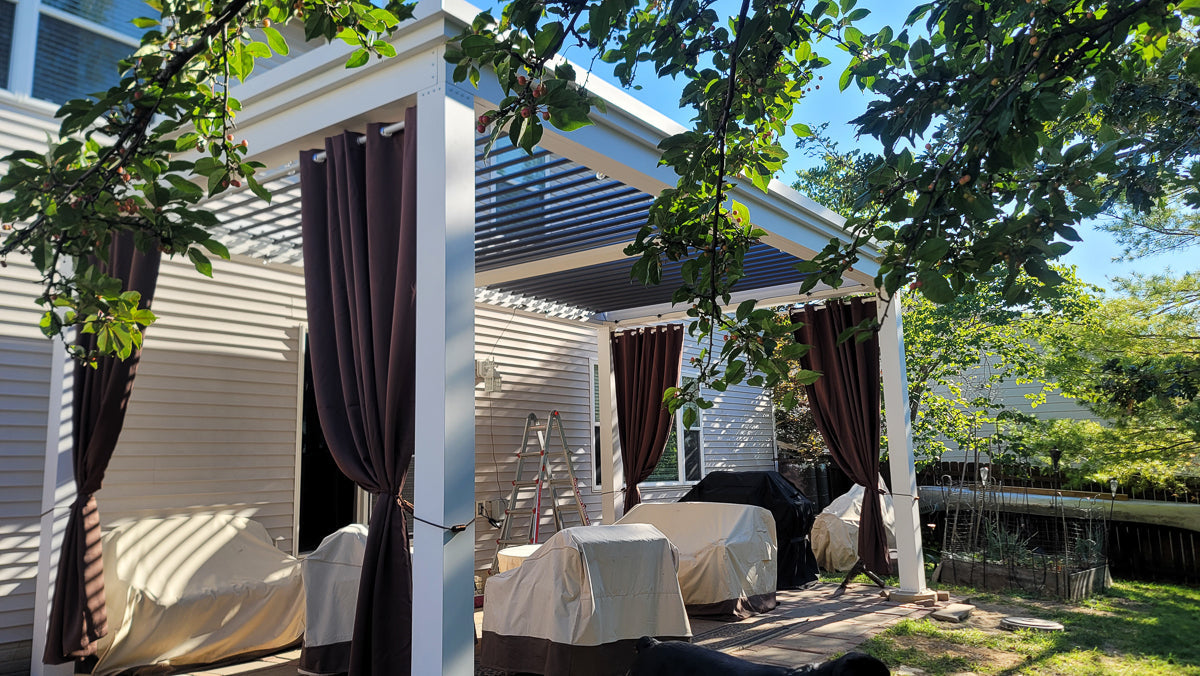
Most homeowners install louvered patio covers over dining areas, outdoor kitchens, pool decks, or hot tubs. The louvers typically rotate 130+ degrees via remote control, and an integrated gutter system channels rain through the posts and away from the patio.
Pros:
- Full sun when you want it, full rain protection when you need it
- Motorized operation with remote or smart home integration
- Commercial-grade aluminum lasts decades with zero maintenance
- Handles wind, rain, and snow (quality models rated for up to 200+ mph wind)
- Adds significant value to your home
- Available as DIY kits, installable in about a day
Cons:
- Highest upfront cost on this list
- Requires electrical connection for the motor
- Quality varies widely between brands (weight is the best indicator)
Cost range: $5,000 to $20,000 or more for a louvered roof pergola, depending on size and quality. Budget imported models run $3,000 to $6,000 but tend to use thinner gauge aluminum. A commercial-grade unit like The Luxury Pergola runs $10,000 to $21,000 direct from the factory, which is about half what you would pay for the same system purchased through a local distributor and installed.
If you are comparing louvered systems, check out our pergola cost guide for a price breakdown.
2. Solid Roof Pergola Covers
A solid roof pergola cover uses fixed aluminum or polycarbonate panels bolted to a pergola frame. Once installed, the roof stays put. You get complete weather protection from rain, snow, and sun every day of the year without any moving parts.
This is one of the most practical patio cover ideas for homeowners in rainy climates like the Pacific Northwest or Gulf Coast. If your main goal is keeping water off your patio furniture, a solid roof gets the job done at a lower price point than a louvered system.
The downside is obvious: you lose the sky. On a perfect 75-degree day when you want full sun, a solid roof patio cover still blocks it. There is no adjustability. You are trading flexibility for simplicity.
Pros:
- Complete rain and snow protection
- No moving parts means nothing to break or maintain
- Lower cost than motorized louvered systems
- Works well in climates with frequent rain
Cons:
- No sunlight option. The roof is always there
- Can feel darker and more enclosed underneath
- Aluminum panels can be loud during heavy rain
- Less airflow than open or adjustable designs
Price range: $3,000 to $12,000 depending on materials, size, and whether you hire a contractor or DIY. Aluminum panels cost more than polycarbonate but tend to last longer. For a full comparison, see our guide on louvered vs fixed roof pergolas.
3. Retractable Awnings
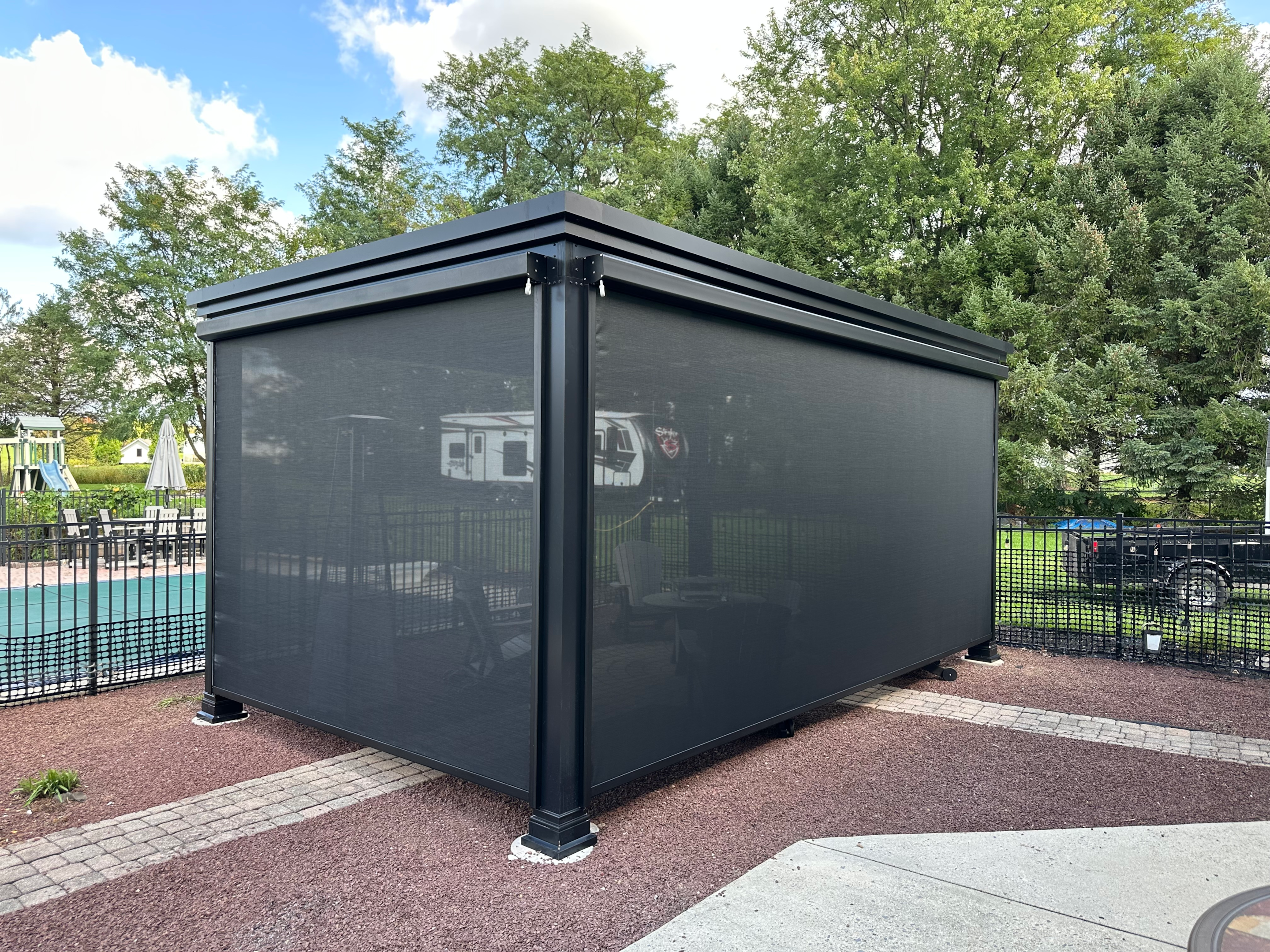
Retractable awnings mount to the side of your house and extend outward on a folding arm mechanism. Pull them out when you want shade, retract them when you want sun. Higher-end models are motorized with a remote control or even a wind sensor that automatically retracts the awning in high gusts.
This patio covering works best for patios directly attached to the house. The awning bolts into the exterior wall or fascia board and projects outward 8 to 14 feet, depending on the model. You can not use it over a freestanding patio in the middle of your yard.
Retractable awnings are a solid mid-range option for shade, but they have a meaningful limitation: fabric is not waterproof. Most awning fabrics are water-resistant, meaning they will handle a light drizzle, but a real rainstorm will soak through or pool on the fabric. And you should never leave them extended in wind above 25-30 mph or the arms can bend or snap.
Pros:
- Adjustable shade coverage (extend or retract as needed)
- Motorized options available with remote and sensors
- Good shade in sunny conditions
- Relatively quick installation (wall-mount)
Cons:
- Not waterproof in heavy rain
- Must retract in wind (25-30 mph limit for most models)
- Fabric degrades over time from UV exposure (replace every 5-10 years)
- Only works attached to a wall (no freestanding option)
- Does not handle snow load at all
Cost: $1,000-$5,000. For a manual crank awning: $1,000. Motorized retractable awning with wind sensor: $2,500-$5,000, installed. Replace fabric: $300-$800 every 5-10 years.
4. Shade Sails
Shade sails are triangular or rectangular pieces of UV-resistant fabric stretched between poles, trees, or mounting points on your house. They create a floating canopy effect that looks modern and architectural without the weight of a full structure.
Among all the patio shade ideas on this list, shade sails give you the most visual impact for the least money. A single high-quality sail costs $100 to $300. Layer two or three overlapping sails in different colors or angles and you get a genuinely striking covered patio for under $500.
The trade-off is durability. Shade sails are fabric. They stretch, sag, and fade over time. Most last 3 to 5 years before they need replacing. They are not waterproof (water-resistant at best), and they are not rated for wind or snow. In fact, most manufacturers recommend removing shade sails during winter or high-wind season entirely.
Pros:
- Extremely affordable (best patio cover idea for tight budgets)
- Modern, architectural look
- Easy to install and remove (DIY-friendly)
- Good UV protection (blocks 85-98% of UV depending on fabric)
- Flexible positioning with multiple anchor points
Cons:
- Not waterproof (rain goes through or pools)
- No wind or snow rating (must remove in storms)
- Fabric sags and fades within 3-5 years
- Requires sturdy mounting points (posts, walls, or trees)
- Temporary feel compared to permanent structures
Cost: $100-$500 per sail. Mounting hardware and posts add $50-$200. Total for a covered patio with two sails: $300-$1,000.
5. Lattice Pergola Covers
A lattice pergola is the classic, traditional patio cover. Wooden beams and cross-rafters create a grid pattern overhead that filters sunlight into a pleasant dappled shade. It is the look you picture when someone says "pergola" without any qualifiers.
Lattice covers are purely decorative. They do not block rain. They do not provide full shade. The open grid lets roughly 50-70% of sunlight through, depending on the spacing. What they do well is define a space. A lattice pergola over a patio instantly makes it feel like an outdoor room, even without walls or a real ceiling.
Wood lattice pergolas look great in year one. By year five, you are dealing with fading, cracking, and potentially rot if you skipped the annual staining. Cedar and redwood resist rot better than pressure-treated pine, but they still require regular maintenance. For a comparison of wood versus aluminum structures, take a look at our guide on aluminum pergola options.
Pros:
- Classic, timeless look that fits most home styles
- Relatively affordable in wood
- Good base structure for growing vines (see idea #7)
- Defines the patio space without feeling closed in
- DIY-friendly for handy homeowners
Cons:
- No rain protection at all
- Only partial shade (50-70% sunlight still comes through)
- Wood requires annual staining/sealing to prevent rot and fading
- Susceptible to insect damage (termites, carpenter bees)
- Lifespan of 10-15 years for wood, less without maintenance
Cost range: $1,000-$5,000 for a DIY wood lattice pergola. Cedar and redwood pergolas cost between $3,000-$5,000. Pressure-treated pine pergolas can cost as low as $1,000-$2,000. Labor costs, if you hire a contractor to install a pergola, cost between $1,000-$3,000.
6. Insulated Patio Panels
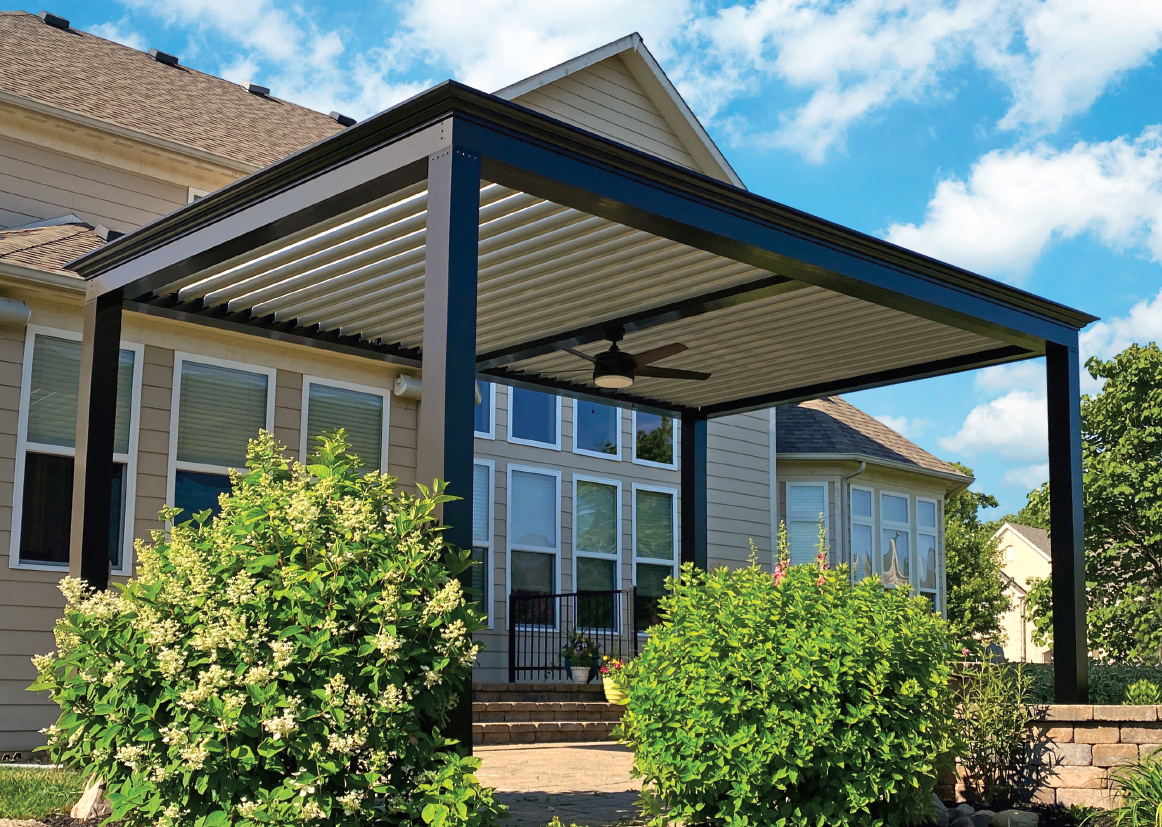
Insulated patio panels are thick, sandwich-style roof panels with a foam core between two layers of aluminum or steel. The insulation layer blocks heat transfer, keeping the area underneath up to 20 degrees cooler than a standard metal roof cover. They are the go-to patio cover for hot climates like Arizona, Texas, and Florida where shade alone is not enough.
These panels bolt to an existing patio structure or a new aluminum/steel frame. The finished look is a flat, clean ceiling that resembles the underside of a residential roof. Many homeowners add recessed lighting, ceiling fans, and speakers for a fully finished outdoor room feel.
Insulated panels are a permanent installation. Once they are up, they stay up. Like a solid roof, you lose the open-sky experience entirely. But for homeowners in extreme heat who want to actually use their patio between May and October, the temperature difference makes it worth the trade-off.
Pros:
- Best temperature control of any patio cover (up to 20 degrees cooler underneath)
- Full rain and weather protection
- Clean, finished ceiling look
- Supports ceiling fans, lights, and other accessories
- Very durable with a 20-30+ year lifespan
Cons:
- No sunlight or open-sky option
- Higher cost than most non-motorized options
- Professional installation usually required
- Can look bulky if not designed well
- Permanent structure (requires permits in most areas)
Cost: Expect to pay between $4,000 and $15,000 for a roof system. The panels alone cost $8 to $15 per square foot. A 12x16-foot insulated patio cover will cost between $6,000 and $12,000, including the frame and labor.
7. Natural Vine Pergola Covers
Growing vines over a pergola frame turns a simple structure into a living patio cover. Wisteria, jasmine, grape vines, bougainvillea, and climbing roses are the most popular choices. As the vines mature, they fill in the gaps between the pergola rafters and create a natural canopy of leaves, flowers, and shade.
This is one of the most beautiful covered patio ideas you can create, and it is also one of the slowest. Most climbing vines take 2 to 3 years to provide meaningful shade coverage. Wisteria and grape vines can take even longer but produce the thickest canopy once established.
The seasonal nature is both a feature and a limitation. In spring and summer, a mature vine pergola is stunning. In winter, most vines drop their leaves and you are back to a bare frame. Year-round coverage requires evergreen vines like jasmine (in warm climates) or combining vines with another cover type.
Pros:
- Gorgeous natural aesthetic that improves with age
- Good shade in summer when vines are full
- Attracts pollinators and adds fragrance (jasmine, wisteria)
- Low-tech and environmentally friendly
- Enhances the overall landscape design
Cons:
- Takes 2-3+ years to fill in
- Seasonal shade only (bare in winter for deciduous vines)
- No rain protection
- Requires regular pruning and maintenance
- Vine weight can damage lightweight structures over time
- Drops leaves, flowers, and debris onto patio
Cost: varies. The plants themselves are between $20-$100 a pop. The true expense comes with the pergola that will support them. If you go with a wooden trellis, that will be in the $1,000-$5,000 range (see idea #5). The more expensive, aluminum option can hold up for decades as your wisteria weaves in and out of the latticework, but will cost more.
8. Outdoor Curtains and Drapes
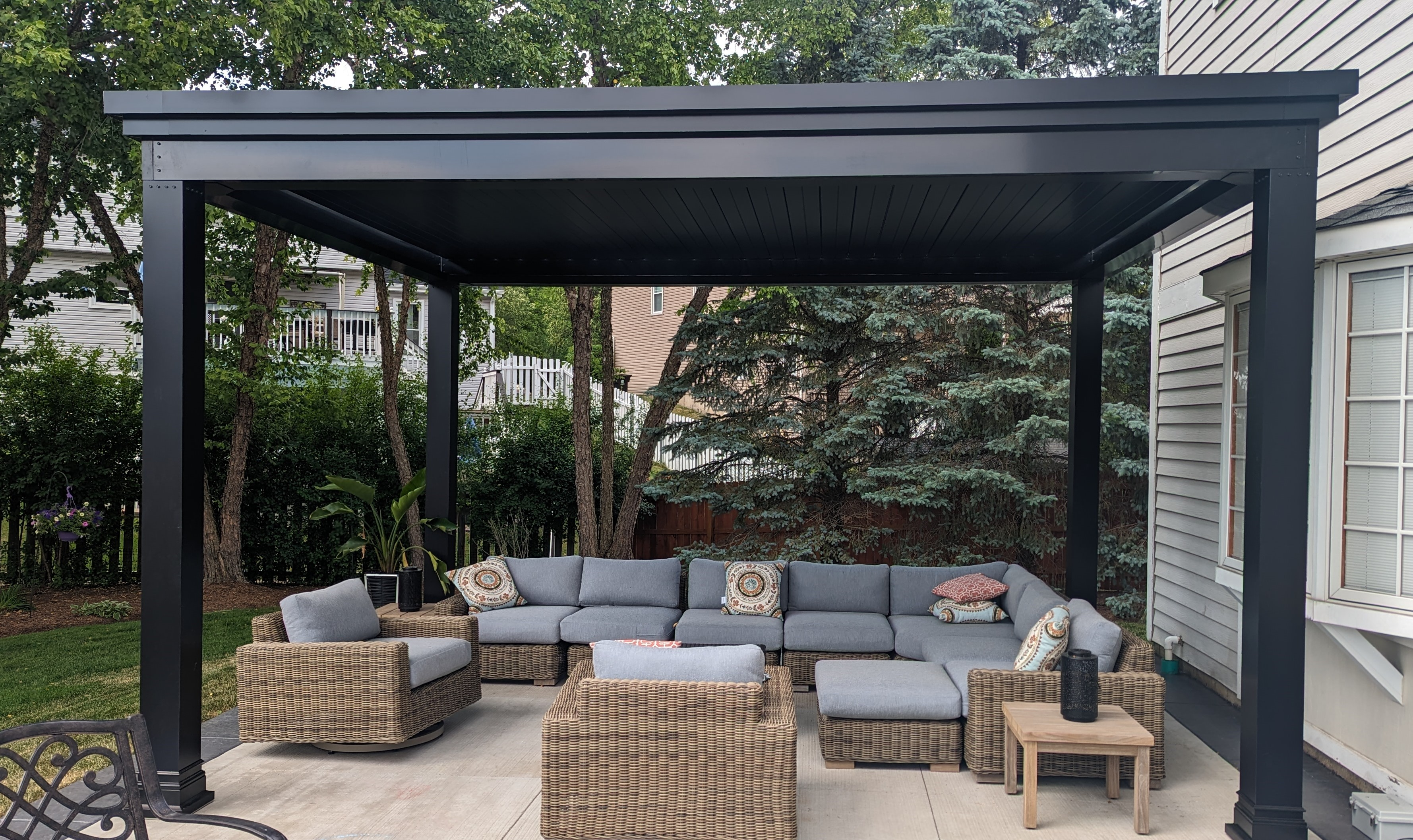
Outdoor curtains and drapes hang from a pergola beam, a curtain rod, or a wire system around the perimeter of your patio. They work as side-shade and privacy screens rather than overhead patio covers. Pull them closed on the sunny side, tie them back when you want the breeze.
Curtains work best as an add-on to another patio cover rather than a standalone solution. Pair them with a pergola or solid roof for both overhead and side protection. On their own, outdoor curtains will not keep rain off your head, but they will block low-angle afternoon sun, wind, and the neighbor's view.
Material matters. Sunbrella and other solution-dyed acrylic fabrics resist UV fading and mildew for 5 to 10 years. Cheaper polyester curtains look great initially but start fading and degrading within 1 to 2 seasons.
Pros:
- Adds privacy and wind protection
- Blocks low-angle sun that overhead covers miss
- Soft, elegant aesthetic
- Easy to change colors or patterns seasonally
- Very affordable patio covering option
Cons:
- No overhead rain protection (side coverage only)
- Cheap fabrics fade and degrade quickly
- Can flap and tangle in wind
- Requires an existing structure to hang from
- Not a standalone patio cover solution
Price Range: $200-$1,000. Standard quality Sunbrella outdoor curtains cost anywhere from $80-$200 per panel. A full patio set of 6-8 panels can range anywhere from $500-$1,000. Cheaper polyester panels can be found for $30-$50 per panel.
9. Patio Umbrellas
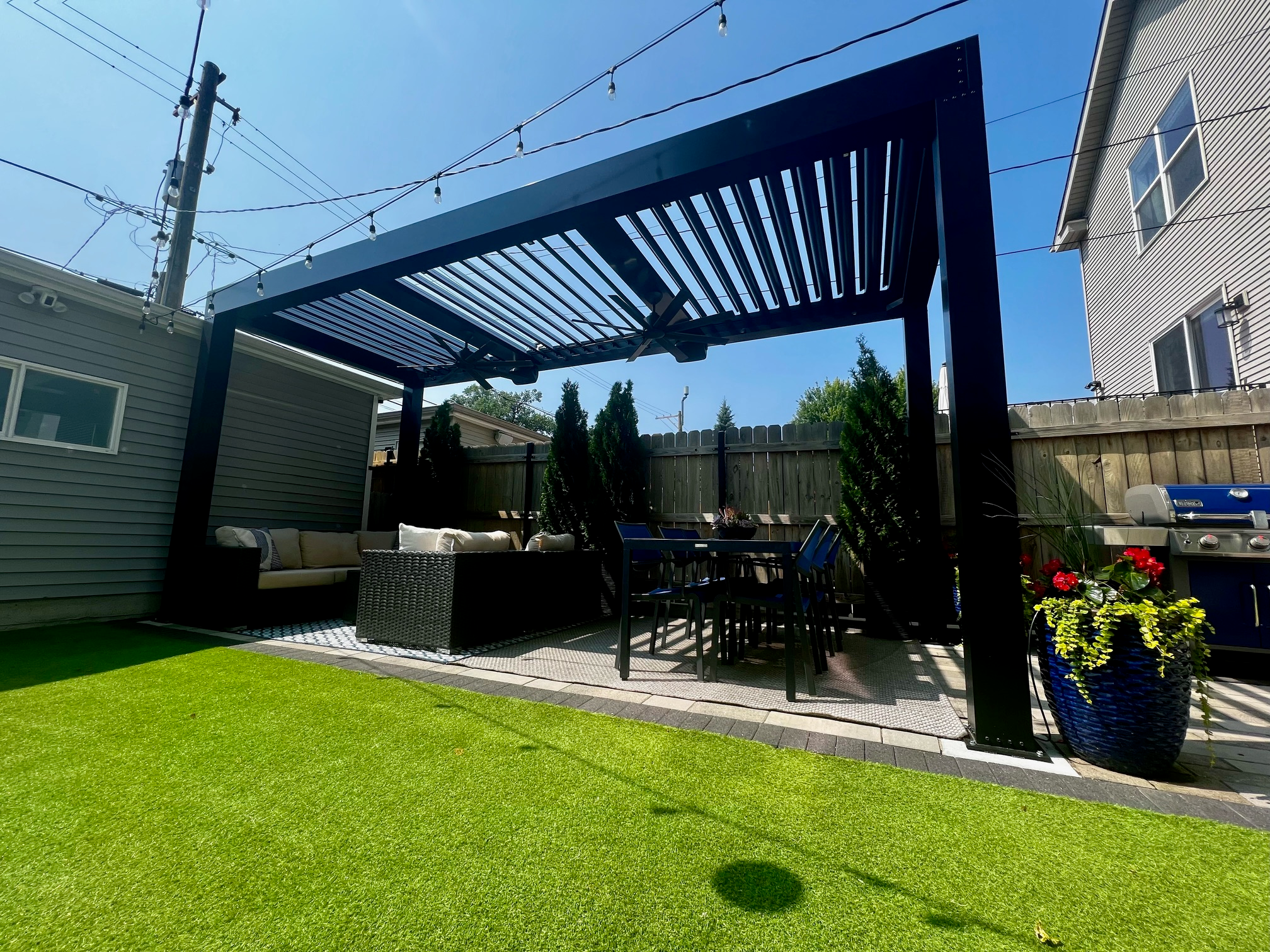
A patio umbrella is the simplest and cheapest patio cover available. No installation, no permits, no commitment. You buy one, stick it in a stand or table hole, and you have shade. Cantilever models offset the pole to the side so you get full shade coverage without a pole in the middle of your space.
For renters, temporary situations, or small spaces, umbrellas make sense. But for any homeowner looking at long-term covered patio ideas, umbrellas are really just a stopgap. They blow over in moderate wind (even with a weighted base), they provide limited coverage area, and most deteriorate within 2 to 3 seasons of outdoor exposure.
Pros:
- Cheapest patio cover option available
- Zero installation required
- Portable and repositionable
- Works for renters and temporary setups
- Available in every size, color, and style
Cons:
- Blows over in moderate wind (a real safety hazard)
- Very limited shade coverage area
- No rain protection (most are not waterproof)
- Short lifespan (2-3 years typical)
- Does not add value to your home
- Looks temporary because it is
Price Range: $50-$500. The price of a patio umbrella can range from as low as $50 for a basic table umbrella to $500 or more for a large commercial umbrella. The price for a high-quality cantilever umbrella with tilt and swivel is typically between $200-$500. A commercial cantilever umbrella with an extra large canopy can cost upwards of $800.
10. Polycarbonate Roof Panels
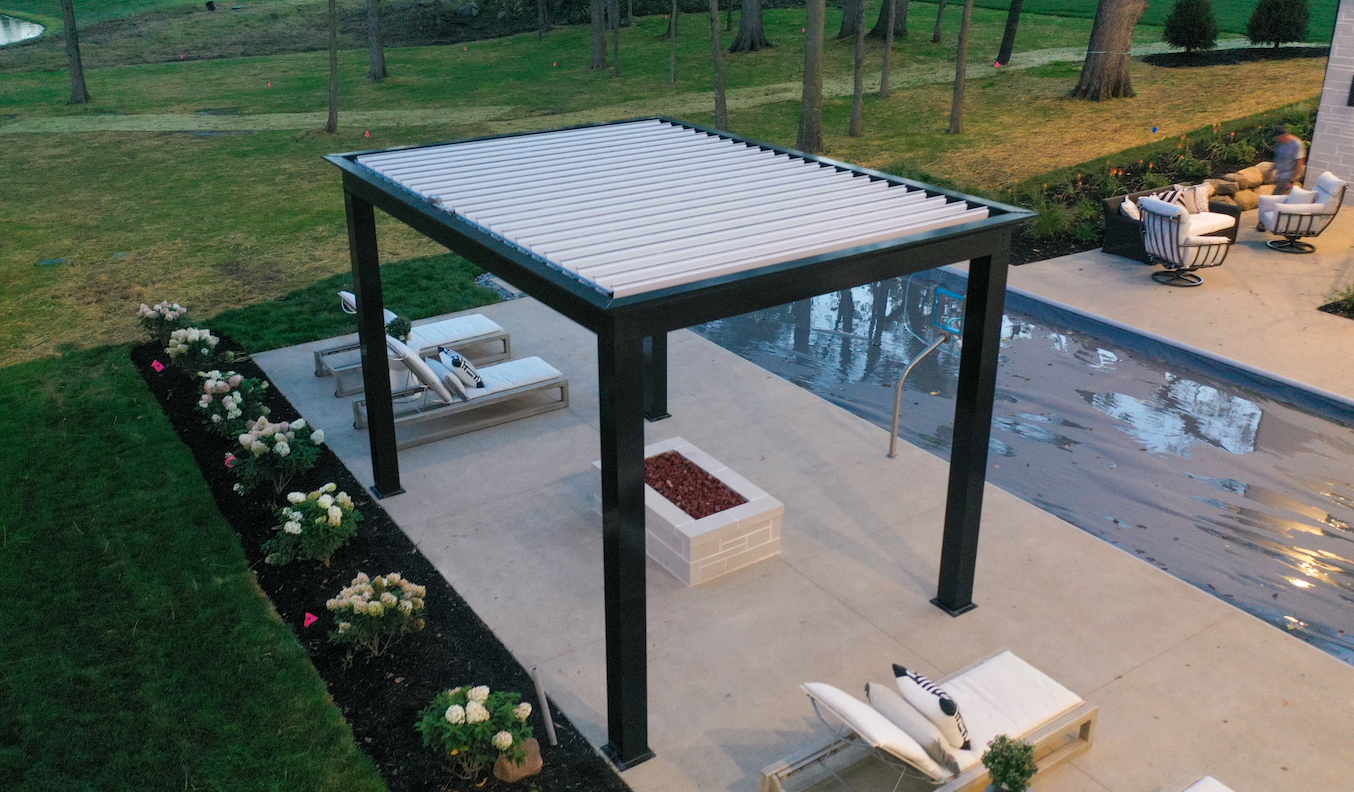
Polycarbonate panels are translucent or semi-opaque plastic sheets that let filtered light through while blocking rain. They come in clear, frosted, or tinted versions. The multi-wall (twin-wall or triple-wall) varieties include air channels that add insulation and diffuse light evenly.
This patio roof idea is popular for homeowners who want rain protection without losing natural light. A polycarbonate patio cover keeps you dry while still feeling bright and open underneath. The clear versions let in the most light but can create a greenhouse effect in summer. Frosted or bronze-tinted panels reduce heat gain while still allowing plenty of ambient light.
The main concern with polycarbonate is long-term appearance. Lower-quality panels can yellow over time from UV exposure. Look for panels with a UV-protective coating on both sides for the longest life. Quality panels maintain their clarity for 10 to 15 years.
Pros:
- Rain protection while letting light through
- Lighter weight than glass or metal (easier to install)
- Nearly unbreakable (200x stronger than glass)
- Good DIY option for handy homeowners
- Multi-wall versions provide decent insulation
Cons:
- Can yellow over time without UV coating
- Clear panels can create a hot greenhouse effect
- Looks more industrial than other patio cover options
- Noisy in hail or heavy rain
- Scratches more easily than glass
Price range: $1,000-$4,000. Price per square foot: $2-$6. DIY polycarbonate patio cover kit 10’x12’: $1,500-$3,000. Installed: $2,500-$4,000. Includes aluminum frame.
11. Fabric Pergola Covers
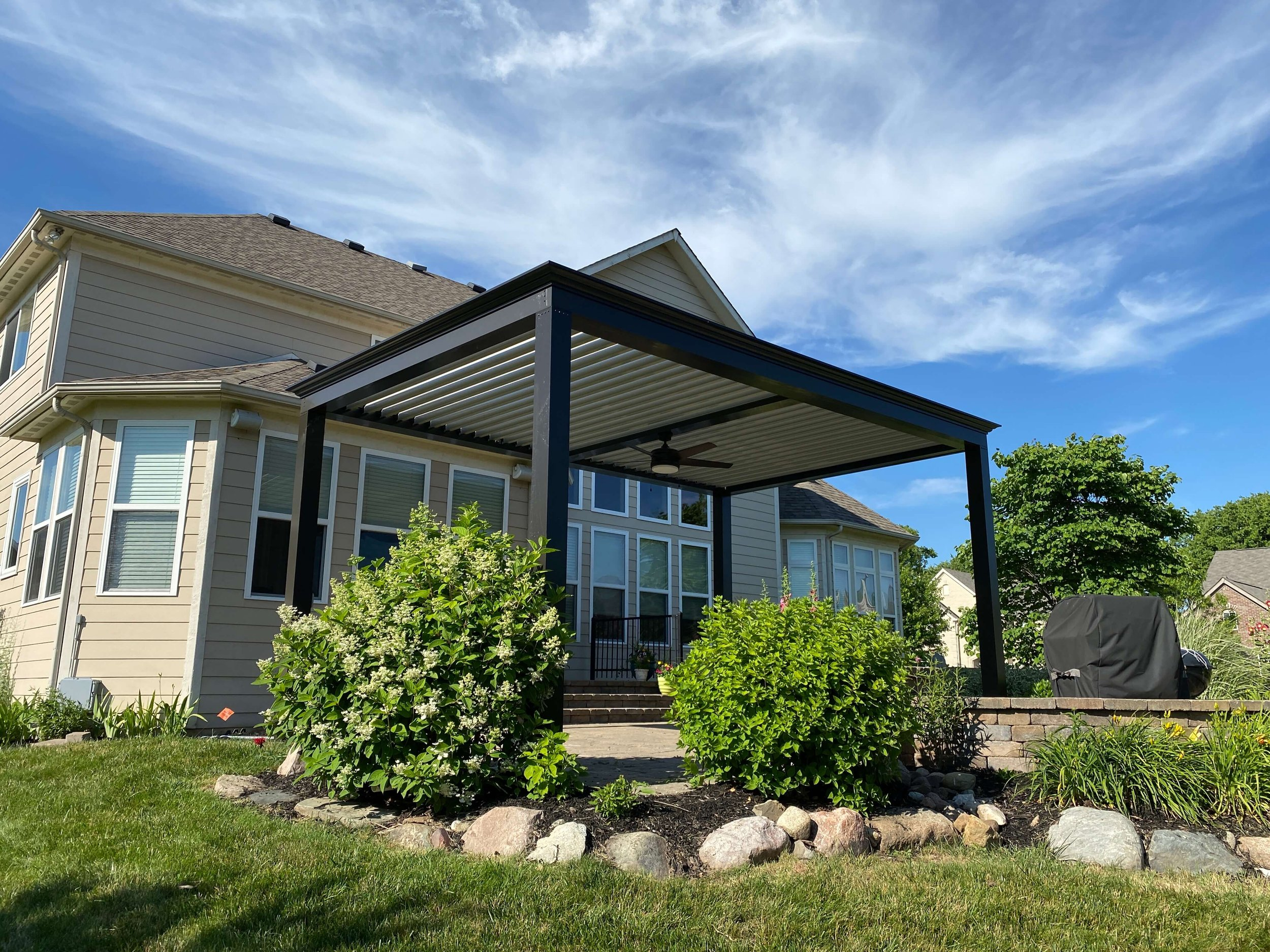
Fabric pergola covers are sheets of canvas, polyester, or acrylic that stretch across the top of a pergola frame. Some slide on a track system so you can pull them open or closed. Others are fixed in place with tie-downs or clips. The look is casual, resort-style shade.
The appeal of fabric patio covers is the soft aesthetic. Fabric diffuses light and creates a warm, inviting glow underneath. It feels more comfortable and less industrial than metal or plastic. Many outdoor restaurants and resorts use fabric canopies for exactly this reason.
Durability is the weak point. Even the best outdoor fabrics (Sunbrella is the gold standard) will eventually fade, stretch, and need replacement. The typical lifespan is 5 to 8 years for premium fabric, 2 to 3 years for budget polyester. Fabric patio covers also collect water, leaves, and debris, which means regular cleaning or the risk of sagging and staining.
Pros:
- Soft, warm aesthetic with diffused light
- Affordable and available in many colors and patterns
- Slide-track versions offer adjustable coverage
- Easy to replace when worn out
- Lightweight (does not stress pergola frame)
Cons:
- Fades and deteriorates from UV exposure (replace every 3-8 years)
- Not truly waterproof (water-resistant at best)
- Collects debris, leaves, and water puddles
- Sags over time
- No wind, snow, or storm rating
Cost range: $200 to $2,000. Price of a simple polyester canopy: $200-$500. Price of a Sunbrella fabric cover on a slide-track system: $800-$2,000, depending on size. Price of a replacement fabric cover: $100-$500.
12. Metal Roofing Panels
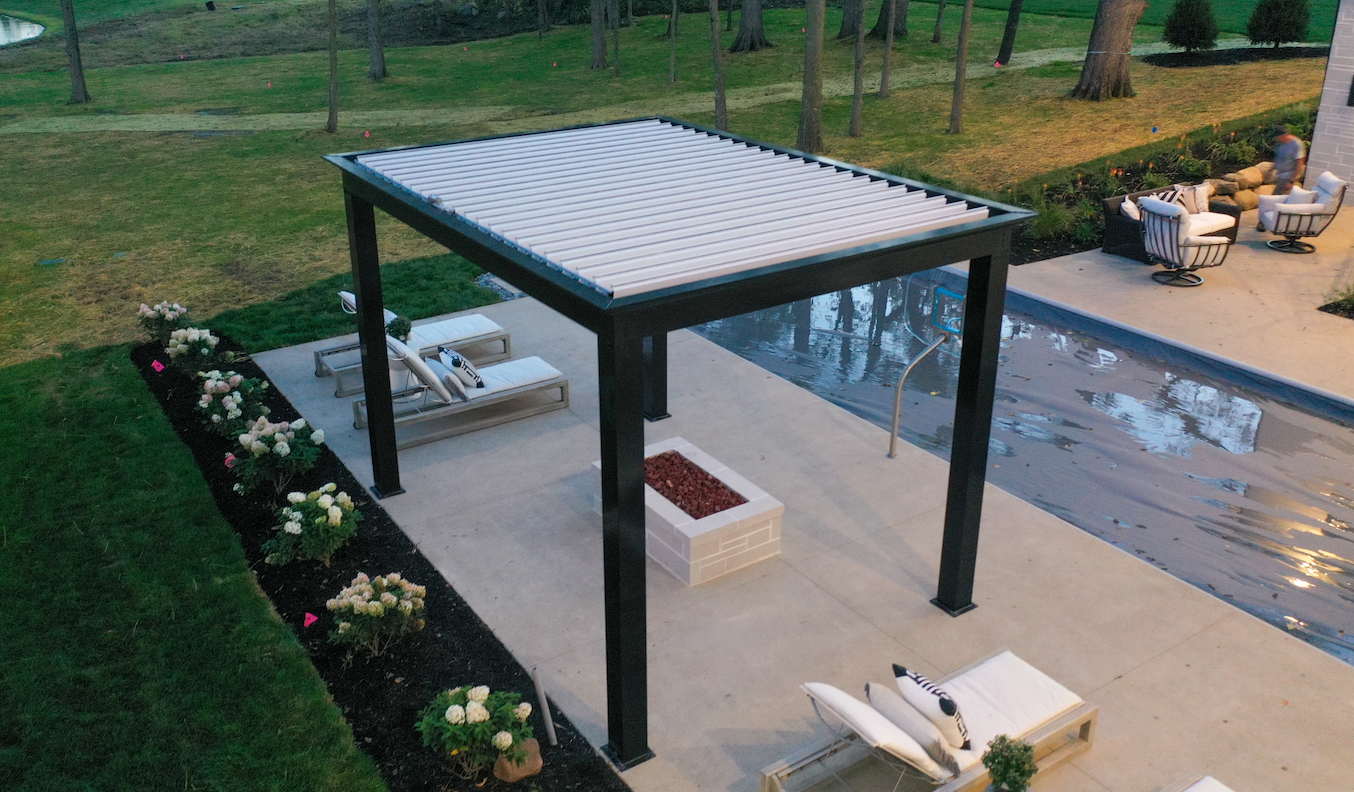
Metal roofing panels (corrugated steel, standing seam, or aluminum) create a rugged, permanent patio cover with a modern industrial look. Standing seam metal is the clean, contemporary option with hidden fasteners and sharp lines. Corrugated metal has a more rustic, farmhouse feel.
Metal patio covers are workhorses. They handle heavy rain, hail, wind, and snow without flinching. A properly installed metal patio roof can last 40 to 60 years with virtually no maintenance. The metal itself does not fade, rot, or attract insects.
The biggest complaint about metal patio covers is noise. Rain on a metal roof is loud. Some homeowners find it charming. Others find it unbearable during a storm. Adding insulation underneath (see idea #6) or using a dampening underlayment helps significantly.
Pros:
- Extremely durable (40-60+ year lifespan)
- Handles heavy rain, wind, hail, and snow
- Low to zero maintenance
- Modern industrial or rustic farmhouse aesthetic
- Fire-resistant
- Recyclable material
Cons:
- Loud in rain and hail
- No sunlight option (blocks everything like a solid roof)
- Can be hot in direct sun without insulation
- Corrugated styles can look cheap without good framing
- Professional installation recommended for standing seam
Price: $2,000 to $8,000. Corrugated metal panels cost $2-$5 per square foot. Standing seam metal costs $5-$12 per square foot. A 12x16 metal patio roof costs $3,000-$6,000 in materials, and $1,000-$3,000 in installation.
13. Glass Patio Covers
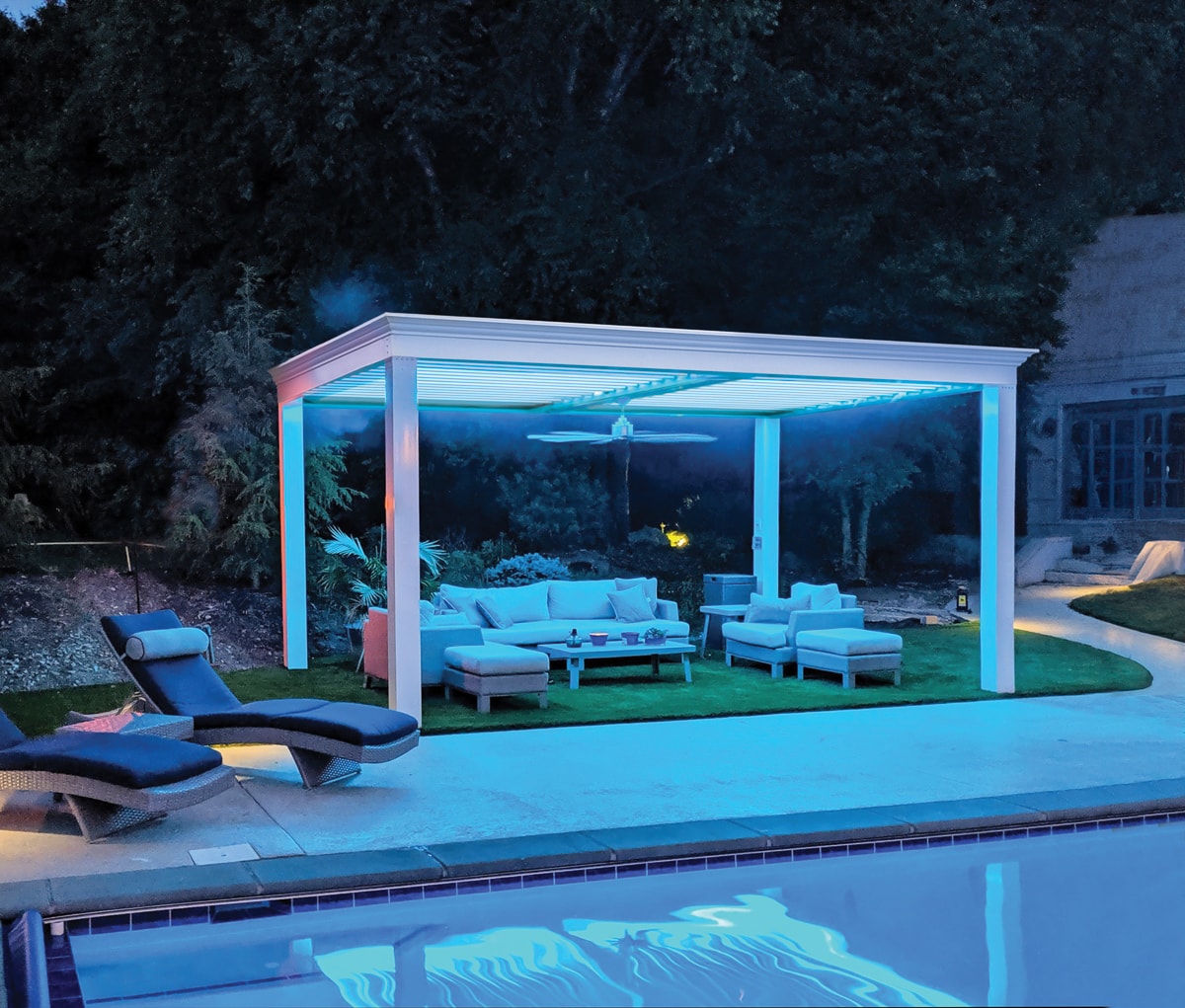
Glass patio covers use tempered or laminated glass panels mounted in an aluminum or steel frame. The result is a transparent ceiling that blocks rain while preserving full natural light and sky views. It is the most premium-looking patio cover you can build, and the price reflects that.
Glass covers work beautifully for homeowners who do not want to sacrifice the open-sky feeling. You still see the clouds, the stars, and the blue sky overhead. But rain, leaves, and debris stay out. The trade-off is heat gain. A glass patio cover in Phoenix or Houston will create a hot, greenhouse-like environment without tinted or low-E coated glass.
Tinted, frosted, or low-E glass reduces heat gain significantly but also reduces the clarity and light transmission you are paying premium for. It is a balancing act between comfort and aesthetics.
Pros:
- Premium, high-end aesthetic
- Full natural light and sky views
- Complete rain protection
- Does not yellow or degrade over time (unlike polycarbonate)
- Easy to clean
Cons:
- Highest cost of any patio cover material
- Heavy (requires engineered structural support)
- Greenhouse heat gain in warm climates
- Can be damaged by large hail or falling branches
- Shows dirt, water spots, and bird droppings
- Professional installation required
Price: $5,000-$20,000+. Tempered glass ranges in price from $10-$25 per sq. ft. A glass patio roof with an aluminum frame for a 10’x12’ patio: $8,000-$15,000. Low-E glass or custom panels: $15,000-$20,000+.
14. Bamboo and Reed Patio Covers
Bamboo or reed rolls laid across a pergola or patio frame create a natural, tropical look that filters sunlight into a soft, dappled shade. Thatch rolls, split bamboo panels, and reed fencing all work for this application. The vibe is tiki bar, beach resort, or Mediterranean villa depending on your space.
These materials are the definition of budget-friendly. A 6x16 foot bamboo roll costs $30 to $80 at most home improvement stores. Lay three or four rolls across a pergola frame and you have a covered patio for under $200 in materials.
The downside is durability. Bamboo and reed are natural materials. They dry out, crack, and break down from sun and moisture exposure. In wet climates, they can grow mold. Most bamboo patio covers last 2 to 4 years before they look worn enough to replace. Think of them as a temporary, seasonal patio covering that you refresh every few years for very little money.
Pros:
- Very cheap (one of the most affordable patio cover ideas)
- Natural, tropical aesthetic
- Filters light nicely (soft dappled shade)
- Easy DIY installation (just roll and attach)
- Eco-friendly, renewable material
Cons:
- Short lifespan (2-4 years before replacement)
- No rain or snow protection
- Brittle and breaks down from sun exposure
- Can grow mold in humid climates
- Looks worn quickly
- Not suitable for permanent patio covering
The cost: $200-$1,000 for a complete patio installation. Rolls of bamboo: $30-$80. Thatch reed panels: a bit higher. Cover replacement every two to three years: $100-$300.
15. Combination Covers

Who says you have to pick just one? Some of the best covered patio ideas combine multiple cover types to handle different zones, seasons, and situations. A louvered pergola with outdoor curtains gives you overhead weather protection plus side privacy and wind blocking. A lattice pergola with growing vines gets better every year. A solid roof section over the grill paired with shade sails over the seating area handles both cooking and lounging.
Combination covers let you customize protection by zone. Cover the outdoor kitchen with something weatherproof. Use a lighter shade option over the lounge area where you want more sky. Add curtains where the neighbor's second-story window looks right into your yard.
The key to making combination covers work is starting with a strong structural base. A quality aluminum pergola frame gives you the backbone to attach curtains, fan in lighting, run electrical, and add accessories over time. Starting with a weak structure limits your options down the road.
If you are exploring combination options, browse our best pergola kits roundup for base structures that support add-ons.
Pros:
- Most customizable patio cover approach
- Can address multiple needs (shade, rain, wind, privacy)
- Build and expand over time
- Unique look that reflects your specific space
Cons:
- More complex to plan and execute
- Multiple materials means multiple maintenance schedules
- Can look disjointed if not designed thoughtfully
- Costs add up when combining premium options
Price: Based on what’s paired together. A louvered pergola + curtains system may cost between $6,000-$22,000. A lattice pergola + vines system could cost between $1,500-$5,500. A budget option, like a shade sail + bamboo system, may cost less than $1,000.
How to Choose the Right Patio Cover
With 15 options to choose from, the decision comes down to four factors: budget, climate, how you use the patio, and whether you want something permanent or temporary.
Budget
Be honest about what you can spend. A $200 shade sail and a $15,000 louvered pergola solve the same basic problem (shade), but the experience, durability, and home value impact are worlds apart. If your budget is under $500, shade sails, bamboo covers, and patio umbrellas are your best patio cover ideas. If you can invest $5,000 to $20,000, you open up the permanent, weather-rated options that last decades.
Climate
Where you live should drive your decision more than anything else. If you get heavy rain, you need a waterproof cover (louvered pergola, solid roof, metal, glass, or polycarbonate). If rain is rare but sun is brutal, shade-focused covers like sails, fabric, or retractable awnings can work. If you deal with snow, you need something with a real snow load rating (see the weather comparison table below).
How You Use the Patio
A patio where you grill 3 nights a week needs different coverage than one where you read a book on Saturday mornings. Cooking areas benefit from solid, permanent patio covers that handle grease, smoke, and heat. Lounge areas can get away with lighter shade solutions. If you entertain frequently, think about both overhead coverage and the aesthetic impression the cover makes.
Permanent vs. Temporary
Are you staying in this house for 20 years or selling in 3? Permanent structures like louvered pergolas, insulated panels, and metal roofs add real value to your home. Temporary options like umbrellas, shade sails, and bamboo rolls cost less but contribute nothing to resale. If you are building equity, spend more now and recoup it later. If you are renting or unsure, spend less and keep it removable.
Not sure whether a pergola or a traditional patio cover is right for your space? Read our detailed comparison of pergola vs patio cover to help decide.
Patio Cover Ideas by Budget
| Budget Range | Best Patio Cover Ideas | What You Get |
|---|---|---|
| Under $500 | Patio umbrella, shade sails, bamboo/reed covers, budget outdoor curtains | Basic shade. No rain protection. Replace every 2-5 years. Good for renters or temporary setups. |
| $500 to $3,000 | Fabric pergola covers, lattice wood pergola (DIY), polycarbonate panels (DIY), retractable awning (manual) | Better shade and some rain protection. DIY installation. Moderate durability (5-15 years). Defines the space. |
| $3,000 to $10,000 | Solid roof pergola, metal roofing panels, motorized retractable awning, budget louvered pergola kit, insulated panels (small) | Full weather protection. Permanent installation. 15-40+ year lifespan. Adds home value. Professional look. |
| $10,000+ | Commercial-grade louvered pergola, glass patio cover, large insulated panel system, combination covers | Premium experience. Full weather control. Motorized operation. Decades-long lifespan. Significant home value increase. This is outdoor living done right. |
Which Patio Cover Is Best for Rain? Wind? Snow?
Not all patio covers are equal when it comes to withstanding the elements. Here’s how the 15 selections perform in rain, wind and snow.
| Patio Cover Type | Rain Protection | Wind Resistance | Snow Load |
|---|---|---|---|
| Louvered Pergola (closed) | Excellent | Excellent (up to 200+ mph) | Excellent (up to 65 psf) |
| Solid Roof Pergola | Excellent | Good to Excellent | Good to Excellent |
| Retractable Awning | Light rain only | Poor (must retract in wind) | None |
| Shade Sails | None to minimal | Poor (remove in storms) | None |
| Lattice Pergola | None | Good (open design) | Moderate |
| Insulated Panels | Excellent | Excellent | Excellent |
| Natural Vines | None | N/A (depends on frame) | None |
| Outdoor Curtains | None (side only) | Light wind blocking | None |
| Patio Umbrella | Minimal | Very poor (blows over) | None |
| Polycarbonate Panels | Excellent | Good | Moderate to Good |
| Fabric Covers | Water-resistant only | Poor (sags and tears) | None |
| Metal Roofing Panels | Excellent | Excellent | Excellent |
| Glass Panels | Excellent | Good (engineered frame required) | Good (tempered glass) |
| Bamboo/Reed | None | Poor | None |
| Combination | Depends on combination | Depends on combination | Depends on combination |
TL;DR: If you are in an area that actually has weather (rain, wind, snow), then you need to look at louvered pergolas, solid roofs, insulated panels or metal roofing. Everything else is a shade solution, not a weather solution.
Frequently Asked Questions About Patio Cover Ideas
What is the cheapest way to cover a patio?
The least expensive patio umbrella prices start at around $50-$150 for a basic one. Shade sails (range from $100-$300 for one) and bamboo roll shades (ranges from $30-$80 for one) are the least expensive patio shade ideas for those on a budget. A two-sail shade can cover a 10x12 patio for under $500.
What is the best patio cover for rain?
Only a patio cover with a solid roof will keep you totally dry in the rain. These include louvered pergolas (with louvers closed), solid roof patio covers, insulated patio covers, metal patio roofs, glass roof patio covers, and polycarbonate roof patio covers. Fabric patio covers, shade sails, and retractable awnings are only water resistant and will not keep you dry in a heavy rain. A louvered patio cover offers the greatest flexibility. You can close it in the rain and open it to enjoy the sunshine.
Do patio covers need permits?
In most cities and towns, yes. A patio cover that is attached to the house will require a building permit in most cases. Freestanding patio covers may not require a permit, but it will depend on local building codes and the size of the structure. Typically, if it's over 120 square feet or over 200 square feet, it will require a permit. Patio umbrellas, shade sails, fabric canopies, etc. do not usually require a permit, but it is always a good idea to verify with your local building department. If there are Homeowners Association (HOA) rules in your area, you may still need to obtain their approval even if a building permit is not required.
How much does it cost to cover a patio?
The price of a patio cover varies widely, from less than $100 to more than $20,000, based on the style, size and materials. Here’s a brief overview: umbrella ($50-$500), shade sail ($100-$500), bamboo cover ($200-$1,000), fabric cover ($200-$2,000), lattice pergola ($1,000-$5,000), polycarbonate panels ($1,000-$4,000), retractable awning ($1,000-$5,000), metal roof ($2,000-$8,000), solid roof pergola ($3,000-$12,000), insulated panels ($4,000-$15,000), louvered pergola ($5,000-$20,000+), glass cover ($5,000-$20,000+). The national average price of a mid-range permanent patio cover is $5,000-$12,000 installed.
What is the most durable patio cover material?
When it comes to durability, aluminum patio covers are the best. They will not rust, decay, or corrode, and will not rot or twist, and they will not attract termites and other pests. A commercial-grade aluminum structure with a powder-coated finish can last for 30 years or more, with little to no maintenance. Patio covers with metal roofing panels (aluminum or galvanized steel) have a similar lifespan. Wood patio covers are among the least durable, requiring periodic sealing, and will only last for 10-15 years. Fabric patio covers have the shortest lifespan of all, from 2-8 years depending on the quality.
Can you add a patio cover to an existing patio?
Yes. The majority of patio coverings can be installed on an existing patio or concrete slab. Freestanding patio covers (pergolas, shade sails, umbrellas) will either rest on or be anchored to the existing slab. Patio covers that are mounted to the house (retractable awnings, wall-mounted patio roofs) are secured to your roof or wall and extend out over the patio. The critical factor is that the surface be flat and solid to place the footings or anchors. Concrete slabs, pavers, and composite decking all qualify. Gravel or dirt patios may require footings or ground anchors if you are putting up a very large, heavy patio cover. A louvered pergola kit can be installed on an existing patio in one day.
What patio cover adds the most home value?
The covers that are worth the most are the permanent, higher quality covers. Real estate professionals will tell you that a properly built covered patio can net 50-80% at resale, and also generate more leads. Pergolas with louvers, insulated panel covers and solid roof covers with lights and fans are the most valuable in the eyes of buyers. Pop up umbrellas and shade sails offer zero in resale value. Quality of materials, permanence, and the extent to which the patio cover adds to the livable space of the house are all major considerations.
Are louvered pergolas good patio covers?
Louvered pergolas are the ultimate patio cover. They are the only patio cover that offers full sun and full rain/sun protection at the push of a button. When louvers open, you enjoy sunlight and air circulation. With louvers closed, you enjoy a waterproof seal that keeps out rain, blocks additional sunlight, and (depending on the quality of the louvered pergola) supports heavy snow loads. The best louvered pergolas are built from commercial-grade aluminum with engineered wind and snow ratings. Learn more about how louvered pergolas work and what to look for when comparing different brands.
Want to visualize an upscale patio cover? Design your custom cover with The Luxury Pergola's online tool and get prices direct from the factory, with no intermediary markup.