

Louvered Pergola: The Complete Guide to Adjustable Outdoor Roofing
A louvered pergola is an outdoor structure with adjustable aluminum slats that rotate to give you full control over sunlight, shade, airflow, and rain protection. One click of the remote and your patio goes from wide-open sky to fully covered and waterproof. Another click, and the louvers tilt to let in a breeze while blocking the afternoon sun.
If you have been shopping around, you already know the market is confusing. Prices range from $3,000 to $60,000+. Some brands weigh 250 pounds. Others weigh 1,800. Some are made in China. Others are manufactured right here in the U.S. The differences behind those numbers are what this guide is about.
We build louvered pergolas in Indiana. We also sell direct to homeowners across the country, which means we skip the dealer markups that inflate prices from other brands. Below, we are going to walk through how louvered pergolas actually work, what they cost, which materials hold up (and which do not), and how every major brand compares on the specs that matter.

What This Guide Covers
- 1. What Is a Louvered Pergola?
- 2. How Do Louvered Pergolas Work?
- 3. Louvered Pergola Materials Compared
- 4. How Much Does a Louvered Pergola Cost?
- 5. Louvered Pergola vs Fixed Roof vs Retractable Canopy
- 6. Best Louvered Pergola Brands For another comparison, see how The Luxury Pergola compares to Hansø.
- 7. Louvered Pergola Sizes and Configurations
- 8. Installation: DIY Kit vs Professional Install
- 9. Wind Rating, Snow Load, and Durability
- 10. FAQ
What Is a Louvered Pergola?
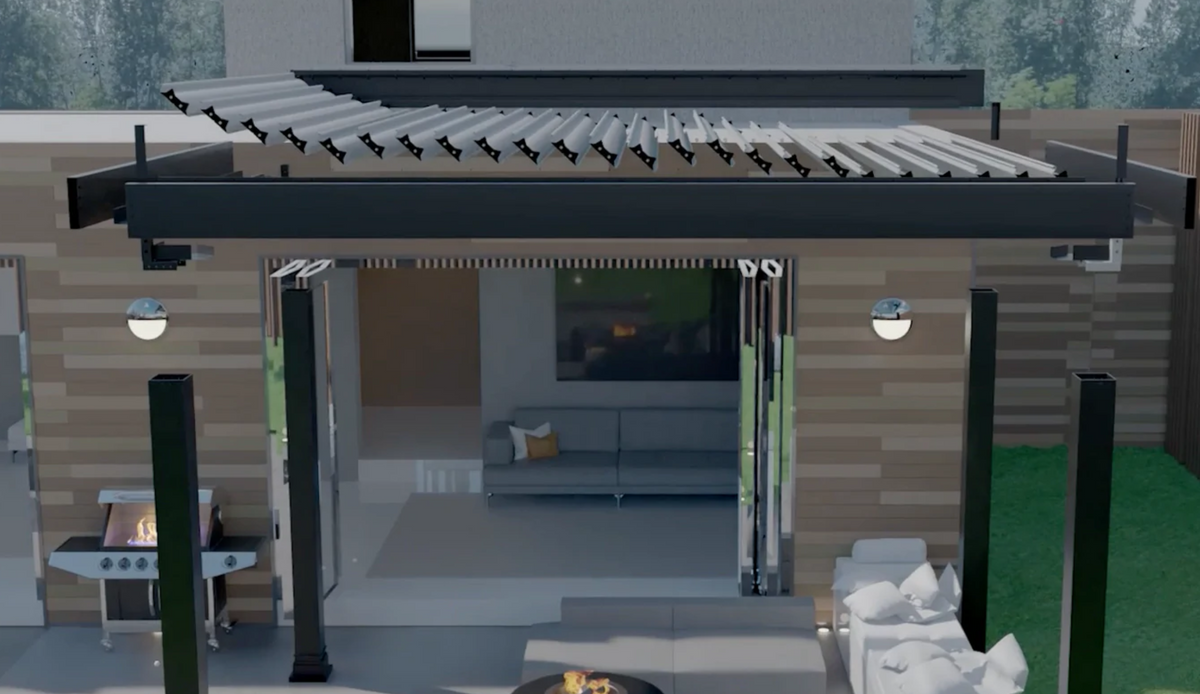
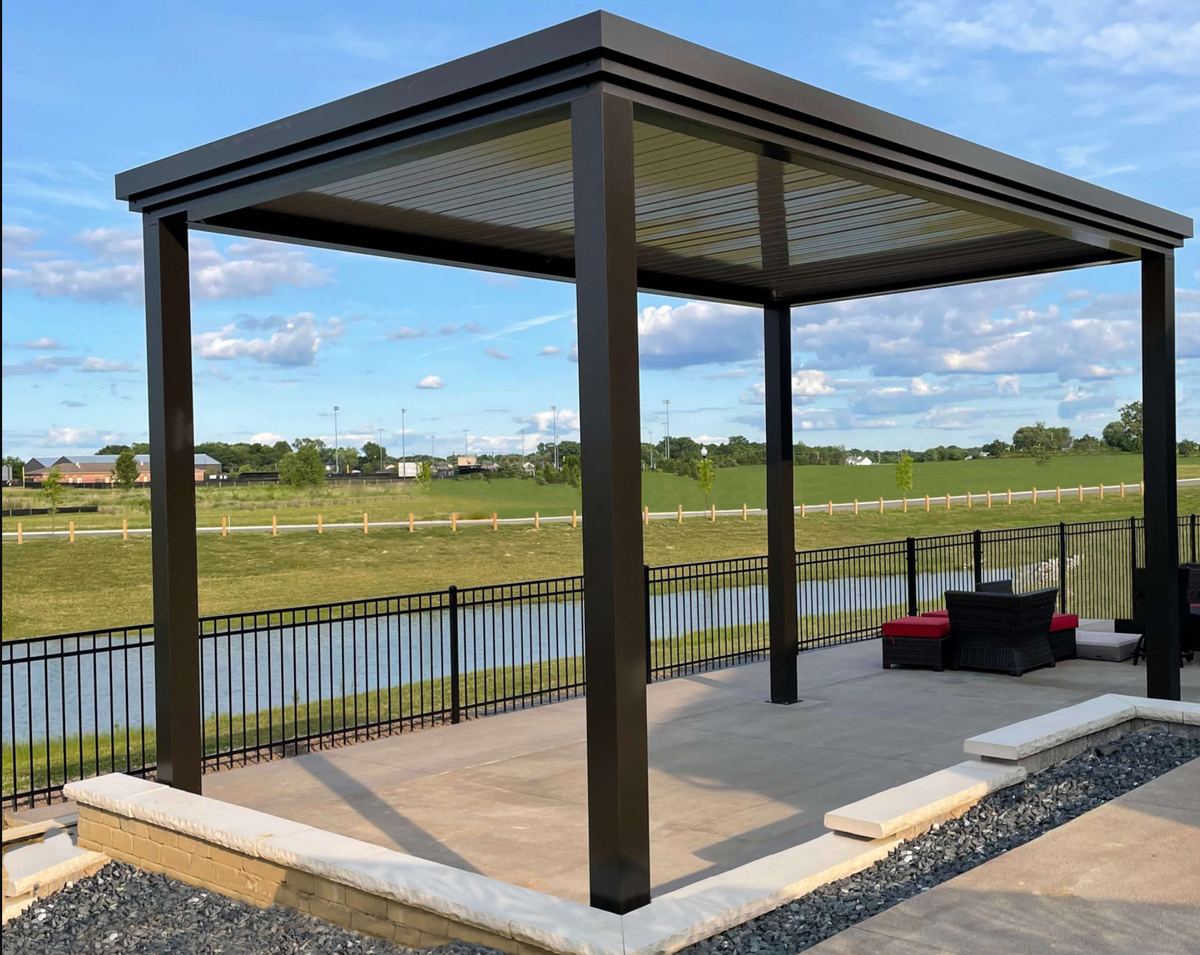
A louvered pergola is an outdoor shade structure built with a roof of adjustable slats (called louvers) instead of fixed panels or open rafters. The louvers are typically made from extruded aluminum and are mounted on a rotation axis inside a sturdy frame. They can be tilted anywhere from fully open to fully closed, usually across a range of about 130 degrees.
When the louvers are open, sunlight and air pass through freely, just like a traditional pergola. When closed, the louvers interlock to create a solid, waterproof roof that channels rain through an integrated gutter system built into the frame posts. Most modern louvered pergolas are motorized, meaning a small electric motor rotates the louvers at the press of a button or remote control.
Think of it this way: a regular pergola gives you partial shade. A solid patio cover gives you permanent shade. A louvered pergola lets you choose, on the fly, exactly how much sun, shade, or rain protection you want. That flexibility is the whole point.
The term "louvered pergola" is sometimes used interchangeably with "louvered roof system" or "adjustable pergola," but they all describe the same thing. Some people also call them "motorized pergolas" because of the automated louver control, though technically the motorization is a feature, not the structure type.
How Do Louvered Pergolas Work?
The mechanics behind a louvered pergola are straightforward but well-engineered. Here is what is happening inside that roof system:
The louver mechanism. Each louver blade is an extruded aluminum profile, hollow inside for strength-to-weight ratio, and mounted on a central pin or axle within the frame. A motorized drive system connects all the louvers through a linkage bar so they rotate in unison. When you press the remote, a small motor (usually 24V DC) turns the linkage, and every louver tilts to the same angle simultaneously.
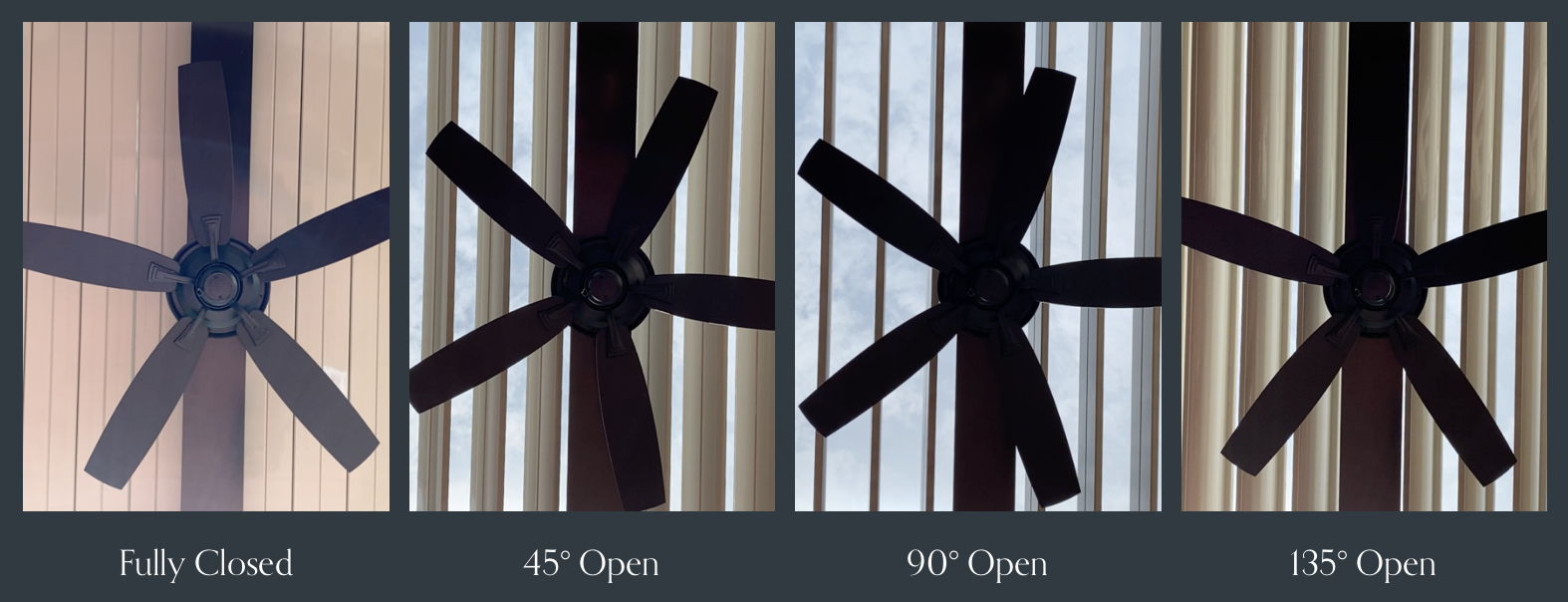
The rotation range. Most quality louvered pergolas rotate up to 130 degrees. At 0 degrees, the louvers sit flat and closed, forming a solid roof. At full rotation, they are nearly vertical, allowing maximum light and air. You can stop them at any angle in between for partial shade. On a motorized pergola, this is all controlled by a wireless remote or a wall-mounted switch.
Rain and water management. When closed, the louver blades overlap or interlock to create a watertight seal. Rainwater runs down the slight pitch of the roof into the integrated gutter channels built along the frame beams. From there, it flows down through the hollow posts and exits at the base. In a well-designed system, the drainage is completely hidden inside the structure. You do not see gutters, downspouts, or exposed plumbing. The water just disappears through the posts.
The frame. Everything sits on a structural aluminum frame consisting of posts (typically 6"x6" or larger), main beams, and crossbeams. The frame carries the weight of the louvers and handles wind uplift and snow load forces. A commercial-grade louvered pergola frame is engineered to specific structural standards, which is why the weight varies so dramatically between brands (more on that below).
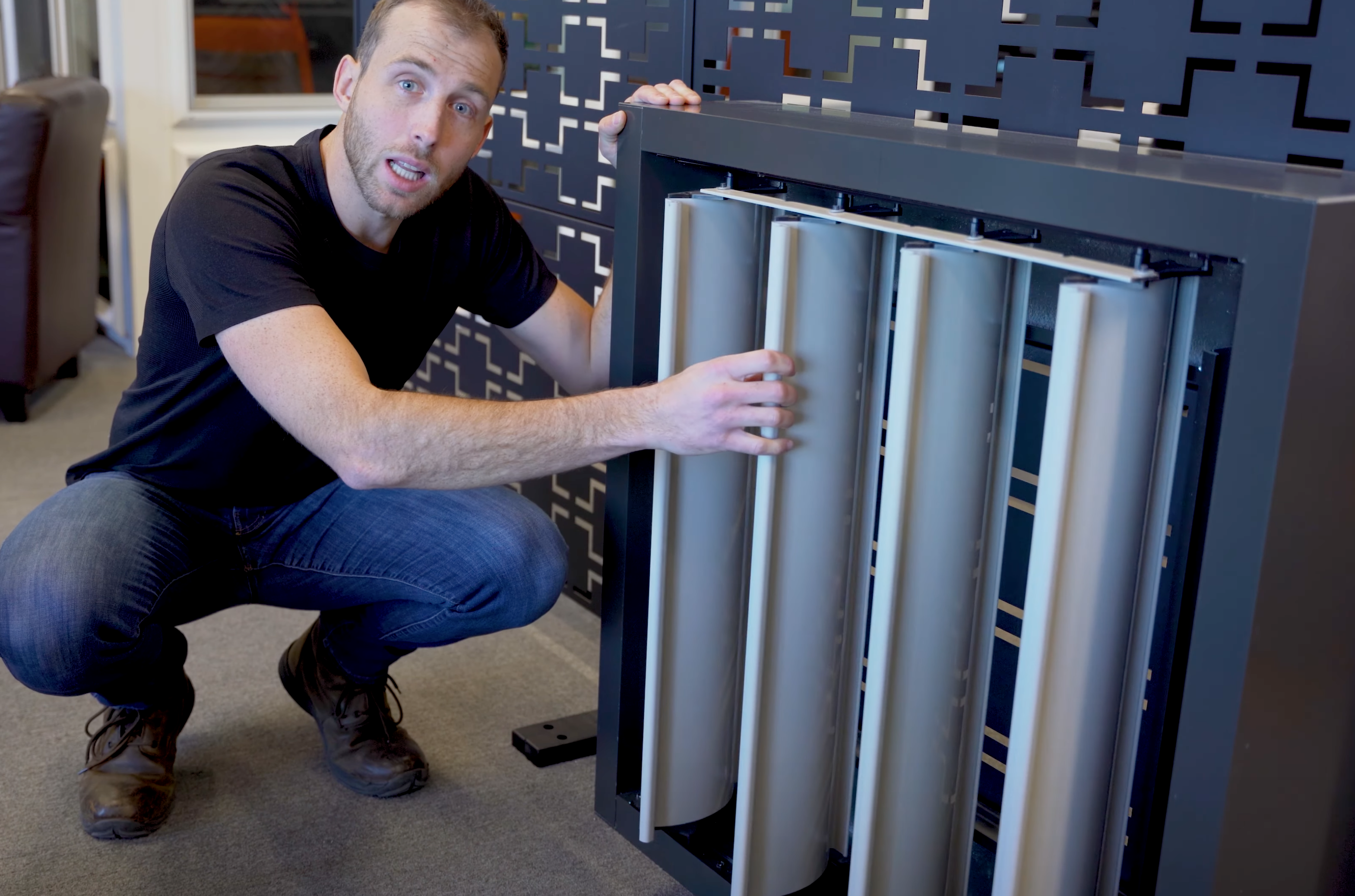
Power and controls. The motor runs on low-voltage power (24V), so installation is safe and does not require a licensed electrician in most jurisdictions. You just need a standard 110V outlet nearby. The control system usually includes a wireless remote, and many units offer optional rain sensors that automatically close the louvers when water is detected. Some higher-end systems include wind sensors, smartphone app control, or integration with smart home systems.
Accessories. Because the frame is structural aluminum, it supports add-ons like integrated LED lighting strips, ceiling fans (mounted to accessory beams), curtain or screen tracks, and outdoor heaters. A good louvered pergola becomes the framework for a full outdoor room.
Louvered Pergola Materials Compared
The material your louvered pergola is made from determines everything: how long it lasts, how it handles weather, how it looks in 10 years, and how much maintenance you are signing up for. Here is the honest comparison.
| Feature | Aluminum (Extruded) | Wood (Cedar/Redwood) | Vinyl/Composite |
|---|---|---|---|
| Durability | Will not rot, rust, or warp. Lifetime material. | Rots over time, even with treatment. 10-20 year lifespan typical. | Resistant to rot but can crack, fade, and warp in extreme heat. |
| Maintenance | Hose it off once or twice a year. That is it. | Annual staining, sealing, and inspection for rot and insect damage. | Low maintenance but limited repairability. Cannot be refinished. |
| Structural Strength | Highest strength-to-weight. Handles wind and snow loads other materials cannot. | Strong initially, but degrades. Joints weaken as wood ages and expands/contracts. | Weakest structural option. Not suitable for heavy loads or high winds. |
| Adjustable Louvers | Yes. Extruded profiles are precision-made for smooth rotation. | Possible but rare. Wood swells and warps, causing louvers to stick. | Not common. Material is too flexible for reliable louver mechanisms. |
| Color/Finish | Powder coated in any color. Premium coatings resist fading for decades. | Beautiful natural grain but grays and fades without constant maintenance. | Factory color only. Cannot be repainted. Fades over time. |
| Waterproof When Closed | Yes, with integrated gutter drainage through posts. | No. Wood louvers do not seal watertight. | Limited. Vinyl does not achieve the same seal tolerances. |
| Best For | Anyone who wants a permanent, low-maintenance, high-performance structure. | Traditional aesthetic where you are willing to maintain it. | Budget projects where structural demands are low. |
The bottom line on materials: Nearly every serious louvered pergola on the market today is made from extruded aluminum, and for good reason. It is the only material that gives you the precision tolerances needed for smooth louver rotation, the structural strength to handle real weather, and the corrosion resistance to last decades without maintenance. Wood pergolas are beautiful but they are not built for adjustable louver systems. If you want a louvered pergola that actually works long-term, aluminum is the answer. For a deeper look, see our guide to the best aluminum pergola options.
How Much Does a Louvered Pergola Cost?
This is the question everyone asks first. The honest answer: it depends on what you are buying. A louvered pergola can cost anywhere from $3,000 to $25,000+ for the structure itself, and $40,000 to $70,000+ if you go the fully-installed route through a dealer. Here is a breakdown of what each price tier actually gets you.
| Price Tier | Typical Cost | What You Get | What You Give Up |
|---|---|---|---|
| Budget Imported Kits | $3,000 - $6,000 | Basic louvered roof, lightweight frame (250-450 lbs), standard powder coat, limited sizes. | Wind/snow performance, longevity, warranty coverage, build quality. |
| Mid-Range DTC Kits | $7,000 - $15,000 | Heavier construction, better motor, improved powder coat, more sizes and colors. | Varies widely. Check weight, wind rating, and warranty closely. |
| Commercial-Grade DTC Kits | $10,000 - $25,000 | Heavy-duty frame (1,000-1,800+ lbs), up to 200+ mph wind rating, up to 65 psf snow load, lifetime warranty, USA-made. | You handle installation (or hire a local contractor). |
| Dealer-Installed Systems | $40,000 - $70,000+ | Professional installation, permitting assistance, sometimes comparable specs to commercial-grade kits. | $20,000 - $40,000 in dealer/installer markup for often the same (or lower) quality materials. |
Why the price spread is so wide. The biggest factor is the sales channel. A dealer-installed louvered pergola from brands like StruXure or Azenco routes through a manufacturer, then a dealer, then an installer. Each layer takes a margin. By the time the product reaches your backyard, the price has doubled or tripled relative to the raw material and manufacturing cost. Factory-direct brands skip those layers and pass the savings on. For a direct comparison, detailed StruXure alternative comparison.
The second factor is build quality. A $3,500 imported louvered pergola might weigh 280 pounds. A commercial-grade aluminum louvered pergola at $15,000 might weigh 1,800 pounds for the same footprint. That weight difference is not cosmetic. It is the difference between a structure that wobbles in a 40 mph gust and one rated for hurricane-force winds. For a detailed cost breakdown, read our full guide on louvered pergola cost.

Louvered Pergola vs Fixed Roof vs Retractable Canopy
A louvered pergola is not the only option for covering your patio. Here is how it stacks up against the two other most common alternatives so you can see where each one makes sense and where it falls short.
| Feature | Louvered Pergola | Fixed Solid Roof | Retractable Canopy |
|---|---|---|---|
| Light Control | Full control. Open, closed, or anywhere in between. | None. Permanent shade. | Two options: open or closed. No partial shading. |
| Rain Protection | Waterproof when closed, with integrated drainage. | Waterproof (always). | Water-resistant when extended, but fabric sags and pools. |
| Airflow | Adjustable. Tilt louvers to direct breeze while maintaining shade. | Blocked. Solid roof traps heat underneath. | Open or closed only. No directional control. |
| Wind Resistance | Up to 200+ mph (commercial-grade aluminum). | Depends on construction. Typically strong. | Must retract in high winds. Fabric tears in storms. |
| Lifespan | 20-50+ years (aluminum). Lifetime warranty available. | 20-50 years depending on material. | 5-10 years for fabric. Mechanical parts wear out. |
| Aesthetics | Modern, clean lines. Flat ceiling design available. | Can look heavy or dated depending on style. | Casual. Fabric sags over time and fades in UV. |
| Cost | $7,000 - $25,000+ (DTC kit). | $5,000 - $30,000+ (built in place). | $1,500 - $8,000. |
When a louvered pergola wins: If you want the flexibility to enjoy your patio in any weather, with precise control over sun, shade, and rain, a louvered pergola is the clear choice. You get the best of both worlds: an open-air feel when conditions are nice, and a solid waterproof roof when they are not. Fixed roofs cannot give you that. Retractable canopies cannot either, and they wear out in a fraction of the time.
When a fixed roof makes sense: If you never want sunlight on your patio and you live in an area with mild weather and no desire for an open-air experience, a solid cover works fine. But most homeowners who spend $10K+ on outdoor living want options, not a permanent dark ceiling.
Best Louvered Pergola Brands
There are dozens of companies selling louvered pergolas right now. Most are relabeled Chinese imports. A handful are serious manufacturers. Here is how the major brands compare on the specs that actually matter.
| Brand | Manufacturing | Weight (10x13) | Wind Rating | Snow Load | Warranty | Approx. Price |
|---|---|---|---|---|---|---|
| The Luxury Pergola | Indiana, USA | ~1,800 lbs | Up to 200+ mph (closed) | Up to 65 psf | Lifetime | $10K - $25K (DTC kit) |
| StruXure | USA | ~800-1,200 lbs | Up to 130 mph | Up to 30 psf | 10 years | $40K - $70K (installed) |
| Mirador (Costco) | China | ~250-400 lbs | Up to 72 mph | Up to 8 psf | 5 years | $3K - $6K |
| Azenco | France/USA assembly | ~900-1,100 lbs | Up to 135 mph | Up to 35 psf | 10 years | $35K - $65K (installed) |
| BON Pergola | China/Imported | ~400-600 lbs | Up to 100 mph | Up to 15 psf | 5-10 years | $5K - $12K (DTC kit) |
| Purple Leaf | China | ~250-450 lbs | Up to 80 mph | Up to 10 psf | 5 years | $3K - $7K |
Here is the takeaway. StruXure and Azenco make solid products. Nobody disputes that. But you are paying $40K-$70K for a structure that weighs less, carries lower wind and snow ratings, and comes with a shorter warranty than what you can get from a factory-direct brand for $10K-$25K. The markup is the dealer and installer margin, not better materials.
Mirador, Purple Leaf, and similar budget imports have their place if your climate is mild and you just want casual shade. But if you live anywhere with real weather (wind, snow, heavy rain, storms), a 250-pound pergola is not going to cut it. We have seen pictures from customers who bought those units and watched them twist in a thunderstorm. You get what you pay for.
The Luxury Pergola hits the middle ground that most homeowners actually want: commercial-grade engineering and a lifetime warranty at a factory-direct price that cuts out the dealer markup. We are not the cheapest, and we are not the most expensive. We are the best value per pound of aluminum in the market.

Louvered Pergola Sizes and Configurations
Louvered pergolas come in a range of standard sizes, and most manufacturers also offer custom dimensions. Here is what you need to know when choosing the right size for your space.
Standard sizes. The most common louvered pergola sizes are 10'x10', 10'x13', 10'x16', and 10'x20'. These cover the typical patio, deck, or outdoor living area. A 10'x13' unit is the most popular choice because it provides enough room for a full dining set or lounge area without overwhelming a standard backyard.
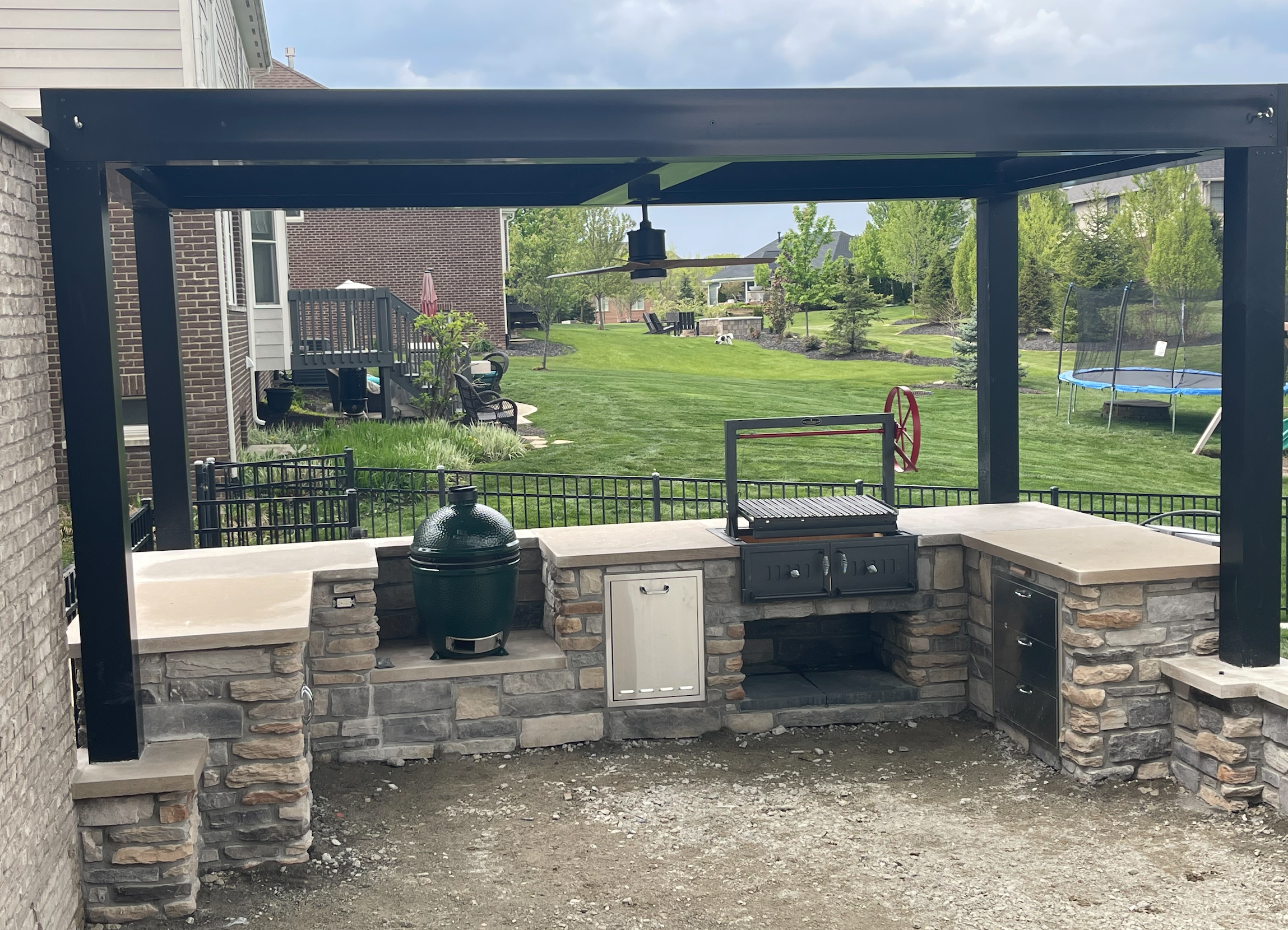
Extended and custom sizes. Need to cover a larger area? Most quality brands offer extended-width options and the ability to connect multiple units (sometimes called "super pergolas") side by side or end to end. This lets you cover an outdoor kitchen, a pool deck, or a long patio run with a continuous louvered roof system. Custom sizes are available for non-standard spaces, though they typically add lead time and cost.
Freestanding vs wall-mounted. A freestanding louvered pergola sits on four (or more) posts and stands independently on your patio, deck, or concrete pad. A wall-mounted (attached) configuration uses two posts and mounts the back beam directly to your home's wall or fascia. Freestanding is more versatile and does not require structural modifications to your home. Wall-mounted saves space and can look more integrated, but you need to make sure your wall can support the load.
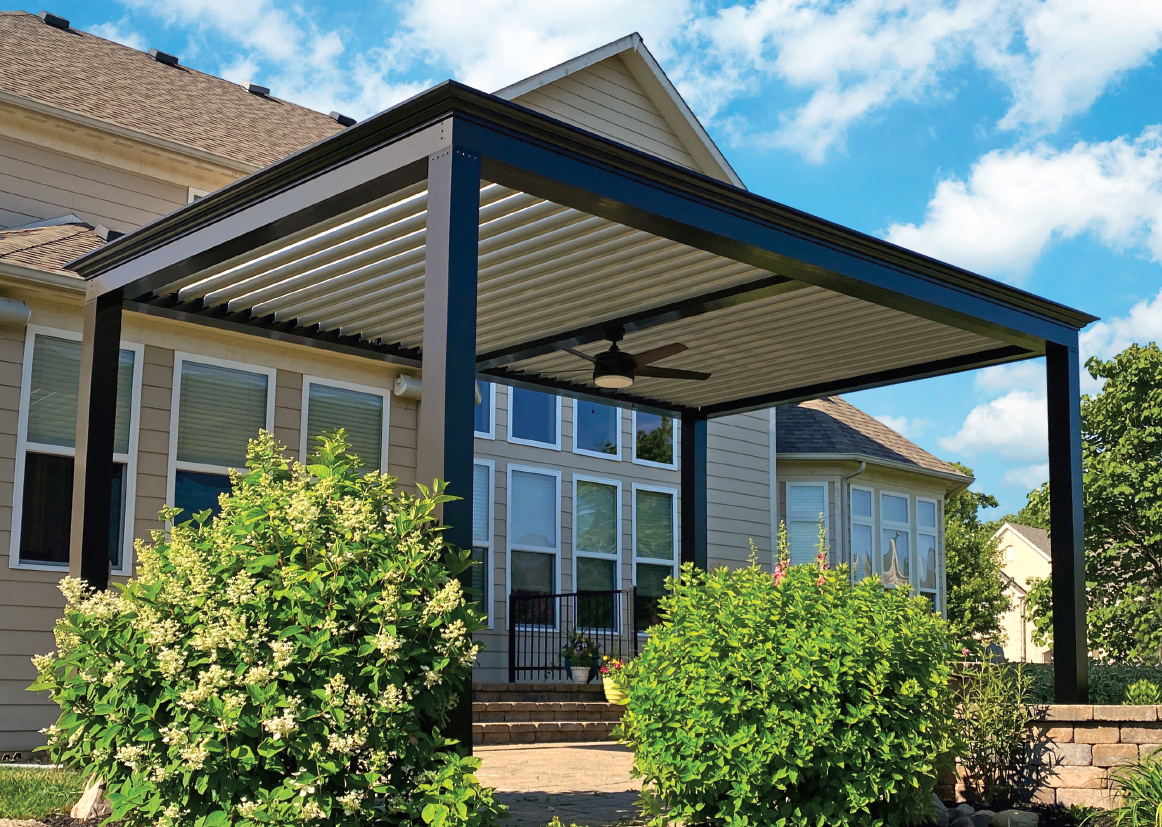
Height considerations. Most louvered pergolas stand between 8' and 10' at the roofline. You want enough clearance for ceiling fans, lights, and tall guests, but not so much height that the structure feels disconnected from the space. An 8'6" to 9' interior clearance is the sweet spot for most residential installations.
How to choose the right size. Measure your patio or deck area and think about what will go underneath. A dining table for six needs roughly 10'x10' minimum. An outdoor living room with sectional seating benefits from 10'x16' or larger. If you have an outdoor kitchen, measure the full footprint including counter space, grill, and traffic flow. Then add 1-2 feet on each side so you are not cramped at the edges. To find the right configuration for your space, try our pergola configurator where you can build your custom setup.
Installation: DIY Kit vs Professional Install
One of the biggest decisions when buying a louvered pergola is whether to install it yourself or hire a professional. Both paths work. Here is what each one involves.
DIY installation. A well-designed louvered pergola kit ships to your door with everything you need: pre-cut and pre-drilled aluminum components, all hardware, the motor and control system, and step-by-step instructions. Most kits are designed so two to three people can assemble the structure in a single day using basic tools (socket wrench, drill, level, ladder).
The process typically goes like this: set and level the posts, attach the main beams, install the crossbeams, mount the louver panels, connect the motor and wiring, and test the system. The heaviest individual components are usually the main beams, which might weigh 80-120 pounds each. That is manageable for two people.
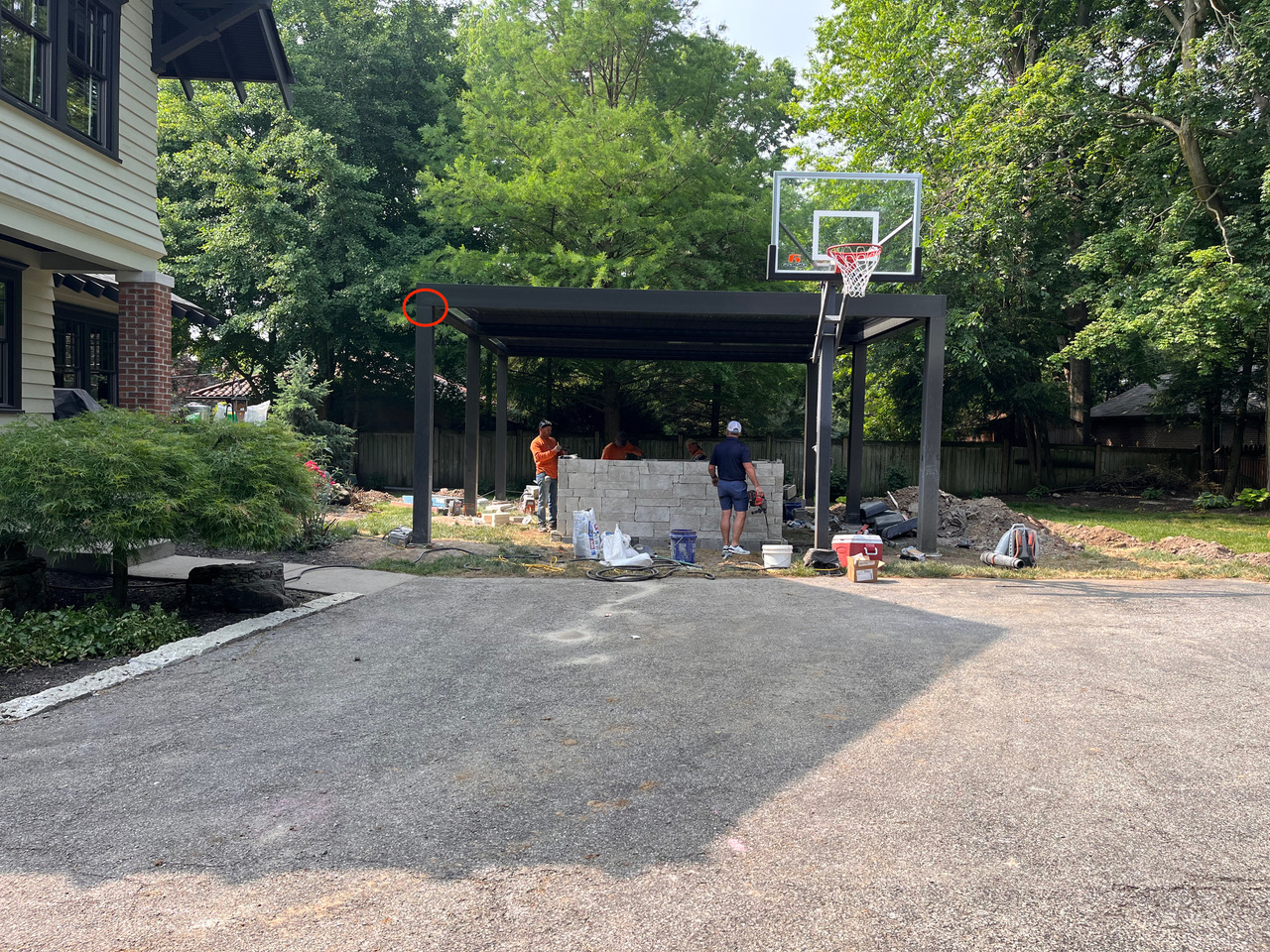
What about the foundation? Your louvered pergola needs to be anchored to a solid surface: a concrete patio, a reinforced deck, concrete footings, or pavers over a compacted base. Most kits include mounting plates that bolt down to concrete. If you are mounting on a wood deck, you will want to make sure the deck framing can handle the load (for a 1,800-pound pergola, that means proper blocking under the post locations).
Professional installation. If you do not want to handle the install yourself, you have two options. First, you can hire a local contractor, handyman, or deck builder. The pergola arrives as a kit with instructions, and they assemble it just like you would. Expect to pay $1,500 to $4,000 for labor depending on your area and the size of the unit. Second, some brands (including The Luxury Pergola) are building national certified installer networks where trained professionals handle the full install.
Which is right for you? If you are handy and have a couple of friends who can help for a day, the DIY route saves thousands and most customers say it was easier than they expected. If you are not the hands-on type, hiring a pro is perfectly fine. The key advantage of buying a factory-direct louvered pergola kit is that you have the choice. With dealer-installed brands like StruXure, professional installation is not optional. It is mandatory, and it is priced accordingly.
Permits. Depending on your city and county, you may need a building permit for a pergola. This varies widely. Some jurisdictions require permits for any structure over a certain size. Others exempt open-air structures. Check with your local building department before you start. Most louvered pergola manufacturers can provide engineering documents and drawings to help with the permit process.
Wind Rating, Snow Load, and Durability
These are the numbers that separate a serious louvered pergola from a decorative one. If you live somewhere with real weather, these specs matter more than anything else.
Wind rating. This measures how much wind force the structure can handle without failure. Budget louvered pergolas typically rate at 72-100 mph. Mid-range units hit 120-135 mph. Commercial-grade units can reach up to 200+ mph with louvers closed. For context, a Category 3 hurricane has sustained winds of 111-129 mph. If your louvered pergola cannot handle that, you are gambling every storm season.
Important note: wind ratings change depending on the size and configuration. A 10'x10' unit will generally have a higher wind rating than a 10'x20' unit from the same brand because of the wider span. Always ask for the specific rating for the specific size you are considering. When we say "up to 200+ mph," that is the rating for our strongest configuration. Your specific size may differ.
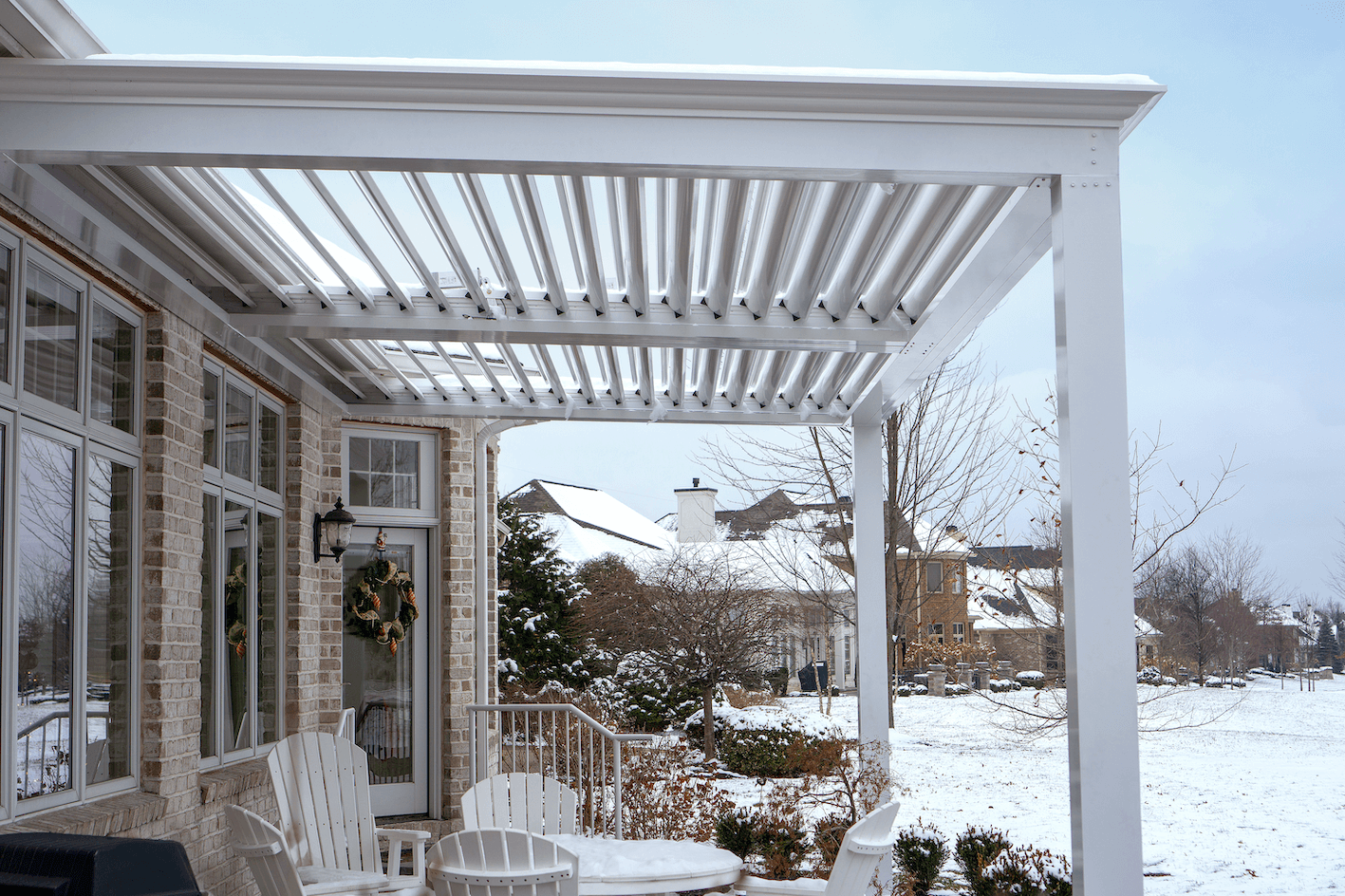
Snow load. Measured in pounds per square foot (psf), this tells you how much weight from snow the roof can support. Budget units handle up to 8-15 psf, which is about 4-7 inches of fresh snow. A commercial-grade louvered pergola rated at up to 65 psf can hold roughly 2.5-3 feet of fresh snow, or the equivalent weight of packed, wet snow. If you live in the Midwest, Northeast, or mountain states, do not buy a louvered pergola that cannot handle your local snow loads. A good rule of thumb: check your local building code for ground snow load requirements and make sure your pergola meets or exceeds them.
What makes the difference? Weight. The physics are straightforward. A heavier, more robustly built structure resists wind and snow better than a lightweight one. When we say our 10'x13' louvered pergola weighs approximately 1,800 pounds versus a competitor at 250-400 pounds, that weight is not excess material. It is thicker-walled aluminum extrusions, larger structural profiles, heavier-gauge louver blades, and beefier connections at every joint. That is what gives you those ratings.
Powder coating and corrosion resistance. The other durability factor is the finish. Standard powder coating will fade and chalk within 5-10 years, especially in high-UV regions like Florida, Texas, Arizona, and California. Premium coating processes (like our proprietary ElectroLayer finish) are designed to resist fading, chalking, and corrosion for decades. If you are spending $10,000+ on a louvered pergola, ask about the coating process. A structure that looks great in year one but faded and chalky by year five is not a good investment. For more about weather performance, see our guide on the best pergola for high winds.
Warranty as a proxy for confidence. A 5-year warranty tells you the manufacturer expects the product to last about that long. A 10-year warranty is better but still limited. A lifetime warranty tells you the manufacturer has enough confidence in their materials and engineering to stand behind the product forever. Ask yourself: if the company that built it will not guarantee it for more than five years, why would you expect it to last longer?
Frequently Asked Questions About Louvered Pergolas
What is a louvered pergola?
A louvered pergola is an outdoor shade structure with adjustable aluminum roof slats (louvers) that rotate to control sunlight, shade, airflow, and rain protection. The louvers are typically motorized and controlled by a wireless remote. When open, they let sunlight and air through. When closed, they form a solid, waterproof roof. It gives you full control over your outdoor environment instead of being stuck with permanent shade or permanent sun.
How much does a louvered pergola cost?
Louvered pergola prices range from about $3,000 for a budget imported kit to $25,000+ for a commercial-grade, USA-made unit. Dealer-installed systems from brands like StruXure and Azenco typically run $40,000 to $70,000+. The biggest price variable is the sales channel: factory-direct brands cut out dealer and installer markups, which can save you $20,000-$40,000 on a comparable product. The second variable is build quality, which directly correlates with weight, wind/snow ratings, and warranty length.
Are louvered pergolas waterproof?
Yes, when the louvers are closed, a well-built louvered pergola is waterproof. The louver blades overlap or interlock to form a continuous seal, and rainwater channels through an integrated gutter system hidden inside the frame and posts. The water drains down through the hollow posts and exits at the base, so you do not see any exposed gutters or downspouts. Note that the waterproof seal applies when the louvers are fully closed. When partially open or fully open, rain will pass through.
Can you install a louvered pergola yourself?
Yes. A louvered pergola kit is designed for DIY installation by two to three people in about one day. The components arrive pre-cut and pre-drilled with all hardware included. You need basic tools (socket wrench, drill, level, ladder) and a solid mounting surface like a concrete patio or reinforced deck. The heaviest individual pieces are typically the main beams at 80-120 pounds each. If you are comfortable assembling large furniture or have basic construction experience, most homeowners handle it without issues. Phone and video support from the manufacturer helps with any questions during the install.
How long do louvered pergolas last?
An aluminum louvered pergola from a quality manufacturer will last 25 to 50+ years. Aluminum does not rot, rust, or degrade from UV exposure. The motor and electronics are the components most likely to need replacement over time, and those are typically replaceable units. Budget imported pergolas with thinner aluminum and standard coatings tend to last 5-15 years before showing significant wear. The warranty is a good indicator: a lifetime warranty means the manufacturer expects the structure to outlast your home ownership.
What is the best material for a louvered pergola?
Extruded aluminum is the best material for a louvered pergola by a wide margin. It provides the precision tolerances needed for smooth louver rotation, the structural strength for high wind and snow loads, complete corrosion resistance, and virtually zero maintenance. Wood pergolas cannot support reliable adjustable louver mechanisms because wood swells, warps, and shifts with moisture and temperature changes. Vinyl and composite materials lack the structural rigidity for larger spans and heavy weather loads.
Do louvered pergolas add home value?
Yes. A permanent, high-quality outdoor structure adds to your home's usable living space and curb appeal. Real estate agents consistently report that finished outdoor living areas are among the top features buyers look for. A commercial-grade louvered pergola with a lifetime warranty is a permanent improvement, not a temporary addition. While exact ROI varies by market, outdoor living improvements typically return 50-80% of their cost at resale, and a louvered pergola makes your backyard usable year-round, which is a strong selling point.
How do motorized louvers work?
Motorized louvers use a small electric motor (typically 24V DC) connected to all the louver blades through a linkage bar. When you press the remote control, the motor rotates the linkage, and all louvers tilt simultaneously to the same angle. The system runs on low voltage, so it plugs into a standard household outlet and does not require an electrician. Most systems include a wireless remote, and options like rain sensors (auto-close when it rains), wind sensors, and smart home integration are available depending on the brand and model.
What sizes do louvered pergolas come in?
Standard louvered pergola sizes include 10'x10', 10'x13', 10'x16', and 10'x20'. Many manufacturers also offer custom dimensions and extended-width options for larger spaces. For very large areas like pool decks or commercial patios, multiple units can be connected side by side to create continuous coverage. The most popular residential size is 10'x13', which comfortably covers a dining area or lounge setup.
Are louvered pergolas worth the money?
If you value your outdoor space and want to use it regardless of weather, yes. A louvered pergola turns a patio that sits empty half the year into a space you can use 365 days. For homeowners comparing a $3,000 patio umbrella that blows away to a $15,000 louvered pergola that lasts a lifetime, the per-year cost of ownership strongly favors the pergola. And compared to the $40,000-$70,000 price tag of dealer-installed systems, factory-direct louvered pergola kits offer the same (or better) quality at roughly half the cost.
Ready to Build Your Louvered Pergola?
Use our online configurator to pick your size, color, and accessories. Get an instant quote with free shipping. Every unit ships factory-direct from Indiana with a lifetime warranty.