


Not all pergola roofs are created equal. Some keep you dry for 25 years. Others yellow, sag, or blow off in a storm. This guide breaks down four pergola roof types, what each one costs, and which ones actually hold up in real weather.

Table of Contents
- 1. Can a Pergola Have a Roof?
- 2. Louvered Roof Pergolas
- 3. Solid Roof Pergolas
- 4. Polycarbonate Roof Pergolas
- 5. Retractable Fabric Roof Pergolas
- 6. Pergola Roof Cost Comparison
- 7. Pergola With Roof vs. Pavilion vs. Gazebo
- 8. Which Pergola Roof Is Best for Rain? Snow? Wind?
- 9. How to Choose the Right Roofed Pergola
- 10. Frequently Asked Questions
Can a Pergola Have a Roof?
Yes. A pergola can definitely have a roof and for most pergola owners purchasing a new pergola in 2026, there is an expectation of a roof.
The pergolas of yesteryear were open-beam constructions. They were pretty and all, but they didn’t provide any shelter from the rain, sun, or even snow. You were basically sitting underneath a handful of ornamented lumber. If it rained, you went indoors.
That’s all changed with today’s pergolas. A covered pergola now means you can still have the openness of a pergola and now enjoy true weather protection all year long. From fixed solid panels to adjustable louvers that allow you to dial up or down the amount of sun and shade you desire, the roof options are endless.
So why do more homeowners opt for a covered pergola instead of an open one? Here’s why:
- Rain protection - a roofed pergola keeps your outdoor furniture, grill, and guests dry
- UV control - block direct sun during peak hours instead of hiding under an umbrella
- Extended use - a pergola with a roof turns a 3-season patio into a 4-season outdoor room
- Property value - covered outdoor structures consistently add more resale value than open ones
- Furniture protection - outdoor furniture lasts significantly longer under a covered structure
The question shouldn’t be if you need a roof on your pergola. It is rather, what type of roof is best for your weather conditions, your budget and your intended use of your outdoor space.
Below, you will find the four primary types of pergola roofs, their prices, and the weather ratings you need to know before you buy.
Louvered Roof Pergolas
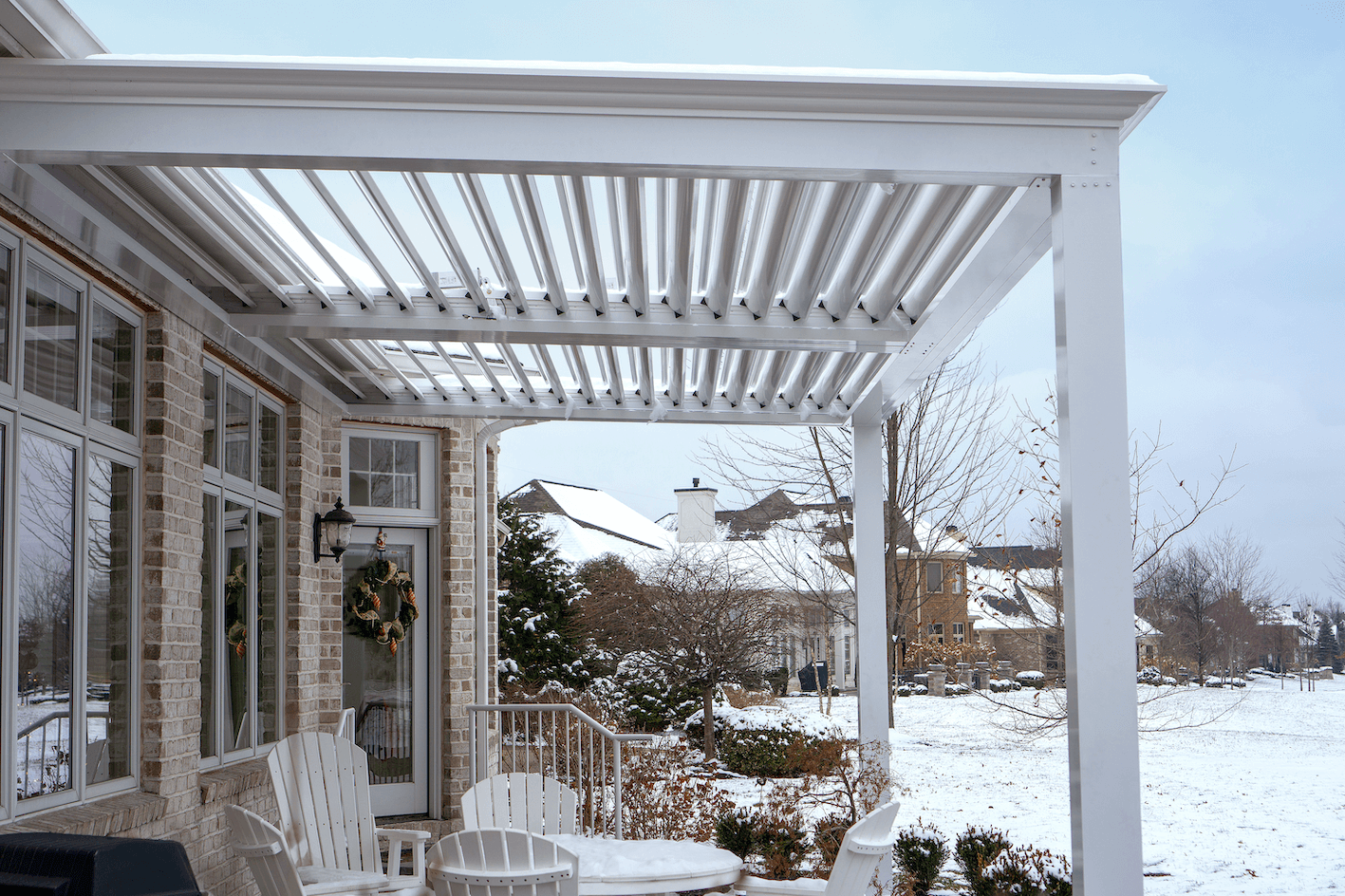
A louvered roof pergola is a pergola with a moving roof made of adjustable slats (louvers) that pivot around a central hinge to provide adjustable sun, shade, and rain relief at the touch of a button. Picture horizontal blinds made from heavy-duty commercial aluminum that can stand up to the elements.
How a Louvered Roof Works
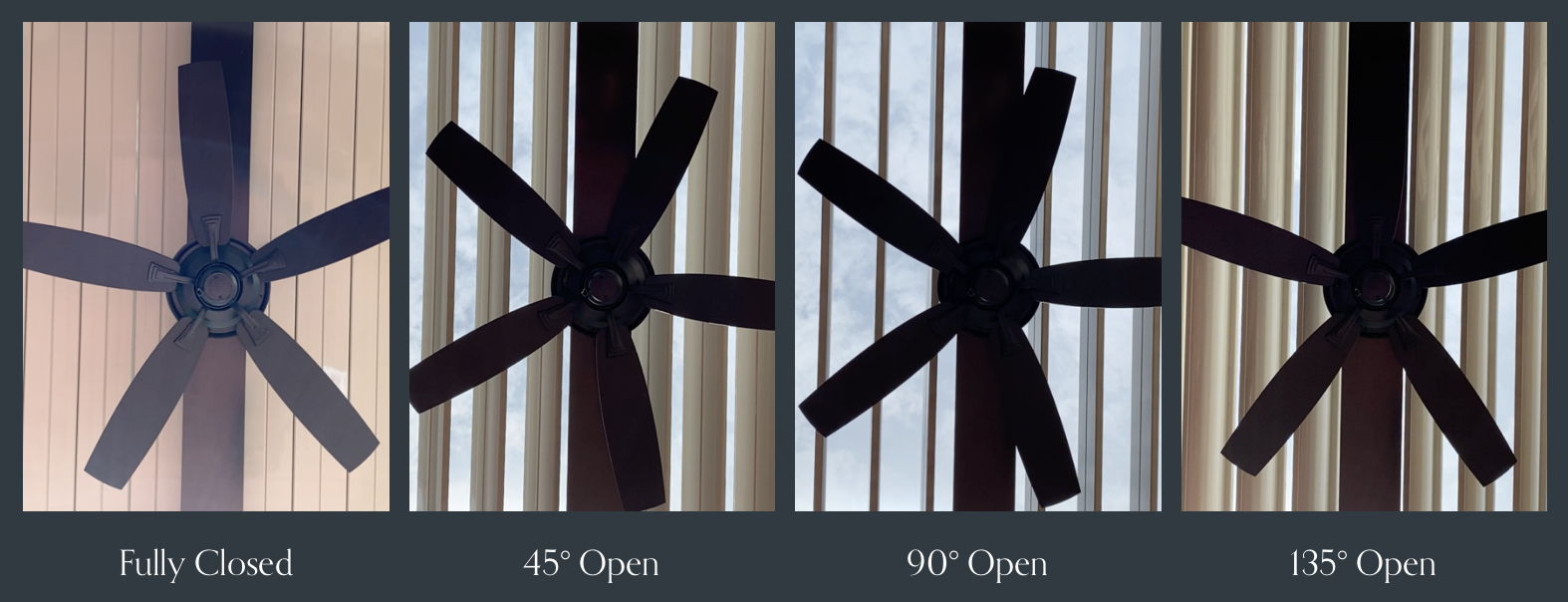
Motorized louvers rotate via remote control. When you close them, you have a solid, waterproof roof that channels rain through an integrated gutter system and down through the support posts. When you open them, sunlight and breeze pass through freely. Most louvered systems rotate between 0 degrees (fully closed) and 130-135 degrees (fully open and slightly inverted), giving you precise control at any angle in between.
This makes a louvered pergola the only roof type that does both things well: full weather protection when you need it, and a wide-open sky when you want it.

Flat-Bottom vs. Curved Louver Design
Not all louvered pergolas are built the same. Most competitors use curved, scoop-shaped louvers. These work, but they create a wavy ceiling profile that looks less finished from underneath.
The Luxury Pergola uses a flat-bottom louver design. When the louvers are closed, you see a smooth, flat ceiling from below, similar to a high-end interior ceiling. The difference is immediately visible and it matters if your pergola is the centerpiece of an outdoor living room, kitchen, or entertaining space. You can read more in our louvered vs fixed roof comparison.
Integrated Gutter System
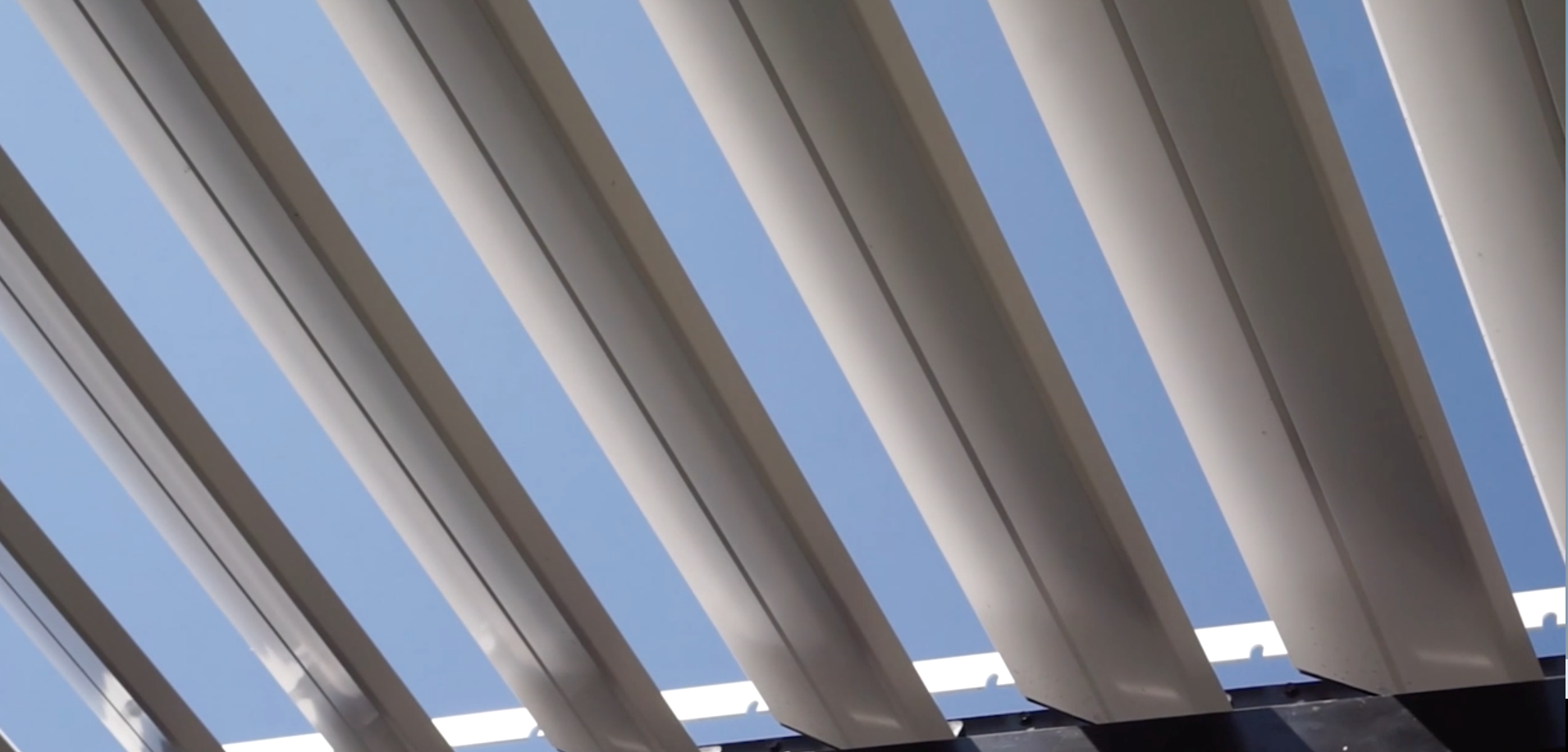
A well-engineered louvered pergola with a roof channels water from the louver surfaces into a hidden gutter track. That water then flows down through hollow aluminum posts, keeping the area underneath completely dry. No visible gutters, no dripping edges, no puddles under the frame.
This integrated drainage is one of the key features that separates a real louvered roof system from a simple pergola cover. For more details on how The Luxury Pergola's system handles heavy rain, see our louvered pergola guide.
Louvered Roof Pergola Specs
- Cost range: $8,000 to $25,000+ depending on size and configuration
- Rain protection: Full (when louvers are closed)
- Wind rating: Up to 200+ mph (The Luxury Pergola, louvers closed)
- Snow load: Up to 65 psf (The Luxury Pergola)
- Material: Commercial-grade aluminum frame, aluminum louvers, stainless steel hardware
- Maintenance: Very low. Hose down once or twice a year. No painting, staining, or rust treatment.
- Lifespan: 25+ years (The Luxury Pergola offers a lifetime warranty)
- Best for: Homeowners who want full versatility, all-weather protection, and a premium look
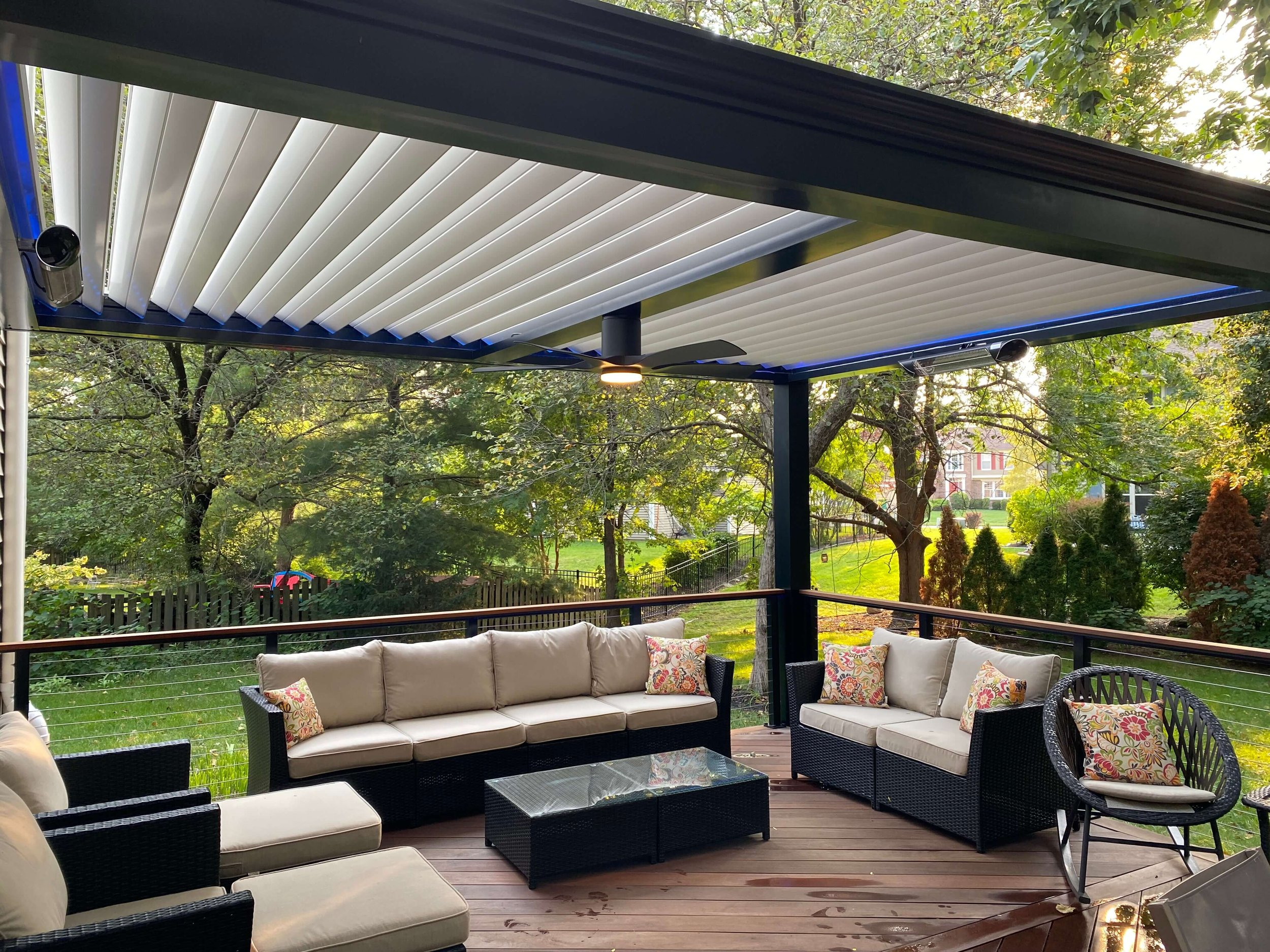
If you are comparing pergola roof options and your budget allows it, a louvered roof gives you the most functionality per dollar. No other roof type lets you switch between full sun and full coverage in seconds.
Solid Roof Pergolas
A solid roof pergola uses fixed, non-adjustable panels mounted on top of a pergola frame. The panels are typically aluminum, insulated aluminum, steel, or occasionally composite materials. Once installed, the roof is permanent. It blocks rain, sun, and snow at all times.
Who Should Consider a Solid Roof Pergola
Solid roofs make sense for specific use cases where you never want the roof open:
- Outdoor kitchens: If you have a built-in grill, smoker, or pizza oven, a permanently covered area protects your investment and lets you cook in any weather
- Carports: Vehicle coverage needs to be constant and reliable
- Rain-heavy climates: If it rains 150+ days per year, a solid roof is a practical choice (though a louvered roof does the same job and gives you the option of opening up on sunny days)
- Attached patio covers: When the structure attaches directly to the home, a fixed roof often integrates more naturally with the existing roofline
The Downsides
The downside of a solid roof pergola is that it's closed all the time. On a beautiful spring day when you want to get a little sunshine, you still have a fixed roof above you. There is no way to "open up" the roof without completely re-engineering it. You also lose any of the beauty of the pergola itself. At that point, you might as well have a patio cover.
Solid Roof Pergola Specs
- Cost range: $3,000 to $12,000
- Rain protection: Full (permanent)
- Wind rating: 90-130 mph (varies by brand and attachment method)
- Snow load: 20-40 psf (varies)
- Material: Aluminum, steel, or insulated panels
- Maintenance: Low. Occasional cleaning. May need repainting or sealing every 5-10 years depending on material.
- Lifespan: 15-25 years
- Best for: Outdoor kitchens, carports, areas where permanent shade is the only priority
Polycarbonate Roof Pergolas
Polycarbonate panels are translucent or semi-transparent sheets of plastic that attach on top of a pergola frame. They will keep out the rain but allow some natural light to penetrate through the panels, as if you have a skylight.
The Appeal of Polycarbonate
Perhaps the cheapest pergola roof option is polycarbonate. It’s a pretty cheap material, light and easy to install. If you want a bit of rain protection but don’t want to spend a lot, you can install a few polycarbonate panels.
It is true that you’ll receive some natural light with a polycarbonate roofed pergola, and this is where it has a huge advantage over the solid types. The light will be diffused and soft and it can be quite nice in the right context.
The Downsides
Polycarbonate does not hold up over time. After 3-5 years, the panels turn yellow, become brittle and cloudy as a result of UV degradation. Instead of having a "skylight" you have a dingy, yellow skylight that can only be restored with new panels.
Other drawbacks:
- Heat buildup: Polycarbonate traps heat underneath the structure, making the space uncomfortably warm in summer
- Noise: Rain hitting polycarbonate panels is loud, much louder than rain on aluminum louvers or solid metal panels
- Aesthetics: Polycarbonate reads as "budget" on a home. It does not have the premium look of aluminum or natural materials.
- Low wind resistance: Lightweight panels can flex, crack, or blow off in high winds
- No adjustability: Like a solid roof, polycarbonate is always "on." You cannot open it for sunshine.
Polycarbonate Roof Pergola Specs
- Cost range: $1,000 to $4,000
- Rain protection: Full (when new and properly sealed)
- Wind rating: 50-80 mph (varies widely by installation)
- Snow load: 10-20 psf (limited by panel rigidity)
- Material: Polycarbonate plastic sheets, typically 6mm-16mm thick
- Maintenance: Moderate. Requires cleaning to prevent algae/moss growth. Panels need replacement every 5-10 years as they degrade.
- Lifespan: 5-10 years before replacement needed
- Best for: Budget projects, temporary coverage, greenhouses, or spaces where natural light is the top priority
Retractable Fabric Roof Pergolas
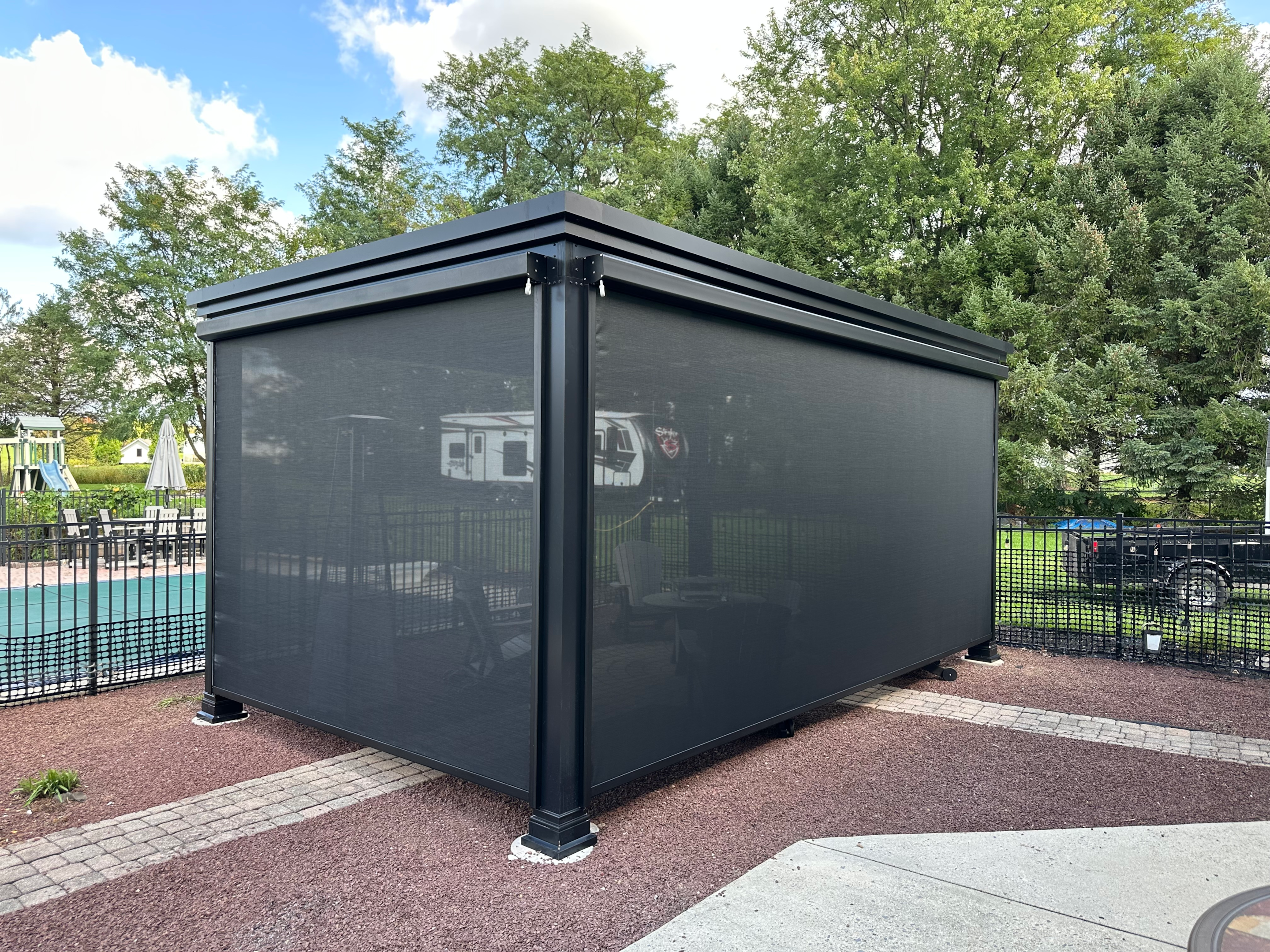
A fabric pergola roof has a motorized or hand-crank mechanism that moves a fabric canopy along tracks that are attached to the frame. When extended, the canopy offers shade. When retracted, the roof is wide open.
The Appeal of Retractable Fabric
Retractable fabric gives you some adjustability. You can extend it for shade and retract it for sun, which is more flexible than solid or polycarbonate options. The fabric options are wide-ranging, from basic canvas to Sunbrella-grade outdoor textiles in dozens of colors.
Fabric roof systems also add a softer, more casual aesthetic that works well for certain settings like beach houses, restaurant patios, or Mediterranean-style outdoor areas.
The Downsides
Fabric has serious limitations as a pergola roof material:
- Rain protection is limited: Most fabric canopies resist light rain but are not waterproof. Heavy rain pools on the fabric and eventually drips through or causes sagging.
- Wind vulnerability: Fabric canopies need to be retracted in winds above 25-35 mph. They are not designed to handle storms. If you forget to retract during a storm, the fabric can rip or the motor tracks can bend.
- Fabric degradation: Even high-quality outdoor fabric fades, mildews, and weakens with UV exposure. Expect to replace the fabric every 5-8 years.
- Snow is a problem: Fabric cannot support any meaningful snow load. It must be retracted before snowfall or it will sag and potentially damage the track system.
- Motor maintenance: The track-and-motor system requires periodic lubrication and adjustment, and the mechanical components can fail.
Retractable Fabric Roof Pergola Specs
- Cost range: $2,000 to $8,000
- Rain protection: Partial (light rain only, not waterproof in heavy rain)
- Wind rating: 25-35 mph (must retract above this)
- Snow load: 0 psf (must retract before snow)
- Material: Outdoor-grade fabric (canvas, acrylic, polyester, Sunbrella) on aluminum or steel tracks
- Maintenance: High. Fabric cleaning, mildew treatment, lubrication of tracks, fabric replacement every 5-8 years.
- Lifespan: 5-8 years for fabric, 10-15 years for the frame/track mechanism
- Best for: Sun-only climates with minimal rain, casual/restaurant settings, mild-weather regions
Pergola Roof Cost Comparison
Here is a side by side comparison of what each pergola roof costs and what you get for the money. For more detail on louvered system costs, see our full pergola cost breakdown.
| Roof Type | Cost Range | Rain Protection | Snow Load | Wind Rating | Maintenance | Lifespan |
|---|---|---|---|---|---|---|
| Louvered (Adjustable) | $8,000 - $25,000+ | Full (closed) | Up to 65 psf | Up to 200+ mph | Very Low | 25+ years |
| Solid (Fixed Panels) | $3,000 - $12,000 | Full (permanent) | 20 - 40 psf | 90 - 130 mph | Low | 15 - 25 years |
| Polycarbonate | $1,000 - $4,000 | Full (when new) | 10 - 20 psf | 50 - 80 mph | Moderate | 5 - 10 years |
| Retractable Fabric | $2,000 - $8,000 | Partial (light rain) | 0 psf | 25 - 35 mph | High | 5 - 8 years |
Cost per year of use is a different picture. $15,000 louvered roof that will last 25+ years is $600/year. $5,000 retractable fabric roof that will last 7 years is $714/year and will never keep you dry in the rain or block the wind. $2,500 polycarbonate roof that will last 7 years is $357/year and will look old-fashioned in 3-4 years.
The lowest initial cost may not be the lowest cost over the life of your house.

Pergola With Roof vs. Pavilion vs. Gazebo
If you are searching for "pergola with a roof," you may also be considering a pavilion or a gazebo. These three structures overlap in purpose but differ in design, flexibility, and cost. Here is how they compare. For an even more detailed breakdown, read our pergola vs gazebo guide.
| Feature | Pergola With Roof | Pavilion | Gazebo |
|---|---|---|---|
| Roof Type | Adjustable (louvered) or fixed | Fixed (solid shingles or metal) | Fixed (peaked, often ornamental) |
| Shape | Rectangular (most common) | Rectangular | Round, hexagonal, or octagonal |
| Sides | Open (screens optional) | Open | Open or partially enclosed |
| Sun Control | Full (louvered) or None (fixed) | None (always shaded) | None (always shaded) |
| Modern Aesthetic | Yes (especially aluminum) | Traditional or modern | Traditional (classic garden look) |
| Typical Cost | $8,000 - $25,000+ | $8,000 - $30,000+ | $3,000 - $15,000 |
| DIY Installation | Yes (1 day for kit-based systems) | Usually requires contractor | Yes (smaller models) / No (large) |
The main distinction: A pavilion offers fixed shade but not versatility. A gazebo has a unique design, but is usually smaller and not practical for entertaining crowds. A louvered pergola with a roof offers the best of both worlds: Full weather protection with the louvers closed, sunshine when you open the louvers, and a modern appearance to complement newer homes.

If you want a structure that functions like a pavilion in the rain and like an open pergola in the sunshine, a louvered system is the only option that delivers both.
Which Pergola Roof Is Best for Rain? Snow? Wind?
Weather performance is the number one reason people search for a pergola with a roof. Here is how each type stacks up across the three major weather categories.
Rain Performance
| Roof Type | Light Rain | Heavy Rain | Integrated Drainage |
|---|---|---|---|
| Louvered | Excellent | Excellent | Yes (through posts) |
| Solid | Excellent | Excellent | Varies (external gutters common) |
| Polycarbonate | Good | Good (if sealed properly) | No (edge runoff) |
| Retractable Fabric | Fair | Poor (pooling, dripping) | No |
So which one is best for rain? Well, that’s a tie between louvered and solid. The reason is a louvered roof uses an integrated gutter system. That means the rain comes down and it will run into the gutters and down through the posts. So, you’ll never see water coming over the edges of a louvered roof. Many solid roofs use gutters that attach to the fascia board. The water runs over the fascia and into a gutter. These gutters can clog up and overflow. A polycarbonate roof will work as well. The water just runs off of the roof and over the edges. The retractable fabric roofs should not be used for rain protection.

Snow Performance
| Roof Type | Snow Load Rating | Notes |
|---|---|---|
| Louvered (The Luxury Pergola) | Up to 65 psf | Handles heavy, wet snow. Open louvers to dump accumulated snow when needed. |
| Solid | 20 - 40 psf | Decent snow performance. Cannot shed snow on demand. |
| Polycarbonate | 10 - 20 psf | Light snow only. Heavy snow can crack or bow panels. |
| Retractable Fabric | 0 psf | Must be retracted. Any snow accumulation can damage fabric and tracks. |
The Luxury Pergola’s louvered system is load tested to 65 psf which is greater than 6x the closest competitor. That means approximately 3-4 feet of fresh snow can be on the roof without any risk of collapse. And because the louvers are adjustable, you can open them just enough to blow off the snow and then shut them back down. No need to get on a ladder with a roof rake.
Wind Performance
| Roof Type | Wind Rating | Notes |
|---|---|---|
| Louvered (The Luxury Pergola) | Up to 200+ mph (closed) | Hurricane-rated. 1,800 lb structure stays planted. |
| Solid | 90 - 130 mph | Good for most weather. Not hurricane-rated. |
| Polycarbonate | 50 - 80 mph | Panels can flex, crack, or detach in strong gusts. |
| Retractable Fabric | 25 - 35 mph | Must be retracted in any significant wind. |
This is an area where the wind rating is more important than many customers realize when purchasing a pergola roof. A Category 1 hurricane is 74 mph. A typical severe thunderstorm has 60-80 mph wind gusts. If your pergola roof is rated for 50 mph, then you are one good storm from saying goodbye to it.
The Luxury Pergola's louvered roof weighs up to 1,800 lbs (for a 10x13 pergola). That weight of that roof, combined with the fact it's built with commercial-grade aluminum and engineered post anchors, is why it's rated up to 200+ mph (with louvers closed). If you live in a coastal area of Florida, the Carolinas, Gulf states, etc., that rating isn't a "nice-to-have." It's a "must-have." You can read more about this in our aluminum pergola guide.
How to Choose the Right Roofed Pergola
There are 5 things to consider when deciding which type of pergola roof is best for you. Go through them and you will have your answer.

1. Climate
Rain-heavy region (Pacific Northwest, Southeast, Northeast): You need a roof that handles heavy, sustained rain with proper drainage. Louvered or solid are your only real options. Fabric will not hold up. Polycarbonate works short-term but the lack of integrated drainage means water dumps off the edges.
Snow country (Midwest, Mountain states, Northeast): Snow load is your primary concern. You need a roofed pergola rated for at least 30+ psf. The Luxury Pergola's 65 psf rating gives you the most headroom. Polycarbonate and fabric are not viable.
High-wind or hurricane zone (Florida, Gulf Coast, Carolina coast): Nothing below 130 mph wind rating should be considered. A louvered system from The Luxury Pergola with its up to 200+ mph rating is the only pergola roof option that qualifies as hurricane-rated.
Sun-heavy, mild climate (Southern California, Arizona, dry Southwest): All four roof types will work. The question becomes whether you value adjustability. In a hot, sunny climate, the ability to open louvers for morning breezes and close them during the brutal afternoon sun is a significant quality-of-life upgrade over a permanently fixed roof.
2. Budget
Be honest about your budget, but also think long-term:
- Under $4,000: Polycarbonate is your best bet. It will protect from rain and provide partial shade. Plan to replace it in 5-7 years.
- $4,000 to $8,000: A solid roof pergola or a quality retractable fabric system. Both will serve you well for 10-15 years, but neither offers adjustability.
- $8,000 to $25,000+: This is louvered roof territory. You get the most functionality, the longest lifespan, and the highest weather ratings. The Luxury Pergola starts at around $8,000 for a 10x10 louvered roof kit and ships factory-direct, which means no dealer or installer markup.
3. Permanence
What is your intended longevity in your home? Building a forever outdoor space? You may want to invest in a pergola roof. A louvered roof or a high quality solid roof is a 20-30 year investment. Are you renting? Staging a home? Looking for something for a season? Polycarbonate and fabric are your options.
4. Aesthetics
This matters more than you think. Your pergola with a roof will be the most prominent feature in your yard. A flimsy polycarbonate roof over a high-end outdoor kitchen just looks out of place. A sleek aluminum pergola with a louvered roof suits the clean lines of modern architecture. A fabric roof brings a relaxed, casual warmth to a Mediterranean or resort-style property.
Look at what the pergola surrounds: if you have invested $50,000+ in an outdoor living space with stone, stainless steel and hardwood, the roof should be finished to that level.
5. DIY vs. Professional Installation
Some roofed pergola systems are designed for homeowner installation. Others require a contractor.
- DIY-friendly: Louvered roof kits (like The Luxury Pergola, which installs in about 1 day with 2-3 people), polycarbonate panels, and some smaller solid roof kits
- Typically needs a pro: Large solid roof structures, custom pavilions, and motorized fabric systems with complex track mechanisms
Pergola kits from the factory cut out the middle man (contractor), allowing you to do the labor yourself. The Luxury Pergola comes with instructions and phone support from the factory that makes the product.
Want to design your pergola? Use the online configurator to select your size, color and options. Every kit ships free, direct from our Indiana factory.
Frequently Asked Questions
What is a pergola with a roof called?
A pergola with a roof goes by several names depending on the roof type. A louvered pergola has adjustable aluminum slats that open and close for on-demand sun and rain control. A pavilion has a fixed, solid roof. You will also hear the terms "covered pergola," "roofed pergola," or simply "covered patio structure." The term you see most often with modern, adjustable roof systems is "louvered pergola."
What is the best roof option for a pergola?
A louvered roof is the most popular choice for residential pergolas. It is the only roof type that can provide full protection from the weather and full openness to the sun. The louvers can be closed to form a watertight, windproof roof with a built-in gutter system. The louvers can also be opened for an unblocked view of the sky and free flow of air. You can’t do that with any other type of pergola roof. If the louvered roof is outside your budget, the solid aluminum roof is your next best bet for protecting you from the weather, but you can’t open it up.
Can you add a roof to an existing pergola?
Yes and no. A standard pergola can hold an aftermarket roof panel or louver system, if it’s constructed of heavy-gauge steel or commercial aluminum. However, most residential pergolas (wood and residential aluminum) are not designed to hold the additional weight and loads that a roof will add. A structural analysis will be necessary, and it’s usually cheaper to purchase a new, fully-engineered pergola kit with roof than it is to retrofit an existing pergola.
Do roofed pergolas need permits?
Yes, most cities and counties. A pergola with a roof is considered a covered structure and most cities and counties require a building permit for covered structures. The regulations are different depending on your location but examples of regulations include, distance from your property lines, height limits, snow and wind load requirements for your area, and sometimes homeowners association (HOA) approval. It is always best to consult your local building department prior to purchase. The Luxury Pergola has engineered drawings and spec sheets which are helpful in the permitting process.
How much does a pergola with a roof cost?
The price varies significantly depending on the type of roof. Polycarbonate: $1,000-$4,000 Retractable fabric systems: $2,000-$8,000 Solid roof pergolas: $3,000-$12,000 Louvered roof pergolas: $8,000-$25,000 or more (depending on size and features). A louvered system that is professionally installed (through a dealer such as StruXure or Azenco) can cost $40,000-$60,000 or more for the same square footage. A factory-direct louvered pergola company like The Luxury Pergola eliminates the dealer and installer margins to offer a commercial-grade louvered pergola in the $8,000-$25,000 price point.
Are louvered pergolas waterproof?
Absolutely. If they are closed. A quality louvered pergola with a roof has a louver system with gaskets or overlap channels that prevent water from passing through the slats. The Luxury Pergola’s system directs all water on the louver surface into an integrated gutter within the frame. This water then flows through hollow aluminum posts and out at the bottom. The area below is 100% dry, even in the most severe rain storms. If the louvers are left open, rain flows through, just like any traditional pergola.
What is the difference between a pergola with a roof and a pavilion?
A pavilion is a free-standing structure with a fixed, solid roof that is permanently attached. This means you have shade and protection from the elements all the time, but can’t open it up to let the sunshine in. With a louvered pergola roof you can open it up all the way or close it all the way. Pavilions also usually have a classic or old-fashioned architectural style with peaked or gabled rooflines while covered pergolas are more modern with a flat, clean look. Price-wise, custom built pavilions cost between $8,000-$30,000+ and usually require hired labor. You can buy a louvered pergola kit of a similar size and install it yourself in a day.
Can a pergola roof handle snow?
Depends on the roof system and the company. Inexpensive pergola kits typically range from 8-18 psf (6-12 of fresh snow). Not nearly enough for any serious snow region. The Luxury Pergola can go up to 65 psf (3-4 of fresh snow). That's 6-8 times as much as most pergolas. And with the louvered roof you can open them partially to dump snow off and then close them again. No fixed roof pergola can do that.
What is the best material for a pergola roof?
The very best choice for a pergola roof is aluminum. It does not rot like wood, does not rust like steel, does not yellow like polycarbonate, and does not degrade like fabric. Quality powder coated commercial-grade aluminum (like our ElectroLayer coating) will not fade, scratch, or corrode for decades. It is also lightweight relative to its strength, which means you can engineer the pergola to handle very high wind and snow loads without all the extra weight. If you want to build a roof over a pergola that you install once and never think about again, aluminum is the answer. Browse our full line of aluminum pergola options for further information.

