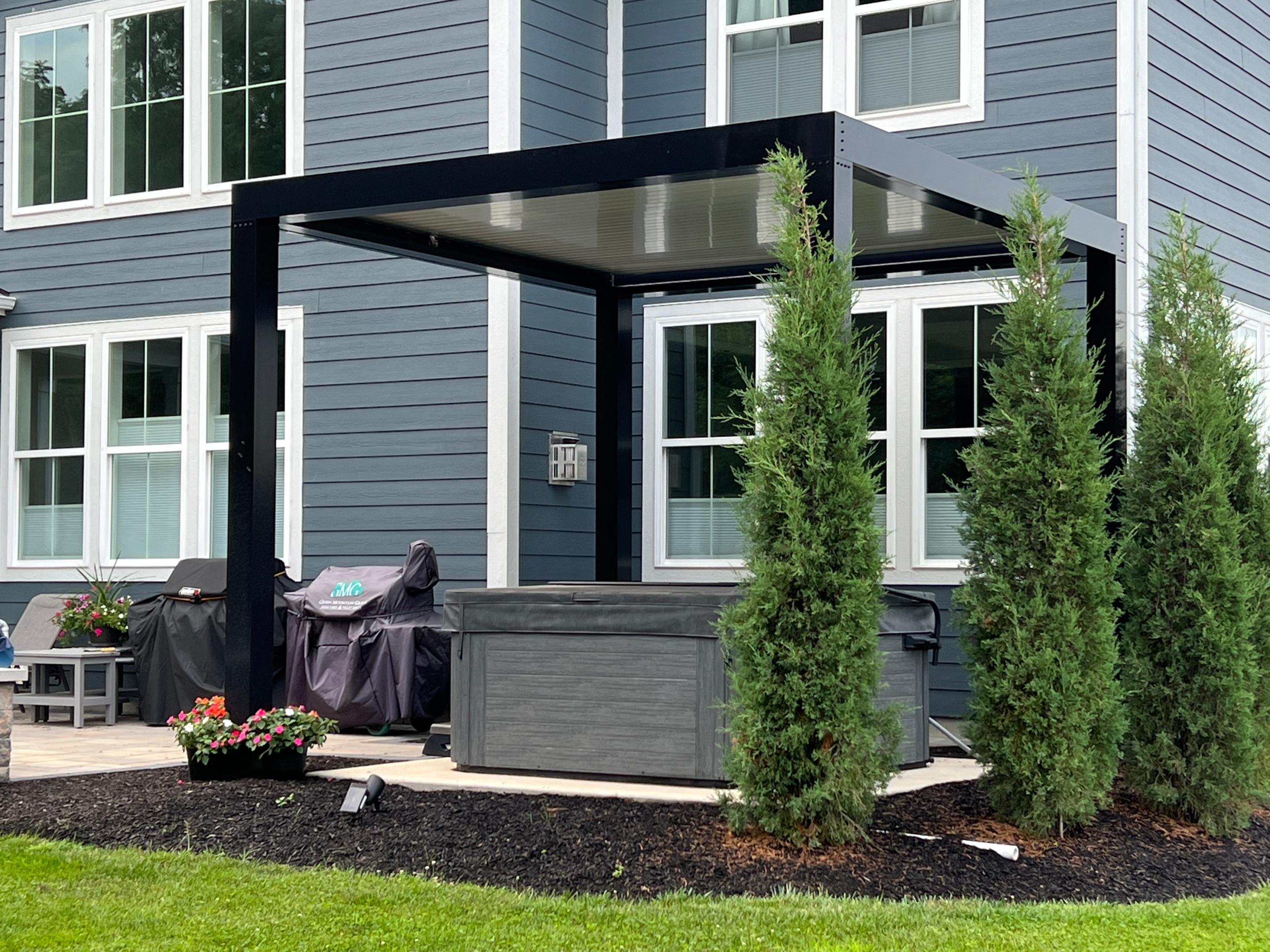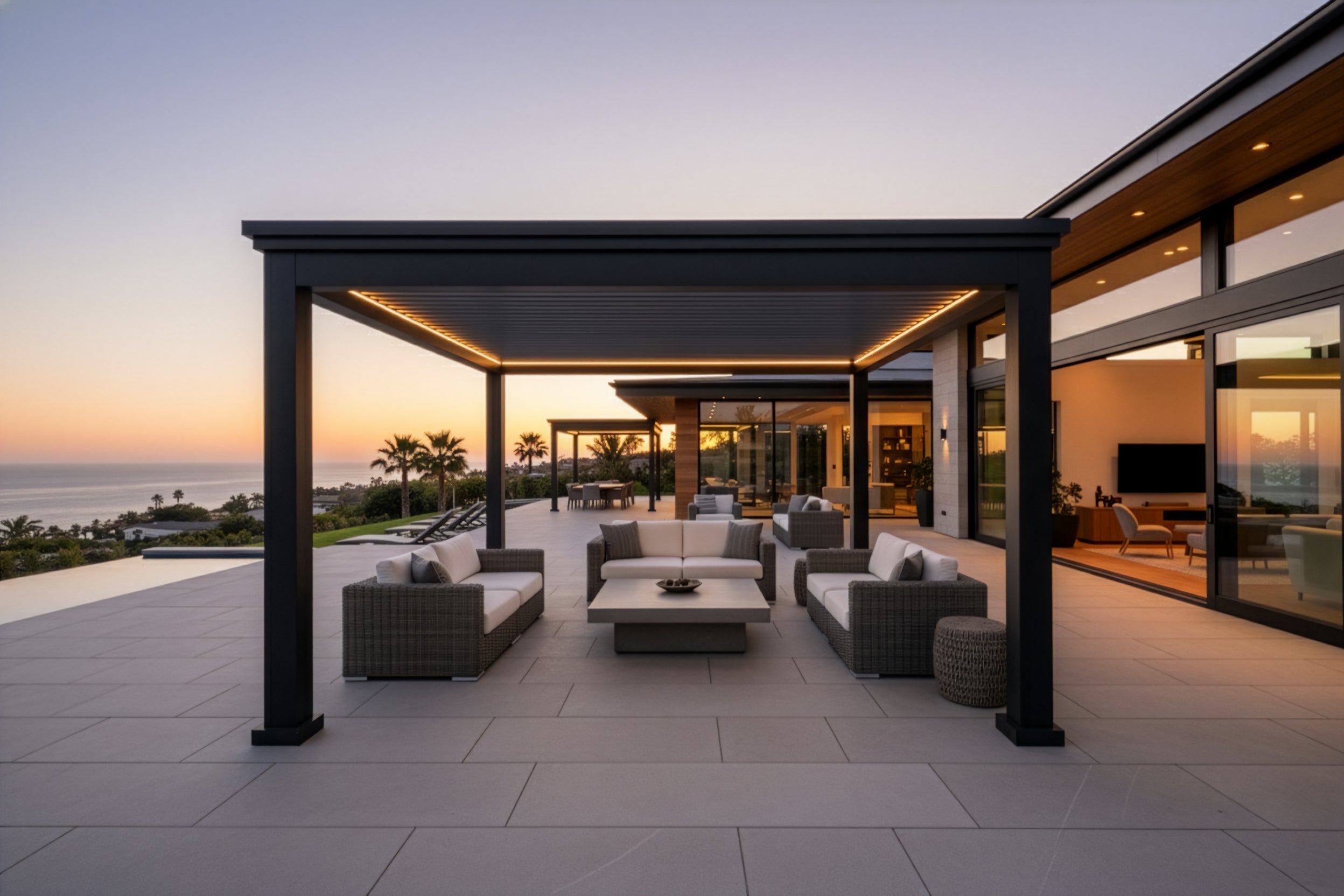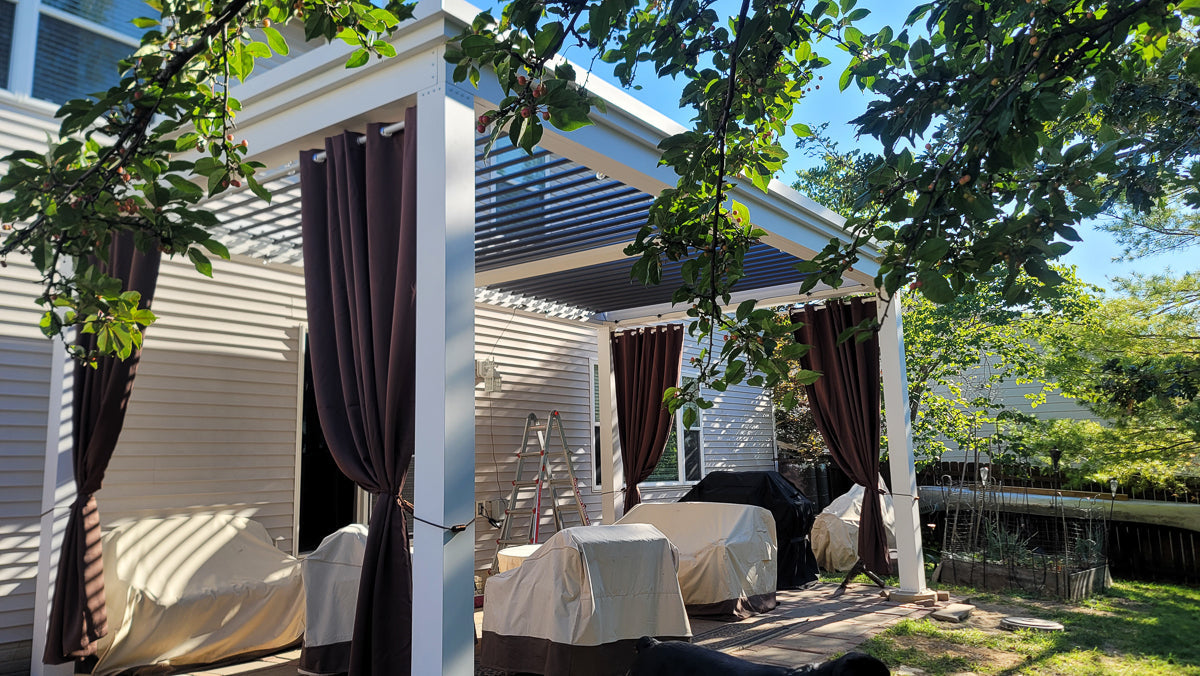


You are looking for an aluminum pergola. You already know the benefits of aluminum: it doesn’t rot like a wood pergola, doesn’t rust like a steel pergola and doesn’t yellow like a vinyl pergola. That’s about where the pergola shopping guides end. They don’t tell you that a 250 lb. aluminum pergola from a big-box store and an 1,800 lb. commercial grade aluminum pergola are about as similar as a garden shed and a built-in garage.
But this article will go further. We will compare the specifications, costs, advantages and disadvantages of some of the top brands of aluminum pergolas available on the market in 2026. By the time you finish this article, you will understand what is important and what is not; whether you are looking at a $2,000 DIY pergola kit or a $25,000 electric louvered pergola.
Why Aluminum? Benefits Over Wood, Vinyl, and Steel
Aluminum has dominated the pergola business for the past five years. Wood pergolas are nice looking when they are new but by year three, you are staining, sealing and replacing warped or rotted boards. Steel is heavy, expensive to ship, and it rusts if the finish gets chipped. Vinyl is inexpensive, light weight, flexes in the wind, turns yellow in the sun and looks like what it is: plastic.
Aluminum has a different sweet spot. It doesn’t corrode easily, it’s very strong for how light it is, and it takes powder coating like no other metal. An aluminum pergola, if well-made, will appear just as good in 20 years as it did on the day it was installed. No staining, no sealing, no rust treatment.
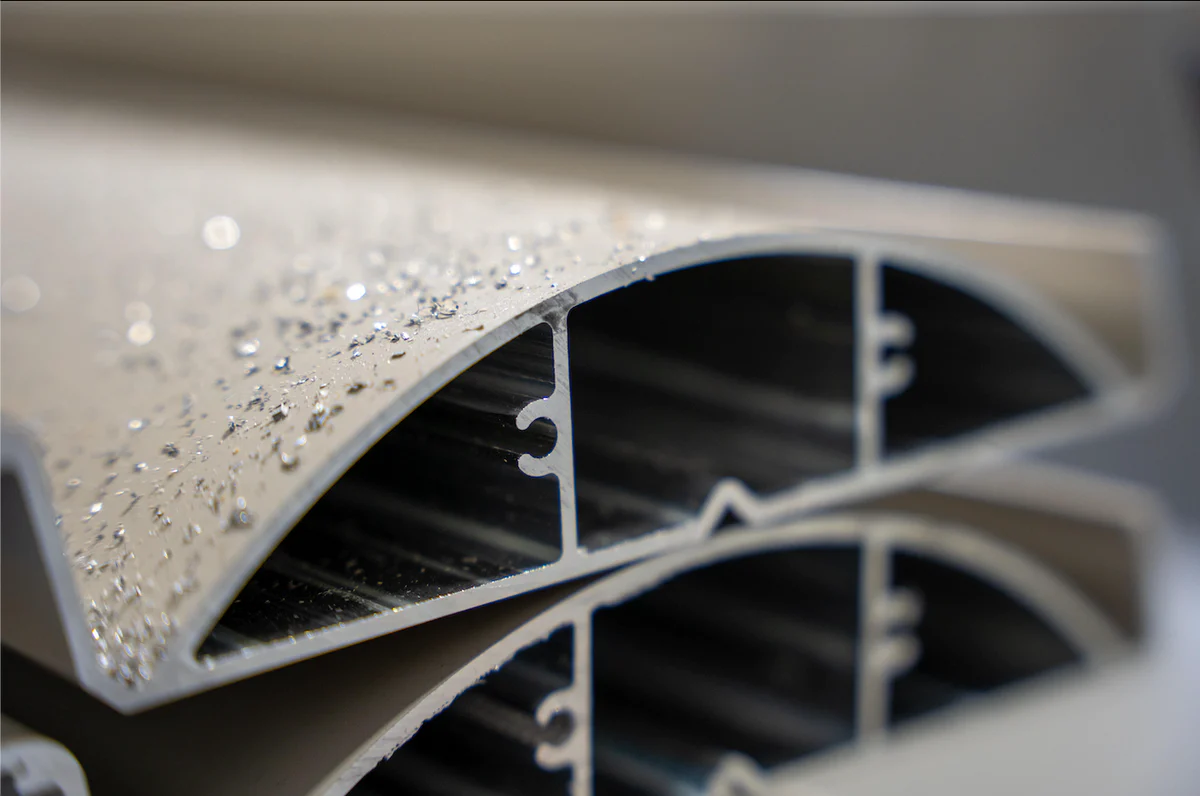
But not all aluminum is the same. The thickness of the extrusion, the alloy grade, and the coating process all matter. Here's how the four main pergola materials stack up on the specs that actually affect your daily experience:
| Feature | Aluminum | Wood (Cedar/Redwood) | Steel | Vinyl |
|---|---|---|---|---|
| Lifespan | 25+ years (lifetime with quality coating) | 10-15 years with maintenance | 15-20 years if no rust | 10-15 years before yellowing |
| Maintenance | Hose off once or twice a year | Annual staining, sealing, hardware checks | Inspect for rust, touch up chips | Clean mildew buildup, check for cracks |
| Wind Resistance | Up to 200+ mph (commercial-grade) | Up to 75-90 mph | Up to 100-130 mph | Up to 60-80 mph |
| Corrosion Resistance | Excellent (natural oxide layer) | Poor (rots without treatment) | Poor (rusts if coating fails) | Good (doesn't corrode but degrades in UV) |
| Weight (10x13 structure) | 250-1,800 lbs (varies wildly by brand) | 500-800 lbs | 800-1,500 lbs | 150-300 lbs |
| Customization | High (colors, sizes, motorized options) | High (can be cut to any shape) | Moderate (welding required for changes) | Low (limited sizes and colors) |
| Typical Price Range | $2,000 - $25,000+ | $1,500 - $8,000 | $3,000 - $15,000 | $800 - $4,000 |
Even within the realm of aluminum there is tremendous variation. A 2,000 amazon pergola and a 15,000 commercial pergola kit are not even in the same family. The cheap pergolas are made with thin wall extrusions (as thin as 1mm), standard powder coat, and light weight hardware. The heavy duty pergolas are made with thick wall commercial extrusions, multi stage proprietary coatings, and stainless steel fasteners throughout. If you live in a region with actual weather, this matters.
Types of Aluminum Pergolas
Not all aluminum pergolas are created equal. The type of roof will influence the degree of protection against the elements (sun, rain, snow). There are four primary types of aluminum pergola roofs you will come across:
Louvered (Motorized Adjustable Roof)
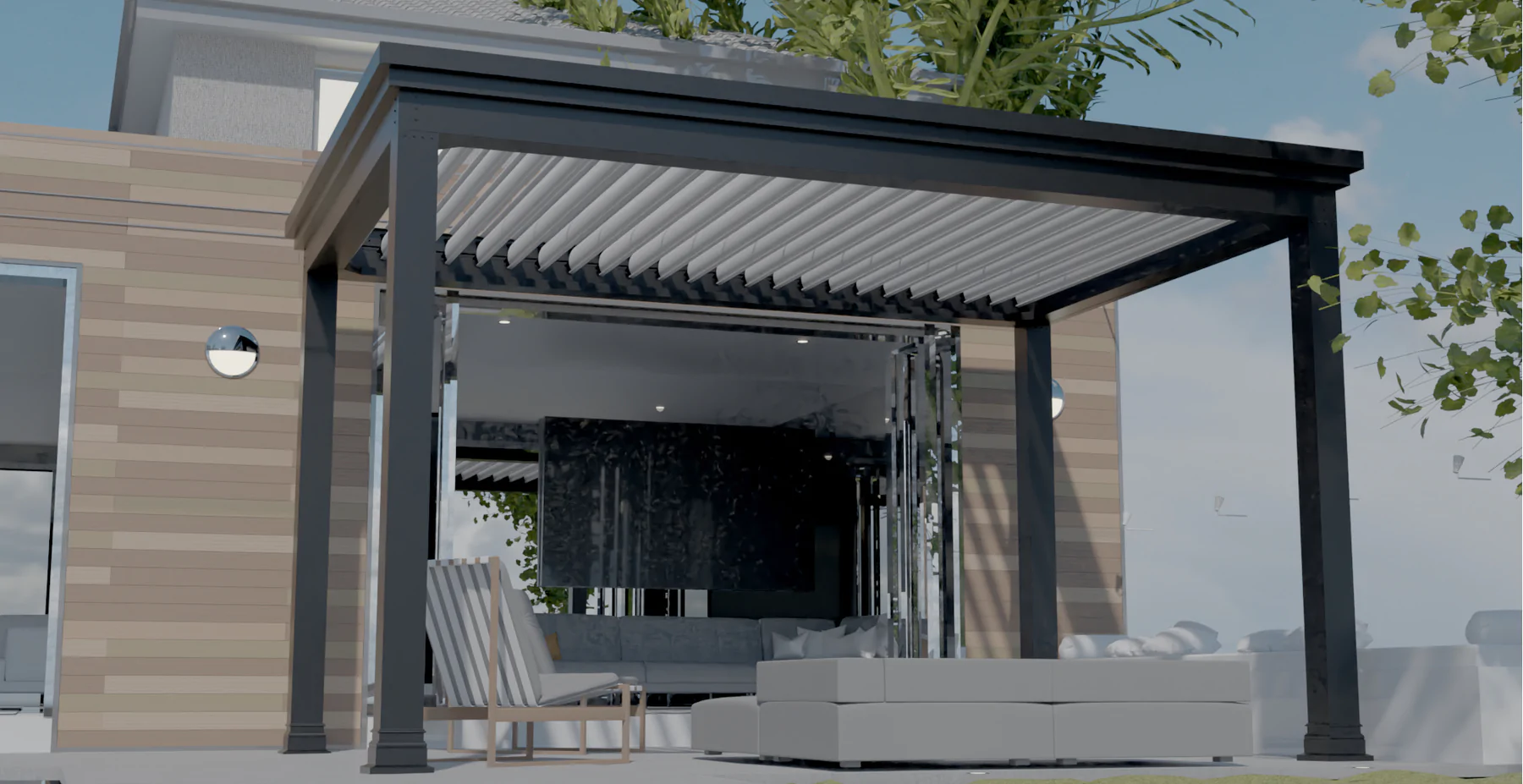
The louvered aluminum pergolas have roof slats that rotate open and closed by using a motor and remote. If you open them up, you receive full sun and ventilation. If you close them, you receive full protection from the rain and shade. The top-rated systems can rotate up to 130 degrees, allowing you to control exactly how much light enters from any given angle.
This is the most multi-functional style and the most rapidly increasing in demand. You will receive a patio cover for all seasons. But it will cost you… A nice quality motorized louvered pergola will cost around $7,000 for a small size and up. Read our full louvered pergola guide for a deep look at how these systems work.
Fixed-Roof (Solid Panel)
The second type of aluminum pergola has a solid top that is fixed. It is typically made of insulated panels and offers 100% rain and sun protection, 100% of the time. The drawback is that you can’t open it when the weather is nice. We see these in use for outdoor kitchens where you always want a roof and it’s a great application. But they are more like a carport than a “room”. Price varies by size but usually falls between $4,000-$12,000.
Lattice / Open-Top
The classic pergola you see in gardens all over the world are those in aluminum latticework with a series of beams along the top that give shade but not rain protection. They are the least expensive pergola you can purchase and are ideal for growing climbing vines and plants. They are not functional in the aspect of covering the elements. Unless you live in a dry climate, there is no point to even consider a lattice pergola. Price: $1,500-$6,000.
Flat-Top (Modern Minimalist)
The flat top aluminum pergola has a more modern look with horizontal slats that are not adjustable. It provides a modern appearance and some shade (based on how far apart the slats are set) however, like the lattice top, it provides little protection from the rain. Some companies provide a retractable canopy that can be installed under the flat top frame. Cost: $2,000-$8,000.
If you need something that can work in your yard 12 months out of the year then the louvered aluminum pergola is the obvious choice. The aluminum pergola gives you full sun when you desire it, full shade when you need it, and anything in between. Yes, you will pay more for the pergola, but it’s a pergola that you will be able to enjoy 12 months out of the year not just 5.
Top Aluminum Pergola Brands Compared
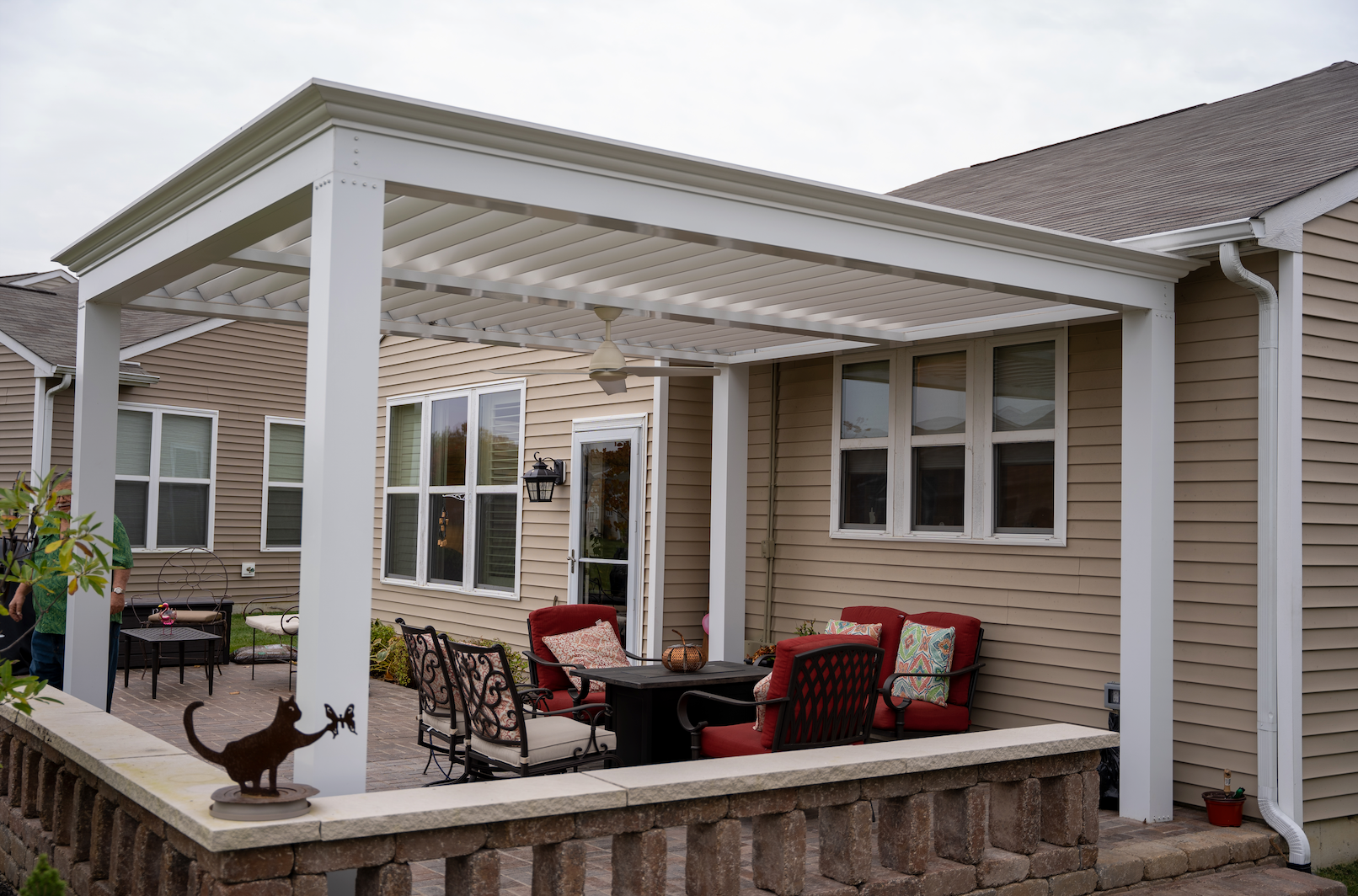
We did our best to get actual numbers from some of the most popular aluminum pergola brands available in the US. You will notice it is sometimes difficult to find these on their website, if at all. In our experience, if a company does not have a wind rating or wall thickness listed, it is not a good sign.
| Brand | Price Range (10x13) | Wind Rating | Snow Load | Warranty | Unit Weight | Motorized | Made in USA |
|---|---|---|---|---|---|---|---|
| The Luxury Pergola | $8,500 - $14,000 | Up to 200+ mph | Up to 65 psf | Lifetime | ~1,800 lbs | Yes (standard) | Yes (Indiana) |
| PERGOLUX | $6,000 - $10,000 | Up to 120 mph | Up to 18 psf | 10 years | ~400 lbs | Yes | No (imported) |
| Purple Leaf | $3,500 - $6,500 | Up to 72 mph | Up to 8 psf | 5 years | ~250 lbs | Yes | No (China) |
| Mirador (Costco) | $2,500 - $5,000 | Up to 75 mph | Up to 10 psf | 5 years | ~300 lbs | Yes | No (China) |
| Azenco | $25,000 - $50,000+ | Up to 130 mph | Up to 40 psf | 10 years | ~800 lbs | Yes | No (France/US assembly) |
| Backyard Discovery | $1,800 - $4,500 | Up to 65 mph | Up to 8 psf | 5 years | ~200 lbs | Select models | No (China) |
| StruXure For a direct comparison, StruXure vs The Luxury Pergola breakdown. | $40,000 - $60,000+ | Up to 110 mph | Up to 30 psf | 10 years | ~600 lbs | Yes | Yes (US assembly) |
| Hanso Home For a direct comparison, detailed Hansø alternative breakdown. | $5,000 - $9,000 | Up to 120 mph | Up to 15 psf | 10 years | ~350 lbs | Yes | No (imported) |
What the Numbers Tell You
From this chart, it’s pretty clear that you don’t get what you pay for. StruXure and Azenco range in price from $40,000-$60,000+ yet they have lower wind ratings and snow loads than The Luxury Pergola, which is roughly $8,500 for the same size. Why? Because StruXure and Azenco products are sold through a network of dealers and installers and you’re paying for three markups in addition to the cost of the product.
Second, the weight. A pergola made of aluminum that weighs 250 pounds is not in the same class of product as a pergola that weighs 1800 pounds. The extrusions are thicker, the hardware is heavier-gauge, the posts have a weight to them when you pick them up. If you have ever lifted a Purple Leaf column alongside a commercial-grade column you can tell right away.
Third, the length of the warranty is indicative of the confidence that the manufacturer has in the product. If they're only warrantying a 5-year product for 5 years (a product that should last 20-30 years) it means that they're aware it probably won't. If they're offering a lifetime warranty it's because they've engineered it to last.
To maximize value, consider what you get for your money: The Luxury Pergola offers commercial-level features (the highest wind rating, the highest snow load, and the heaviest construction of all of these pergolas) for a tiny fraction of the cost of pergolas installed by contractors. That’s the power of direct-from-the-factory ordering, with no middleman to hike up the price. Check out our best pergola kits roundup for more side-by-side comparisons.
Aluminum Pergola Cost Breakdown by Size
The cost of an aluminum pergola depends largely on its size. Here are the price ranges for the different sizes and their respective qualities. These prices are accurate as of early 2026 and represent actual prices, not list prices.
| Size | Budget Tier (Imported, Lightweight) |
Mid Tier (DTC Brands) |
Premium Tier (Commercial-Grade DTC) |
Dealer-Installed (StruXure, Azenco) |
|---|---|---|---|---|
| 8x10 | $1,800 - $3,000 | $4,500 - $6,500 | $7,000 - $9,500 | $25,000 - $35,000 |
| 10x13 | $2,500 - $5,000 | $5,500 - $8,500 | $8,500 - $14,000 | $30,000 - $45,000 |
| 12x16 | $3,500 - $6,000 | $7,000 - $11,000 | $11,000 - $17,000 | $40,000 - $55,000 |
| 12x20 | $5,000 - $8,000 | $9,000 - $14,000 | $14,000 - $21,000 | $45,000 - $65,000 |
| 14x20+ | Rarely available | $12,000 - $18,000 | $18,000 - $28,000 | $55,000 - $80,000+ |
| Super Pergola (connected units) | Not available | Rarely available | $20,000 - $40,000+ | $70,000 - $120,000+ |
A couple notes on price. Those cheaper aluminum pergolas (Purple Leaf, Backyard Discovery, Mirador) are really cheap, yes. But they’re for warm weather, not rainy climates, and moderate use. If you live in Florida or Texas or the Northeast, that 250-pound pergola rated for 72mph winds is not a great value.
Mid range (PERGOLUX, Hanso Home, BON Pergola) is higher quality finishes and starts to include some motorized models. Still import brands with average quality structure and medium term warranty.
The premium DTC option (The Luxury Pergola) is where things really start to get fascinating from a pricing perspective. You’re getting a commercial-grade product that is comparable (or superior) to the dealer-installed offerings, yet you’re paying 30-50% of the cost of the installed product. The value is in the reduction of the dealer and installer margins, not a reduction in the quality of the product.
For a detailed look at what affects pricing, read our pergola cost breakdown.
Powder Coating and Color Options
Powder coating is perhaps the most underappreciated spec that folks look at when purchasing an aluminum pergola. It’s the difference between a pergola that still looks brand new after 15 years, and one that’s faded and chalky after three. Not all powder coatings are the same.
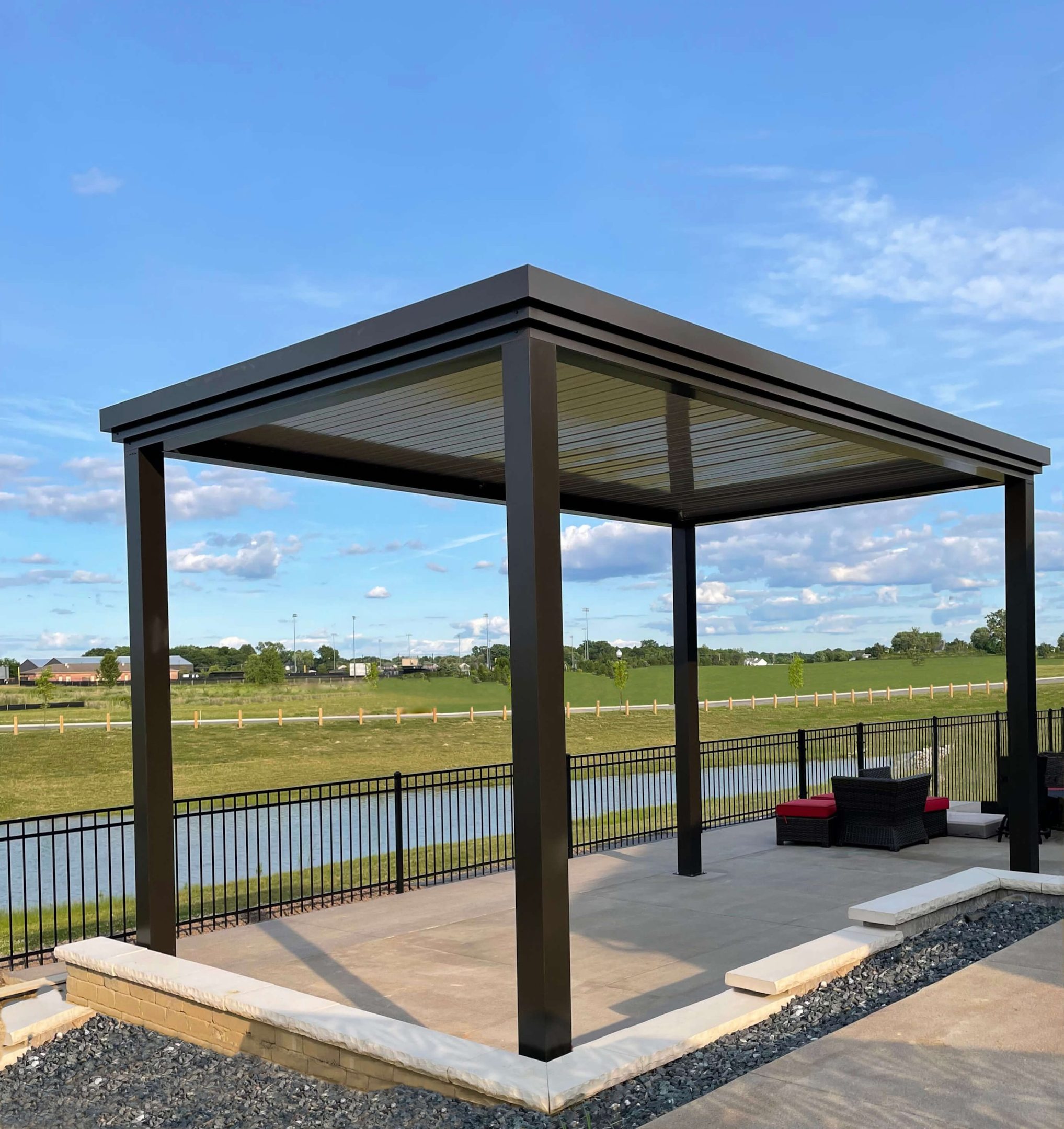
The powder coating used on most imported aluminum pergolas is a one-coat electrostatic powder coat that is heat cured. While this is adequate when the material is new, it will deteriorate in time as the powder is exposed to UV radiation, thermal shifts, and moisture. You will see a chalking (powdered white coating) of the powder and a fading of the color, and then as it continues to degrade, tiny fissures that allow water to creep behind the powder.
The Luxury Pergola features a unique multi-layer coating technique that they call ElectroLayer. I won’t bore you with the details, but suffice it to say that it includes a few extra surface preparation and coating steps that are omitted from standard powder coating. This yields a finish that will retain its color and scratch resistance for much longer than a single-coat pergola. This is a big part of why they can offer a lifetime finish warranty instead of a 5-year finish warranty.
Available Color Options
If you are looking for an inexpensive aluminum pergola, most of them come in 2-3 standard colors (White, Black and sometimes Grey). The more you step up in quality, the more standard colors you have. The Luxury Pergola has the following standard colors which encompasses the majority of architectural colors:
White: Timeless and crisp, goes well with all exterior house colors Black: Sophisticated and sharp, contrasts well with modern home styles Bronze: Earthy, warm color blends well with rock and wood finishes Gray: Universal color suitable for both modern and classic homes Custom colors: Can be specified for architectural matching requirements If you are comparing a color from one manufacturer to another, always ask about the coating. ElectroLayered “black” will appear the same as a “black” powder coated pergola on day one. Take the two out into the sun for five years, and the disparity will be apparent.
Freestanding vs. Wall-Mounted Aluminum Pergolas
There are two types of aluminum pergola kits; freestanding (4 posts, stands alone) and wall mounted (2 posts, mounted to your house). The type you choose is determined by your available space, your home’s structure, and intended use.
Freestanding Aluminum Pergolas
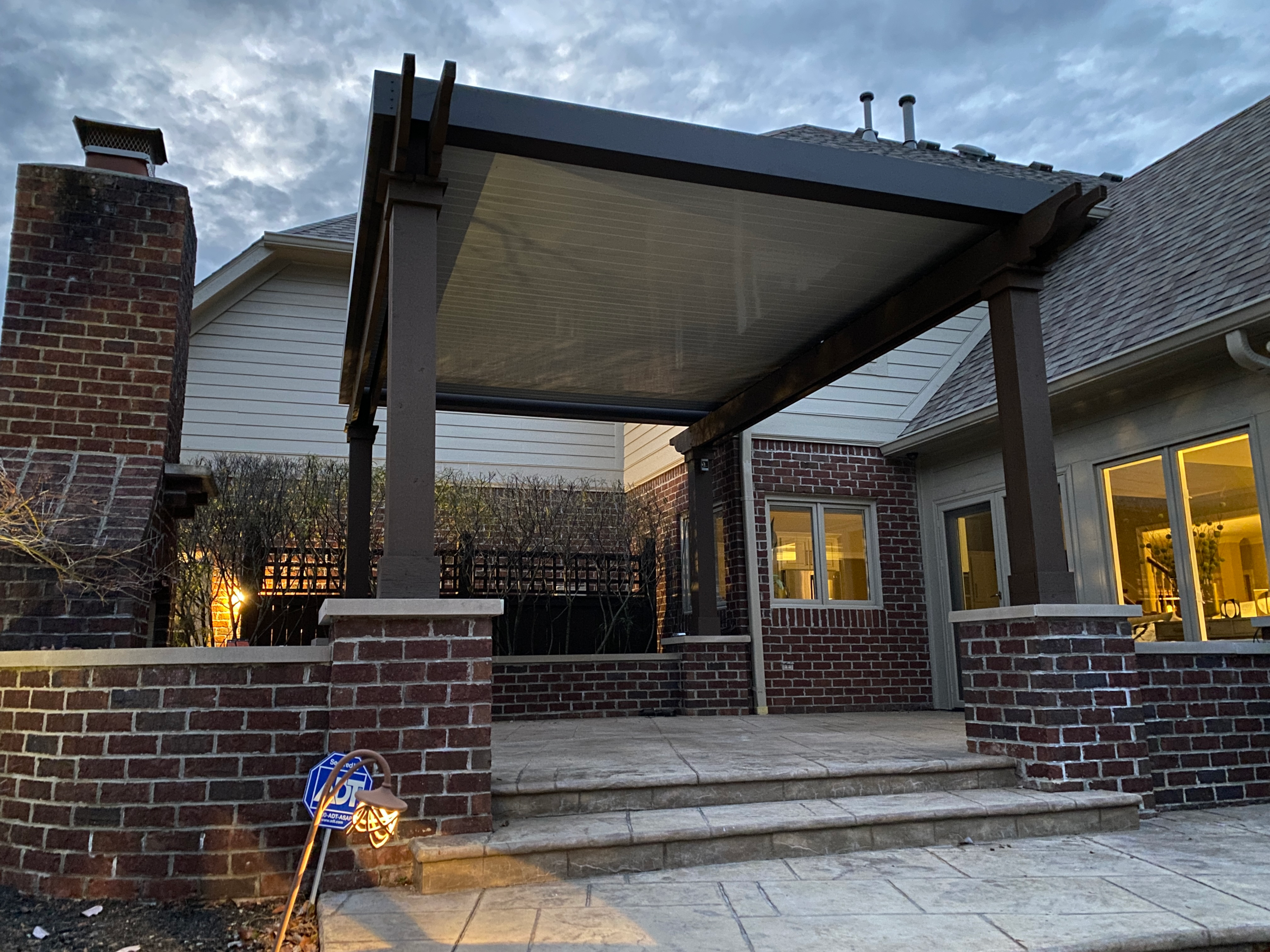
Freestanding units are supported by four posts that are fastened to a concrete pad, a paver patio, or footings. You can put them anywhere in your yard, so you have the most options for locating these units. You don’t have to worry about where your house walls are or what they are constructed of.
Ideal for: Pool decks, freestanding patios, outdoor kitchens (when not attached to the home), fire pit areas, commercial uses. And, a better option when you have a stucco, EIFS, or otherwise hard-to-anchor siding.
Understand that you still need a good foundation. Typically a minimum thickness of concrete (4-6" or so) or footings below frost depth. Also understand that these things are more vulnerable to wind because there is no wall to absorb some of the load, so the structural rating is even more important for freestanding applications.
Wall-Mounted Aluminum Pergolas
The wall mounted is exactly what it sounds like, it attaches to your house on one side with a ledger and two posts on the other. It is an outdoor room that is connected to the house. The ledger must attach to the home where there is a structural element (stud, rim joist, masonry, etc).
Ideal for: Adding a living room or kitchen bump-out to a patio, building an awning or covered breezeway between house and patio, using with a patio built directly adjacent to a house wall.
Things to know: Wall attachment requires proper flashing to prevent water intrusion. If you have a brick or stone veneer home you will want to make sure you are attaching to the main wall behind the veneer, not just the veneer itself. Some HOA’s and building codes have special rules about wall mounted installations, check ahead of time.
Both systems will carry the same wind and snow loads if properly installed. It comes down to a matter of layout and personal preference, not strength.
Wind Rating and Snow Load Specs
The snow load and wind rating are the two numbers to look for if you have weather where you live. The wind rating is the wind speed that the pergola has been designed for. The snow load is how much weight per square foot the pergola can hold.
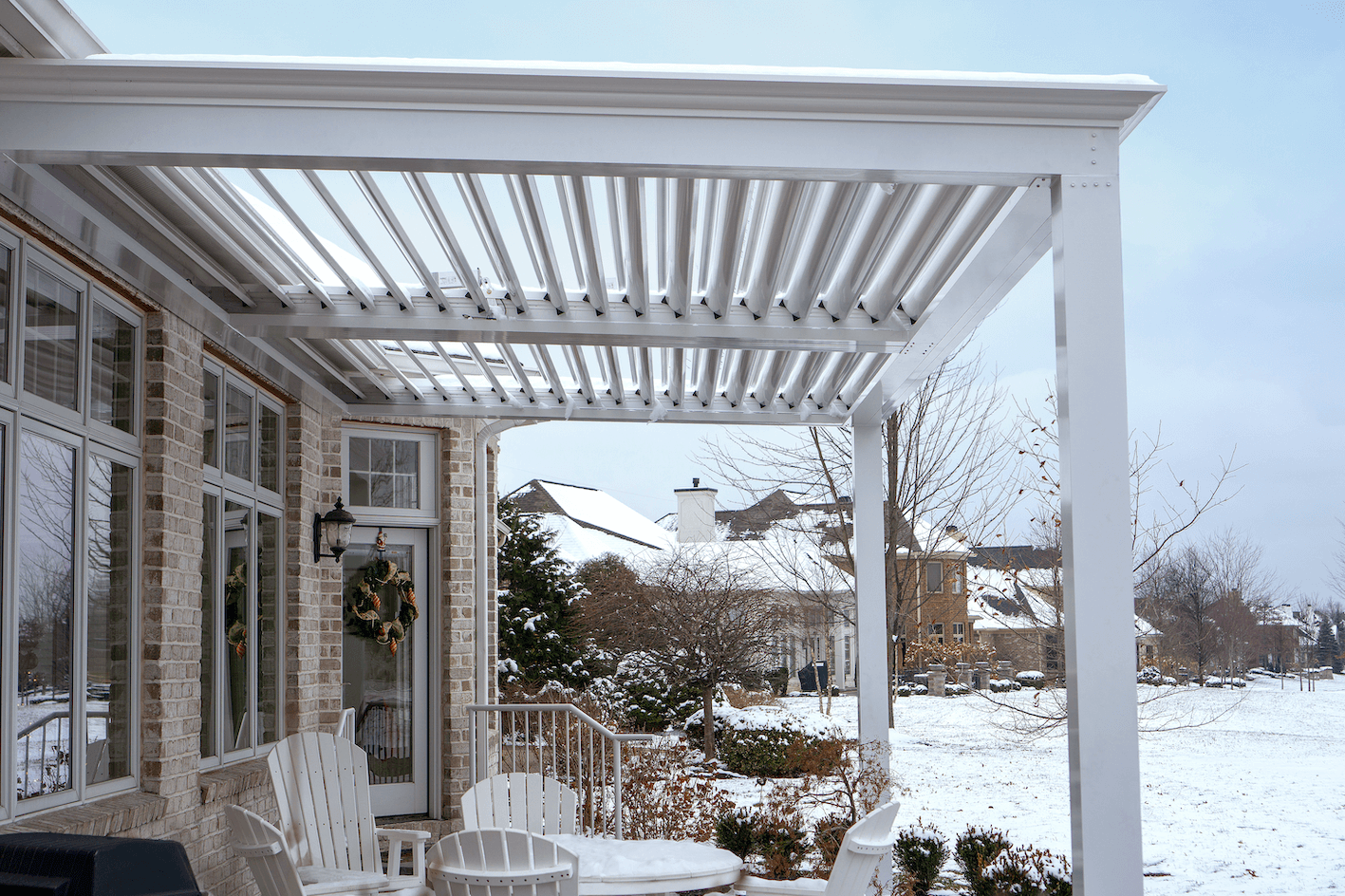
Wind Ratings: What the Numbers Mean
The snow load and wind rating are the two numbers to look for if you have weather where you live. The wind rating is the wind speed that the pergola has been designed for. The snow load is how much weight per square foot the pergola can hold.
Understanding Wind Rating Numbers
The lowest rating for a hurricane, Category 1, begins at 74 mph. Category 3 begins at 111 mph. Category 5 begins at 157 mph. Now look at the table above: most budget aluminum pergolas are rated up to 65-75 mph. That means just a strong thunderstorm, not a hurricane, could exceed their rating.
Luxury Pergola with louvers closed, is 200mph+. That is over a category 5. Additionally, you must know the difference between open and closed. Open louvers allow the wind to grab the louvers like a sail. Closed louvers provides a solid roof surface for the wind to hit and roll off. A good system will have a wind sensor that will close the louvers for you when the wind picks up. You shouldn’t have to monitor the wind.
If you’re in Florida, the Gulf Coast, or the Carolinas, this is a real thing. Your pergola is a high flying projectile if it’s not capable of resisting hurricane strength wind. We have a post on how to select a high wind pergola.
Snow Load: Not Just a Northern Problem
Snow load is calculated in pounds per square foot (psf). For comparison, the weight of new snow is 5-20 psf. Wet or packed snow can weigh 30 or more psf. Ice is heavier.
Take the same aluminum pergola, one that is engineered for 8 psf, it will probably hold a few inches of light, powdery snow before you need to brush it off. One that is engineered for 65 psf, you could have several feet of heavy, wet snow piled on top of it without batting an eye. That is the difference between running out into a blizzard in the middle of the night to brush your pergola off, or sleeping through a blizzard in your warm and cozy bed.
Even if you do not reside in a snowy area, keep in mind that a large amount of rain will exert similar pressure on a flat or nearly flat surface. A louvered system that fully closes and pushes water to gutters which are built in will handle this better than a flat panel which would collect water.
How to Install an Aluminum Pergola Kit
Installing an aluminum pergola kit is straightforward and typically doesn’t require a permit. Start by selecting the desired location, then assemble the pergola according to the manufacturer’s instructions. Usually, you’ll attach the post anchors to a concrete slab or footings, followed by adding the posts, beams, and rafters. Finish by installing the shade fabric or latticework, if included.
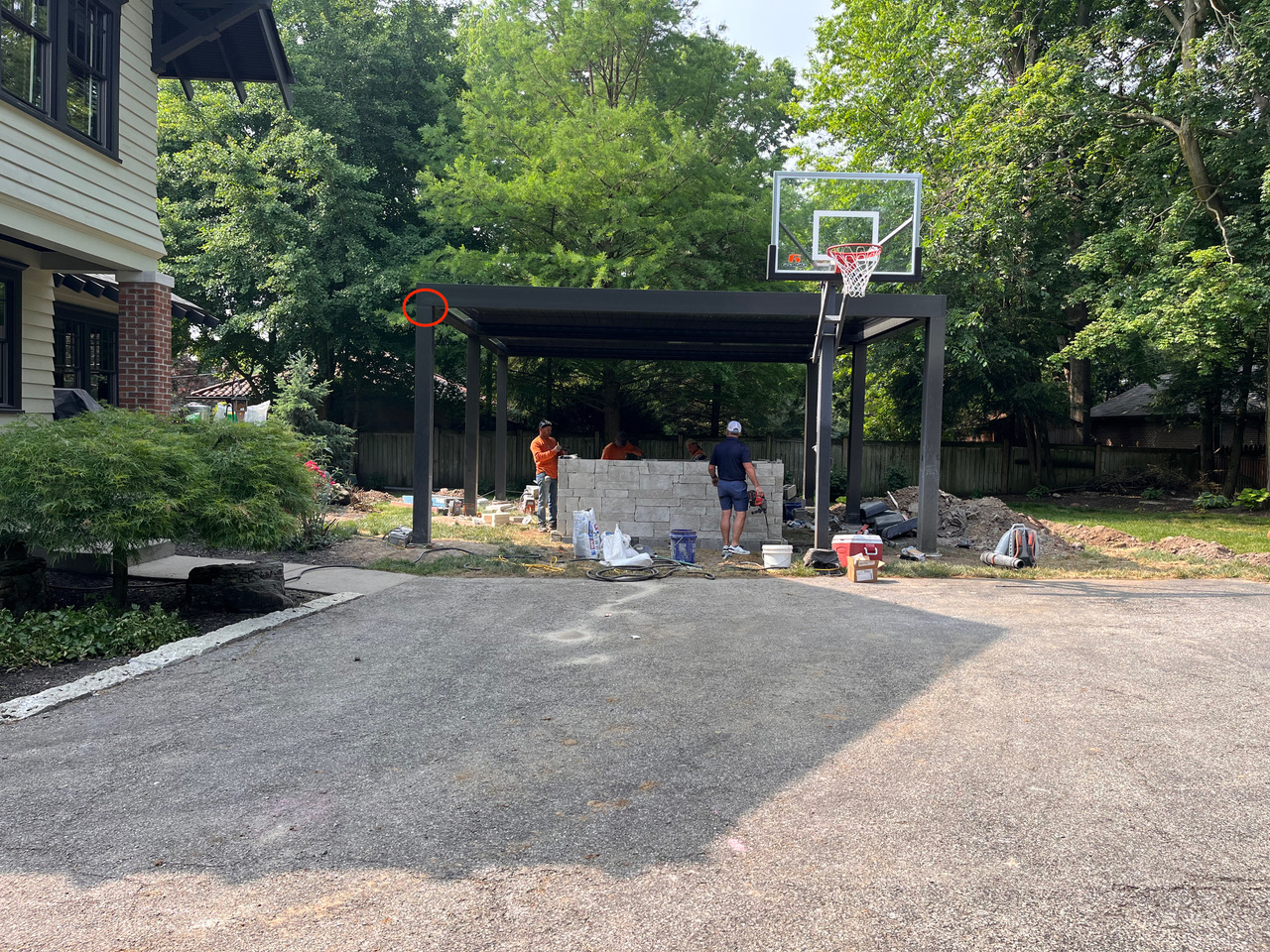
Before You Start
- Check local codes: Most areas require a permit for permanent structures over a certain size. Some HOAs have restrictions on height, setback, or materials. Handle this before your kit ships, not after.
- Prepare your base: You need a level concrete pad (4-6 inches thick minimum), existing paver patio over compacted base, or properly poured footings. An unlevel surface means shimming, and shimming means headaches.
- Gather your crew: Plan for 2-3 adults for a standard size unit. The beams and louver assemblies are heavy, and you'll want someone holding while someone fastens. This is not a solo project.
- Tools needed: Impact driver, socket set, level (a long one), tape measure, ladder, and potentially a concrete drill for anchor bolts. Most kits include the specialized hardware.
The Installation Process (General Steps)
- Layout and anchor posts: Mark your post positions, drill into the concrete pad, and set the anchor brackets. Getting this square and level is the most important step. If your posts aren't plumb, everything downstream is harder.
- Raise the posts: Set the columns into the base brackets and secure them. For an 1,800-pound commercial-grade system, these posts are substantial. Brace them temporarily until the beams are in place.
- Install the beams: The main support beams connect the posts across the top. These are the heaviest individual pieces. Have your crew ready and use stepladders positioned safely.
- Mount the louver/roof assembly: The louver panels or roof sections slide into the beam channels. Depending on the brand, these may come pre-assembled or require field assembly.
- Connect the motor and electronics: For motorized systems, run the power cable to your electrical source, connect the motor, and pair the remote control. Most systems use a standard 110V outlet. The Luxury Pergola includes the motor, remote, and rain sensor as standard equipment.
- Final adjustments: Level check everything, tighten all fasteners to spec, test the louver operation through full range of motion, and verify the rain sensor triggers correctly.
For a commercial-grade metal pergola from The Luxury Pergola, most homeowners complete installation in a single day with 2-3 people. Budget kits with lighter components may go up faster, but they also tend to have less precise engineering, which means more on-site problem-solving. The Luxury Pergola provides detailed video installation guides and phone support during your install if you hit any snags.
If DIY isn't your thing, The Luxury Pergola is building a national network of certified installers who know the product inside and out. You get the factory-direct price on the kit plus professional installation.
Maintenance: What Aluminum Pergolas Actually Need
This is one of my favorite reasons for using an aluminum pergola instead of wood. The list of maintenance is so short. Aluminum doesn’t rot, doesn’t warp, doesn’t crack, and doesn’t harbor insects. If the powder coat is good, it won’t fade or chalk either. Here is what you will need to do:
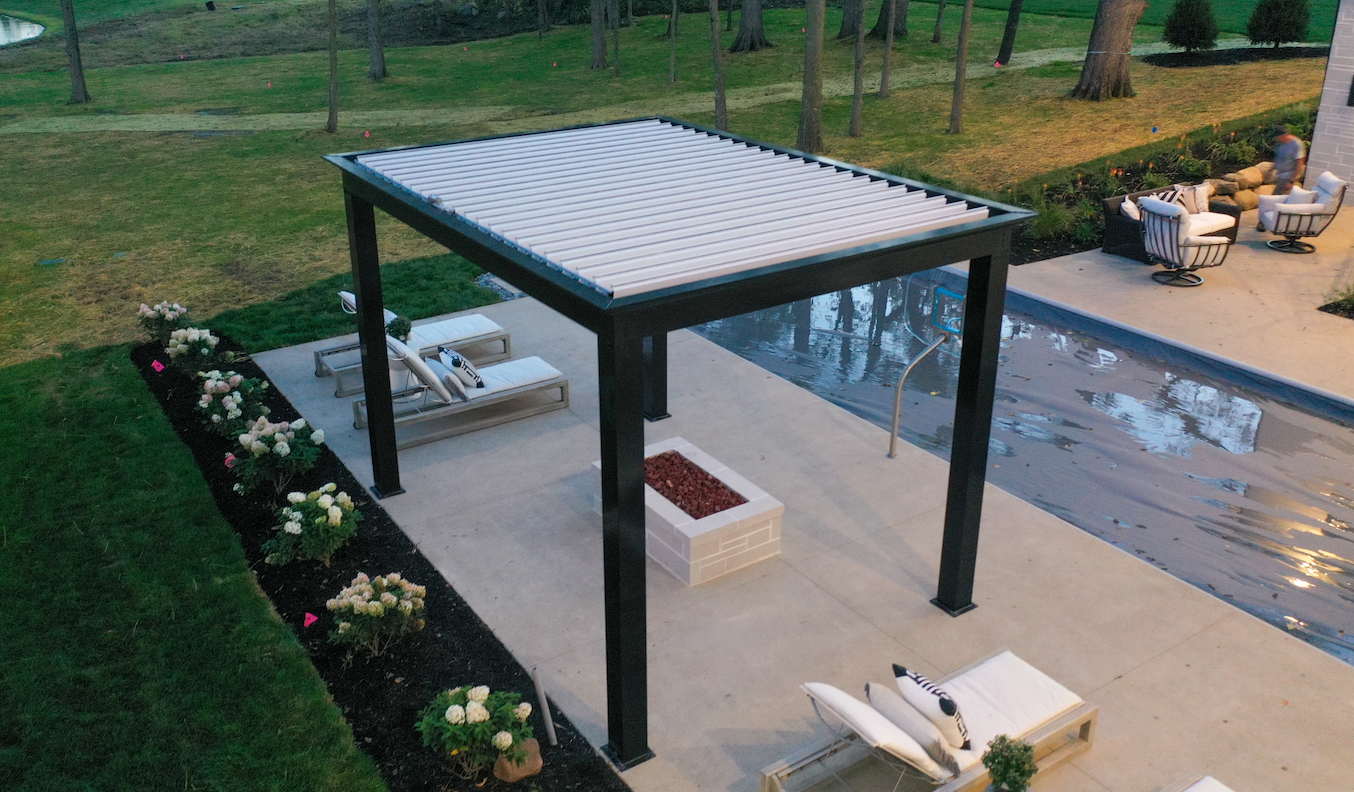
Routine Maintenance (1-2 Times Per Year)
- Rinse with a garden hose: Wash off pollen, dust, bird droppings, and general grime. A gentle spray is plenty. No pressure washer needed and no harsh chemicals required.
- Clean the gutter channels: If your system has integrated gutters (louvered systems do), clear out any leaf debris so water drains properly. A quick scoop or flush takes five minutes.
- Check fasteners: Do a visual inspection of bolts and brackets once a year, especially after storm season. Properly installed commercial-grade hardware shouldn't loosen, but it's good practice.
- Wipe down the motor housing: For motorized systems, keep the motor area free of debris. These are sealed units, so you don't need to lubricate or service them.
What You Do NOT Need to Do
- No staining or painting (ever)
- No sealing or waterproofing treatments
- No rust prevention or treatment
- No replacing rotted or warped boards
- No insect treatment
- No seasonal disassembly or storage
Compare that to a wood pergola, which needs staining every 1-2 years ($200-500 in materials per treatment, plus a full weekend of work) and eventual board replacement as pieces warp and crack. Over a 20-year period, a wood pergola's maintenance costs can easily exceed the original purchase price. An aluminum pergola's total maintenance cost over the same period? Basically just water from your garden hose.
For a deeper look at why aluminum outperforms other materials long-term, check out our aluminum louvered pergola comparison.
Frequently Asked Questions
How long does an aluminum pergola last?
A quality aluminum pergola with proper powder coating will last 25+ years with virtually zero maintenance. Aluminum is naturally resistant to corrosion, and unlike wood or steel, it won't rot, rust, or degrade from UV exposure. The Luxury Pergola backs their structures with a lifetime warranty on the frame, louvers, motor, and electronics because the materials are engineered to last indefinitely.
Is an aluminum pergola worth the money compared to wood?
When you factor in the total cost of ownership, yes. A wood pergola might cost $3,000-$8,000 upfront, but you'll spend $200-$500 per year on staining, sealing, and repairs. Over 15 years, that's $3,000-$7,500 in maintenance alone, plus the labor time. A mid-range aluminum pergola costs $5,000-$14,000 upfront with near-zero maintenance costs afterward. Add in the higher wind resistance, longer lifespan, and zero rot risk, and aluminum is the better long-term investment for most homeowners.
Can I install an aluminum pergola kit myself?
Yes. Most aluminum pergola kits are designed for homeowner installation with 2-3 people. Commercial-grade kits like The Luxury Pergola can be installed in about one day. You'll need basic tools (impact driver, socket set, level, ladder) and a solid concrete base or footings. The heavier the kit, the more help you'll want for lifting beams into place. If you prefer professional installation, many manufacturers offer installer networks or can recommend local contractors. See our aluminum pergola kits buyer's guide for more on what to expect.
What size aluminum pergola do I need?
Start with how you'll use the space. For a dining area with a table for 6-8, a 10x13 is the sweet spot. For an outdoor living room with couches and a fire table, go 12x16 or larger. For pool deck coverage, measure the section of deck you want shaded and add 2-3 feet on each side. Keep in mind that most brands offer standard sizes, while premium manufacturers can do custom dimensions. If you need to cover a large area, connected "Super Pergola" configurations can span 20+ feet in either direction.
Do aluminum pergolas get hot in the sun?
The metal itself can get warm to the touch in direct summer sun, similar to a car door. However, a louvered aluminum pergola actually keeps the space underneath up to 20 degrees cooler when the louvers are adjusted to block direct sunlight. The louvers create shade while still allowing air circulation, which is much more comfortable than sitting under a solid roof that traps heat. Light-colored powder coats (white, light gray) reflect more heat than darker colors.
Will an aluminum pergola rust?
No. Aluminum does not rust. Rust is an iron-specific reaction (iron oxide), and aluminum contains no iron. Aluminum does form a natural oxide layer when exposed to air, but this layer is actually protective and prevents further corrosion. With powder coating on top of that natural oxide layer, a quality aluminum pergola is essentially immune to corrosion. This is one of the key reasons aluminum has replaced steel as the preferred material for outdoor structures.
Do I need a permit to build an aluminum pergola?
In most jurisdictions, yes. Permanent outdoor structures typically require a building permit, especially if they're over a certain size (often 120 square feet) or height (usually 10 feet). Requirements vary by city, county, and HOA. Some areas also require engineered drawings or wind/snow load certifications, which is another reason to choose a brand that publishes real engineering specs. Check with your local building department before purchasing.
What is the best aluminum pergola for high winds?
For areas prone to hurricanes, tropical storms, or sustained high winds, look for an aluminum pergola rated for at least 130 mph (Category 4). The Luxury Pergola leads the market with a rating of up to 200+ mph with louvers closed, which exceeds Category 5 hurricane specifications. The key factors that determine wind resistance are material thickness, post-to-beam connection engineering, anchor bolt design, and overall unit weight. Heavier is better: an 1,800-pound structure anchored to concrete is far more wind-resistant than a 300-pound one.
Ready to Choose Your Aluminum Pergola?
If you've made it this far, you know more about aluminum pergolas than 95% of the people shopping for one. The short version: buy the heaviest, best-coated, highest-rated structure you can afford. Cheap aluminum pergolas become expensive problems. Quality ones become the best part of your home.
The Luxury Pergola offers the strongest specs on the market at factory-direct pricing, with a lifetime warranty and American manufacturing you can verify. Build your custom kit to see exact pricing for your size, color, and configuration, or call the team directly. They're real people, not a call center, and they'll walk you through every detail.