

Pergola vs Gazebo: Costs, Features, and Which Is Right for You
If you're looking at your backyard right now and thinking, "I need something out there," you've probably landed on two main options: a pergola or a gazebo. They're the two most popular outdoor structures in the country, and for good reason. Both add usable living space, boost your home's value, and look great doing it.
But a pergola and a gazebo are very different structures, and the one that's right for you depends on how you actually use your outdoor space, what weather you deal with, and what you're willing to spend. This guide breaks down the full pergola vs gazebo comparison with real pricing, materials, pros and cons, and honest advice on which one makes sense for different situations.
Table of Contents
# Quick Comparison: Pergola vs Gazebo
But first, let’s compare the two. If you’re in a rush, this table gives you the gist of what the fundamental difference between a pergola vs a gazebo is.
| Feature | Pergola | Gazebo |
|---|---|---|
| Roof | Open rafters, adjustable louvers, or retractable shade | Fully enclosed solid roof |
| Shape | Rectangular or square | Octagonal, hexagonal, or round |
| Walls | Open on all sides | Open or screened sides, sometimes with railings |
| Cost Range | $2,000 - $20,000 | $3,000 - $12,000 |
| Best For | Patios, outdoor kitchens, pool decks, entertaining | Garden focal points, standalone seating areas |
| Attachment | Freestanding or attached to home | Almost always freestanding |
| Customization | High (size, color, louvers, fans, lighting) | Moderate (mostly size and material choices) |
| Modern Appeal | Contemporary and versatile | Traditional and classic |
What Is a Pergola?

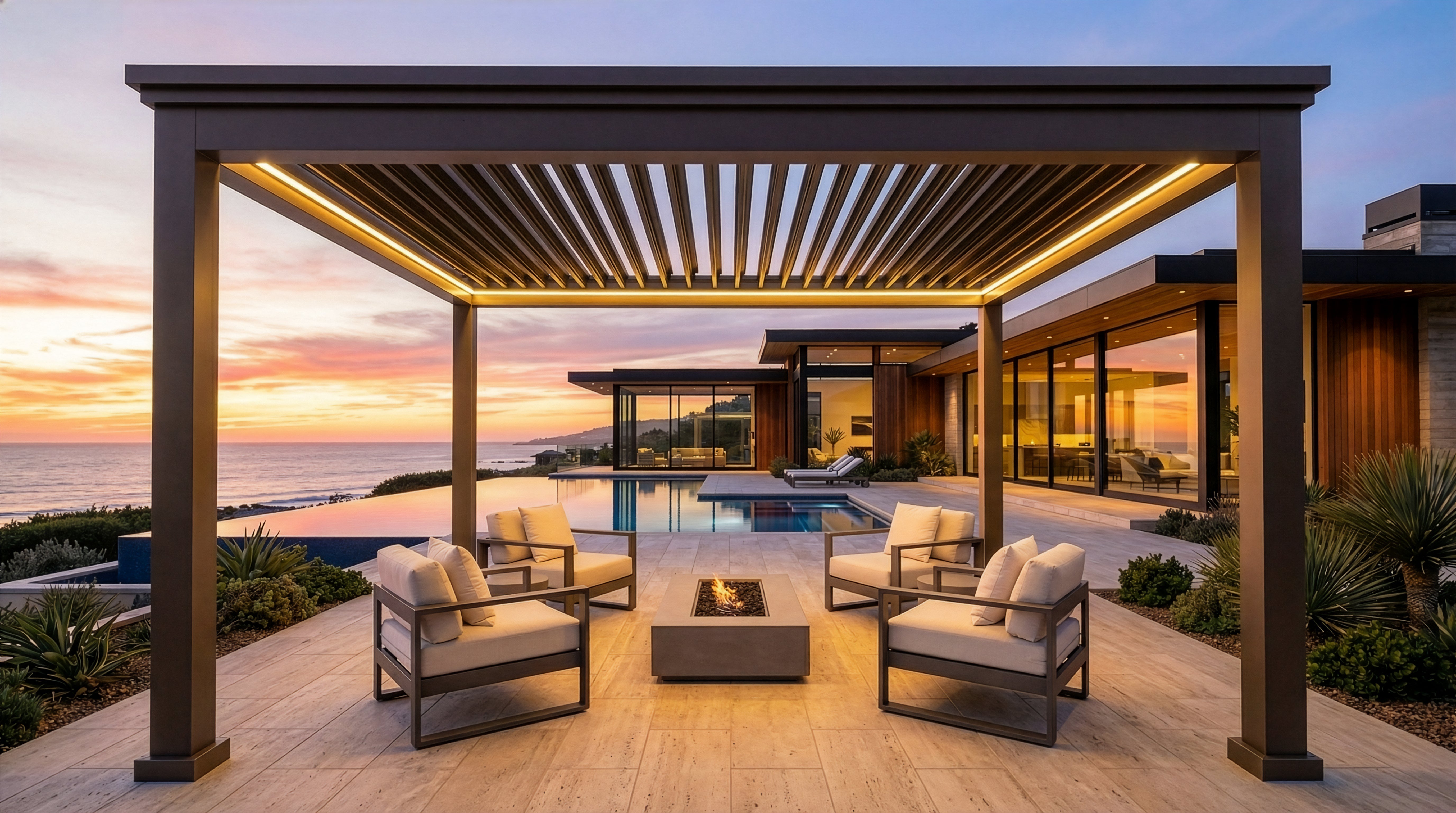
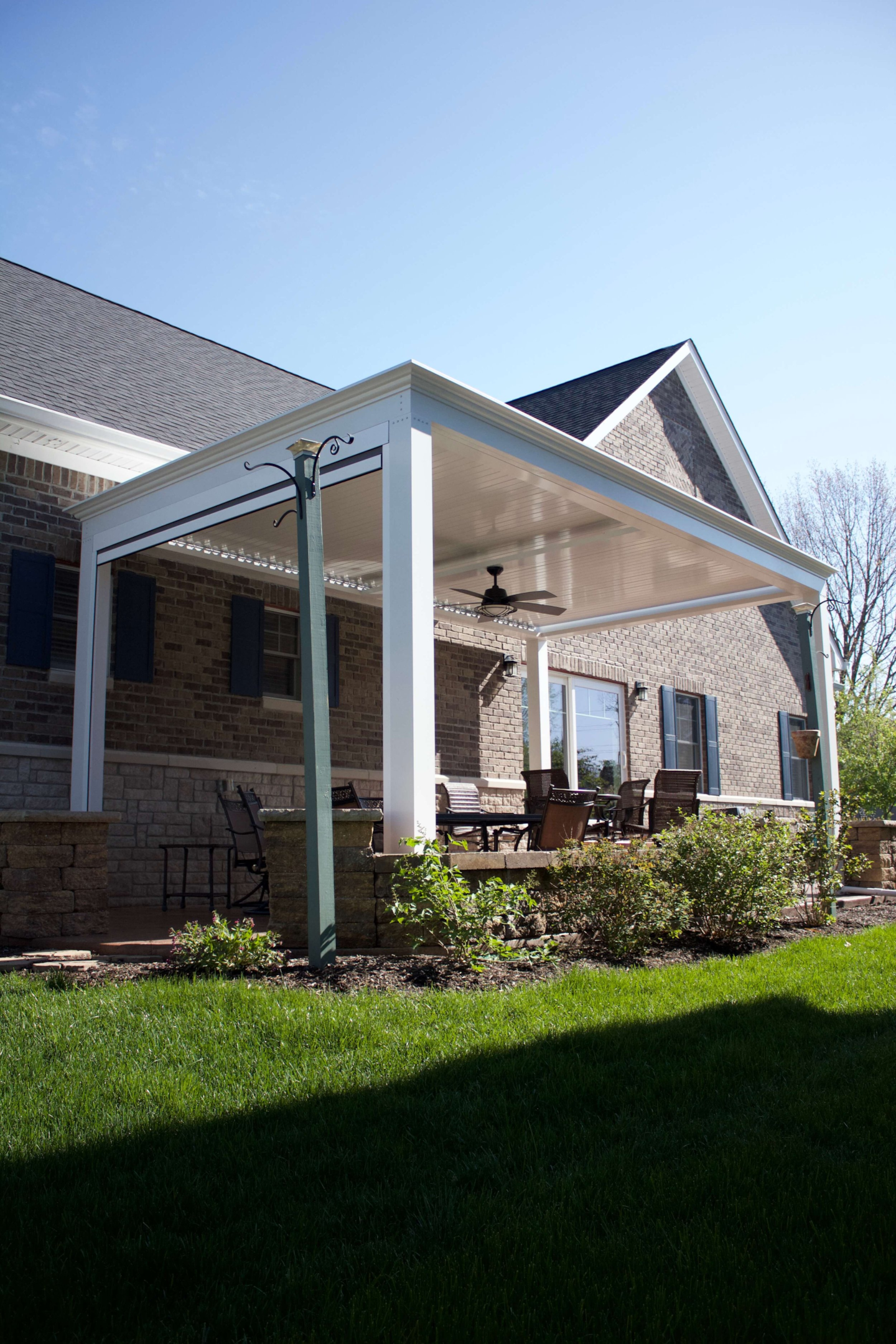
A pergola is an outdoor structure with vertical posts supporting an overhead framework. Traditionally, that framework was a series of open rafters or crossbeams that let sunlight filter through in patterns. You've seen them covering patios, lining garden paths, and framing outdoor dining areas.
The defining characteristic of a traditional pergola is that open roof. It provides partial shade and defines a space without fully enclosing it. That open, airy quality is a big part of why pergolas have become one of the most popular outdoor additions in the U.S.
Modern pergolas have come a long way from the basic wood rafter design. Today, you can find pergolas with:
- Adjustable louvered roofs that rotate to control sun exposure and block rain
- Motorized systems with remote-controlled louver operation
- Aluminum construction that won't rot, warp, or require regular maintenance
- Integrated lighting, fans, and heating for year-round use
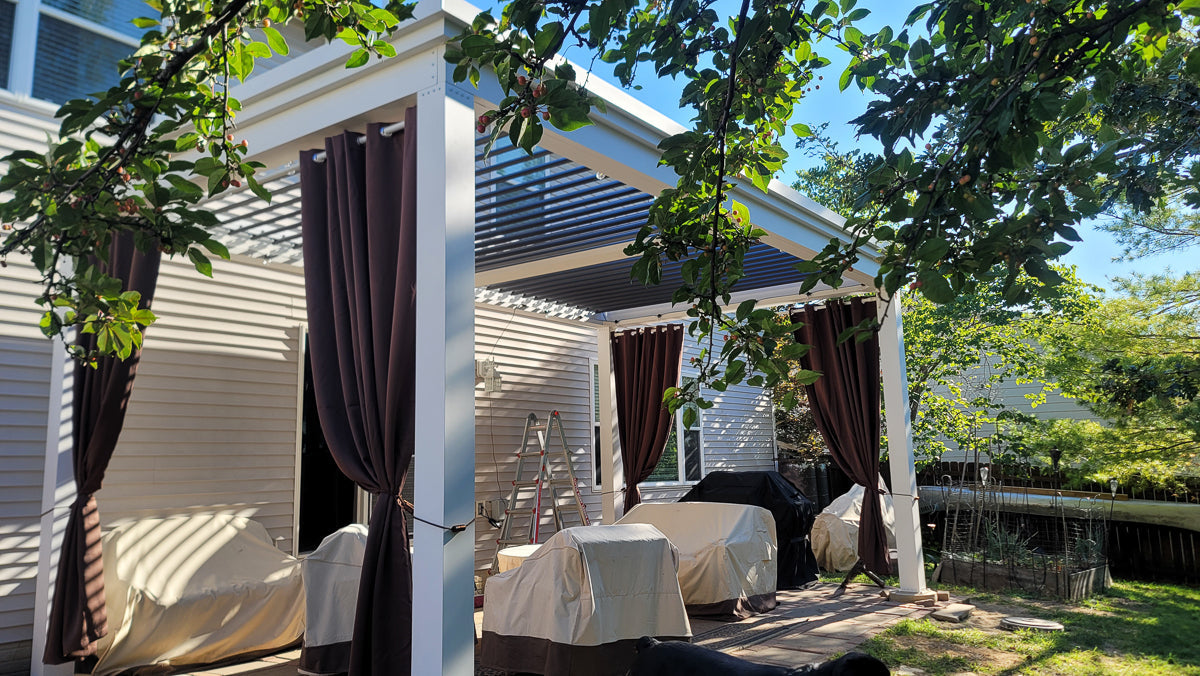
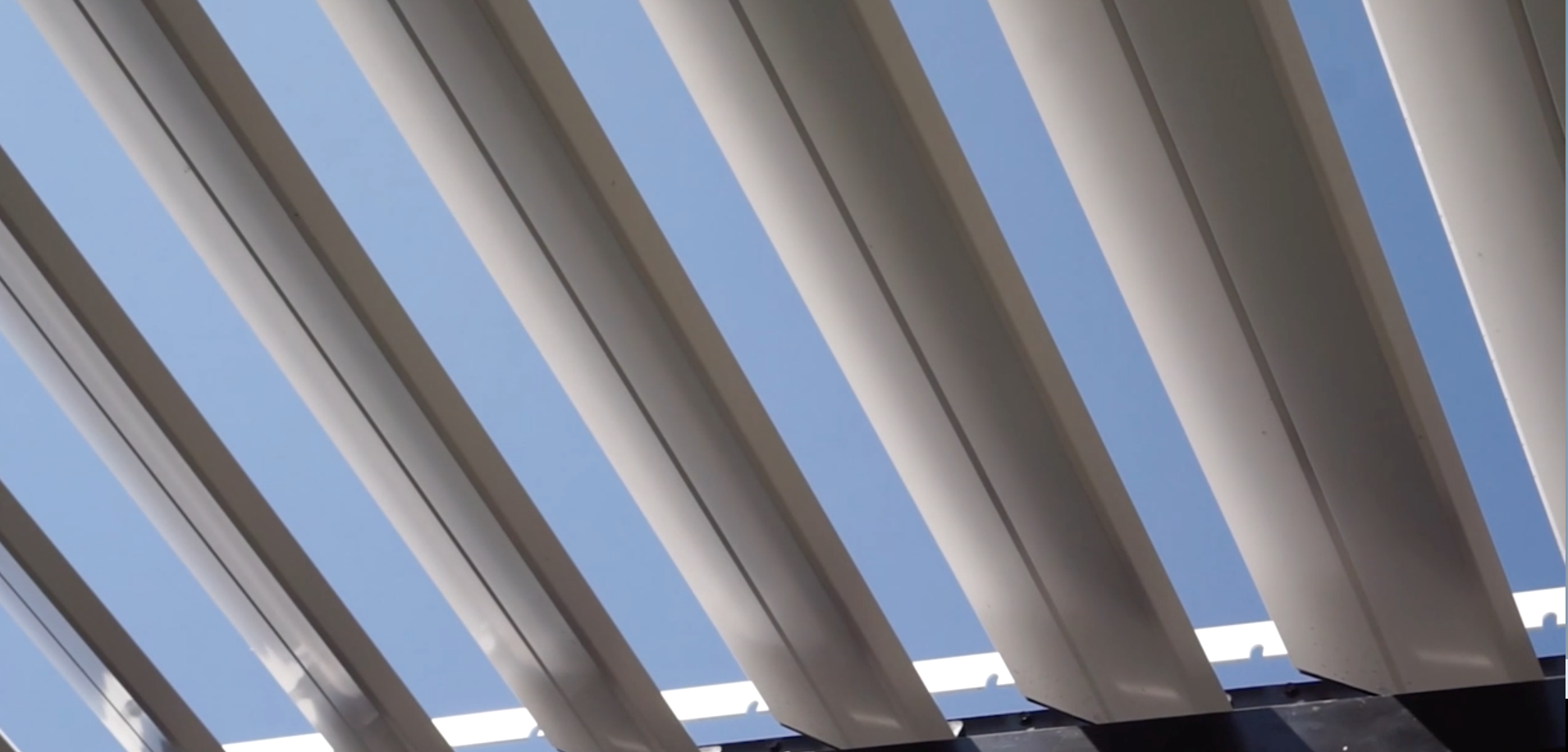
It's the louvered pergola that's really making a difference. You no longer have to decide between sun and shade, as both are built into the same structure. Simply open up the louvers to allow the sun to shine down on you and bring air through. Shut them to block out all sun or rain. It's that flexibility that's making the pergola of today so much more functional than ever before.
What Is a Gazebo?
A gazebo is a detached, usually roofed structure open on the sides, especially one used as a summer house or a sun shelter. Gazebos are usually octagonal or hexagonal (that eight-sided or six-sided shape you always see in a park) but can also be square or rectangular.
What is a gazebo? A gazebo is an outdoor structure with a roof that covers the entire structure. You will never find a gazebo without a full roof. Many also have half walls, railings, and even benches along the sides. Some people install screens or curtains to keep out the bugs.
A gazebo is a free-standing structure that is often found in a yard or garden and serves as a central feature. It can be used as a seating or resting area and is often found in public parks, botanical gardens, and estates. Gazebos may be built of:
- Wood (cedar or pine) for a classic, natural look
- Vinyl/PVC for lower maintenance
- Metal (steel or aluminum) for durability
- Composite materials that combine several of the above
Gazebos are quite traditional. If you have a traditional or cottage-type house, a gazebo will be right up your alley. For modern houses, they can appear incongruous, which might come into play when deciding between a pergola or a gazebo.
Key Differences: Roof, Shape, Materials, Footprint
Alright now what? Well there are a couple of structural and design differences that are the crux of the debate. Let me outline them.
| Category | Pergola | Gazebo |
|---|---|---|
| Roof Style | Open rafters, slatted, or adjustable louvers. Ranges from fully open to fully closed depending on type. | Solid, peaked roof (often shingled). Always fully enclosed overhead. |
| Shape | Rectangular or square. Custom sizes available. Can span long distances (20+ feet). | Typically octagonal or hexagonal. Some square models exist. Sizes tend to be more limited. |
| Materials | Wood (cedar, redwood), vinyl, fiberglass, or aluminum. Aluminum louvered models are the most durable option. | Wood (cedar, pine, redwood), vinyl, metal, or composite. Roof may use shingles, metal panels, or thatch. |
| Footprint | Flexible. Attaches directly to a home wall or stands alone. Great for covering existing patios or decks. | Standalone only. Needs its own dedicated footprint in the yard, often with a separate foundation or pad. |
| Airflow | Excellent. Open sides and adjustable roof allow maximum ventilation. | Good but limited. Solid roof traps heat. Open sides help, but less breeze than a pergola. |
| Light Control | Adjustable (with louvers) or fully open. You choose how much sunlight gets through. | Minimal. The solid roof blocks all direct sunlight. It's shade or nothing. |
| Installation | DIY-friendly, especially kit models. Some aluminum louvered pergolas install in a single day with 2-3 people. | More complex. The peaked roof, multiple sides, and framing usually require professional help or experienced builders. |
| Maintenance | Low (aluminum) to moderate (wood requires staining/sealing every 2-3 years). | Moderate to high. Roof shingles need replacement. Wood requires regular treatment. Roof can collect debris. |
| Permits | Varies by municipality. Many areas don't require permits for open-roof pergolas. | Often requires a permit due to the solid roof and permanent foundation. |
The roof question is everything, isn’t it?
Key takeaway from this pergola vs. gazebo rundown: The roof is the most important functional distinction between the two. The fixed roof of a gazebo offers constant shade and rain protection. No choice there. The open or adjustable roof of a pergola offers choices. With a louvered pergola, you can decide your level of coverage from full sun to full shade to rain protection every day. That is tough to beat.
# Pergola or Gazebo: Which is Cheaper?
Time to talk turkey. The following prices are what you can expect to pay for a pergola vs gazebo, depending on the material and size. Keep in mind that these prices are based on current data and are representative of the actual cost you will pay, not a rough estimate of the lowest prices you may be able to find.
| Structure Type | Small (8x10 - 10x10) | Medium (10x13 - 12x14) | Large (12x16 - 14x20) |
|---|---|---|---|
| Wood Pergola (cedar/redwood) | $2,000 - $4,000 | $3,500 - $6,000 | $5,000 - $8,000 |
| Aluminum Louvered Pergola | $5,000 - $9,000 | $8,000 - $14,000 | $12,000 - $20,000 |
| Wood Gazebo (cedar/pine) | $3,000 - $5,000 | $5,000 - $7,500 | $7,000 - $10,000 |
| Vinyl Gazebo | $4,000 - $6,000 | $6,000 - $9,000 | $8,000 - $12,000 |
| Professional Installation (add-on) | $1,000 - $2,500 | $2,000 - $4,000 | $3,000 - $6,000 |
# Why is there a variation in costs?
Before we begin to compare pergola costs with gazebo pricing, here are some things to consider:
- Material matters most. A basic wood pergola is the most affordable outdoor structure you can build. An aluminum louvered pergola costs more upfront but lasts a lifetime with zero maintenance. Wood gazebos fall somewhere in between.
- Gazebos have higher labor costs. The peaked roof, multiple angled walls, and more complex framing mean professional installation for a gazebo typically runs 30-50% more than a similarly sized pergola.
- Long-term costs favor aluminum pergolas. A wood pergola or gazebo needs staining or sealing every 2-3 years ($200-$500 each time). A gazebo's shingled roof needs replacement every 15-20 years ($1,500-$3,000). An aluminum pergola with a powder-coated finish? Nothing. Just hose it off once a year.
- Foundation costs can add up for gazebos. Since gazebos are freestanding and often placed in yard areas without existing hardscape, you may need to pour a concrete pad ($1,500-$3,000) before the structure goes up.
The takeaway: If you are comparing an entry-level wooden pergola to an entry-level wooden gazebo, the gazebo will be 30-50% more expensive. If you are comparing a high-end aluminum louvered pergola to a vinyl gazebo, they are relatively comparable in price, but you are getting a LOT more bang for your buck with the pergola.
Advantages and disadvantages
As with any exterior feature, there are pros and cons to consider. Below is an overview of the pros and cons of gazebos and pergolas in our gazebo vs pergola debate.
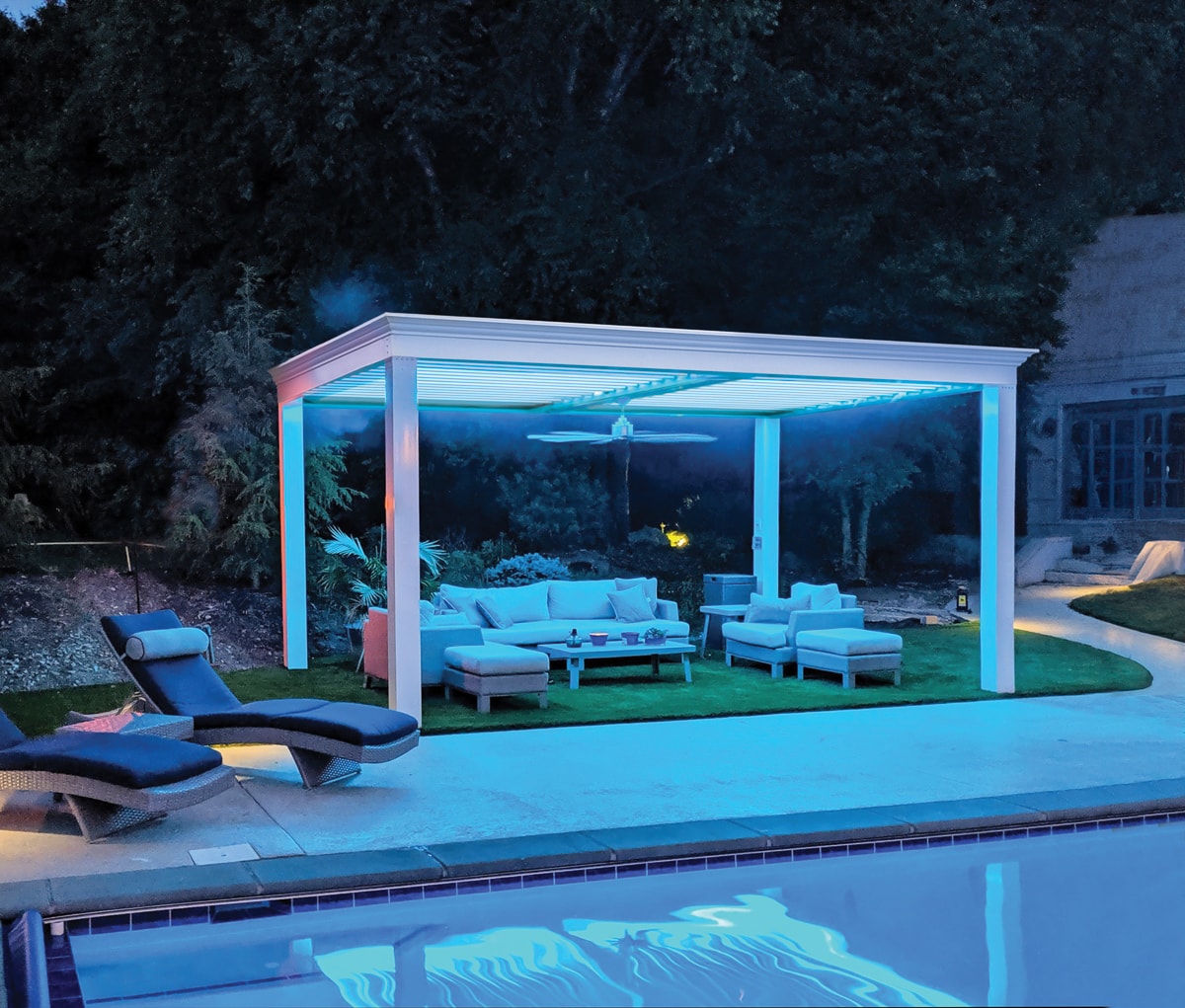
| Pergola | Gazebo | |
|---|---|---|
| Pros |
|
|
| Cons |
|
|
# Gazebos have one major issue: their shape. Since they’re essentially circular (or hexagonal/octagonal) structures, it’s difficult to place them near a fence or wall without losing a decent amount of space.
This is one of those things that people don’t consider unless they’ve stepped inside of one: hexagons and octagons don’t accommodate furniture nicely. Consider trying to fit a regular dining table, an L-sectional couch or a grill station into an 8 sided structure. It doesn’t work very well. A pergola’s rectangle shape does though.
The Best Option for Your Home?
So which is better, pergola or gazebo? Well, that depends on what your goals are. Here are the most popular reasons for choosing one over the other.

For Outdoor Entertaining and Dining
Winner: Pergola. If you host dinners, barbecues, or just want to hang out with friends and family outside, a pergola wins hands down. The rectangular shape fits standard dining tables and seating arrangements. You can attach it directly to your back door for a natural flow from indoor to outdoor space. And with adjustable louvers, you control the vibe: open for stargazing, partially closed for dappled light during a lunch, or fully closed when afternoon rain rolls in.
For Shade and Sun Protection
Winner: Tie (with an edge to louvered pergolas). A gazebo gives you permanent, fixed shade. That's fine if you always want shade. But most people want the option to soak in some sun on a cool morning and then block it during the intense afternoon hours. A pergola that opens and closes gives you that range. It can be up to 20 degrees cooler under closed louvers compared to direct sun, and you can open them right back up whenever you want.
For Year-Round Use
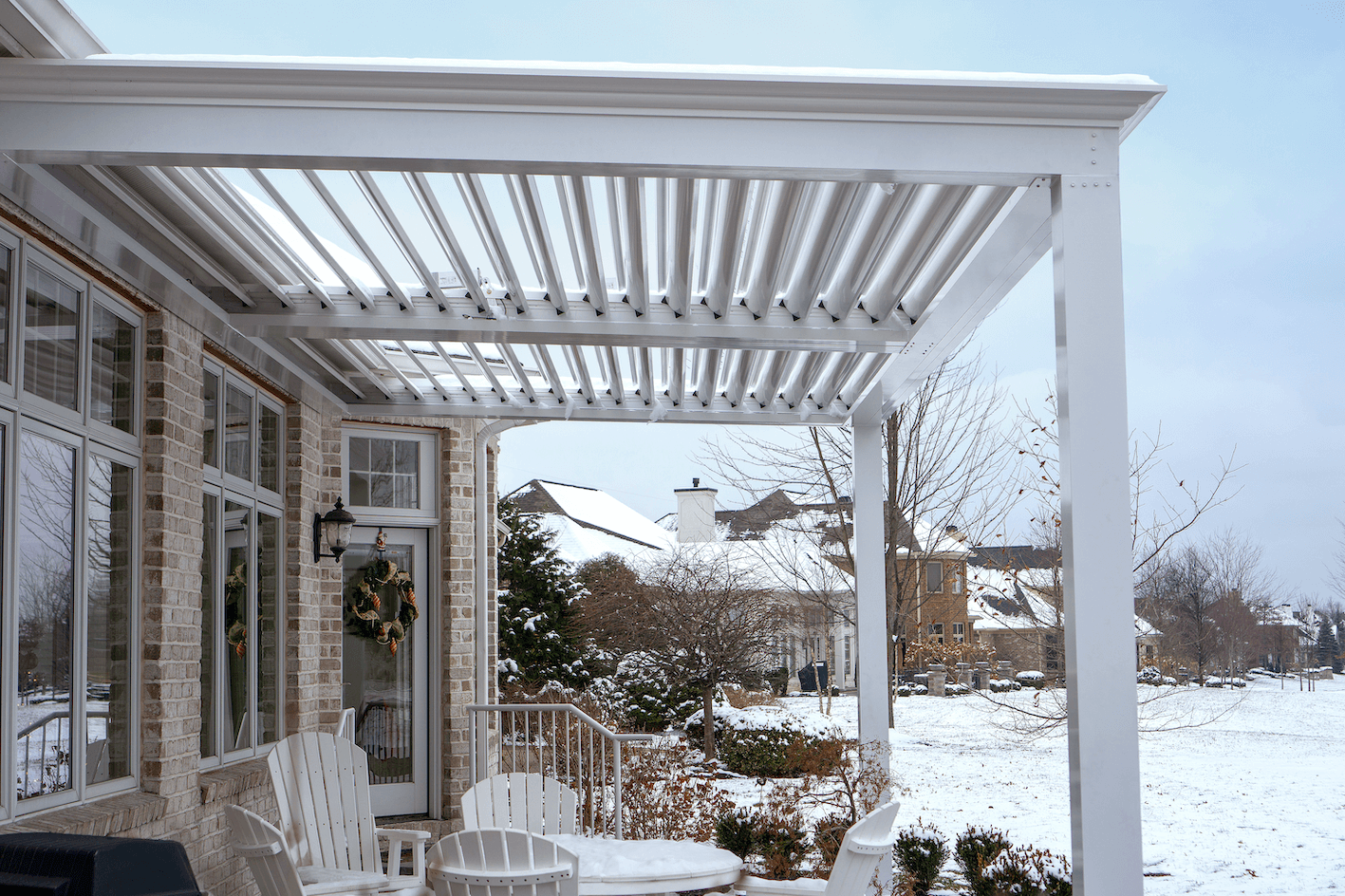
Winner: Pergola (aluminum louvered). This isn't even close. A premium aluminum louvered pergola handles up to 200+ mph winds and up to 65 psf of snow load. You can use it in the rain, in the snow, and in 100-degree heat. Add heaters and fans, and it's truly a four-season outdoor room. A wood or vinyl gazebo? It handles rain fine, but the typical wind rating is 60-90 mph, and heavy snow can damage the roof structure. Most gazebos also lack the engineering to support ceiling fans, heaters, or integrated lighting systems.
For Resale Value and ROI
Winner: Pergola. Outdoor living improvements are one of the best returns on investment in home remodeling, and pergolas consistently rank among the top outdoor additions for boosting property value. Real estate experts estimate a well-built pergola can return 50-80% of its cost at resale. Pergolas also photograph well for listings, creating that aspirational outdoor-living look that buyers are actively searching for. Gazebos can add value too, but they appeal to a narrower range of buyers, and the traditional look can actually work against you if the home skews modern.
For Small Yards
Winner: Pergola. If your yard is tight, a pergola that attaches to your home is the clear call. You use the existing patio footprint and don't sacrifice any additional yard space. A freestanding gazebo, on the other hand, needs its own dedicated area plus room to walk around it on all sides, eating up precious square footage.
For a Garden Focal Point
Winner: Gazebo. Credit where it's due. If you have a large property with a garden area and you want a charming, standalone structure that acts as a visual centerpiece, a gazebo does that beautifully. It's the one scenario where the gazebo's traditional styling and standalone nature are genuine advantages rather than limitations.
Can You Get the Best of Both?
Here's what most pergola vs gazebo comparisons don't tell you: you don't have to choose between open-air freedom and full coverage anymore. That's exactly what a louvered pergola delivers.
Think about the core appeal of each structure:
- What people love about pergolas: the open feel, the airflow, the light, the modern look, the ability to attach to your home.
- What people love about gazebos: the full rain and sun protection, the sense of having a real outdoor room with a real roof.
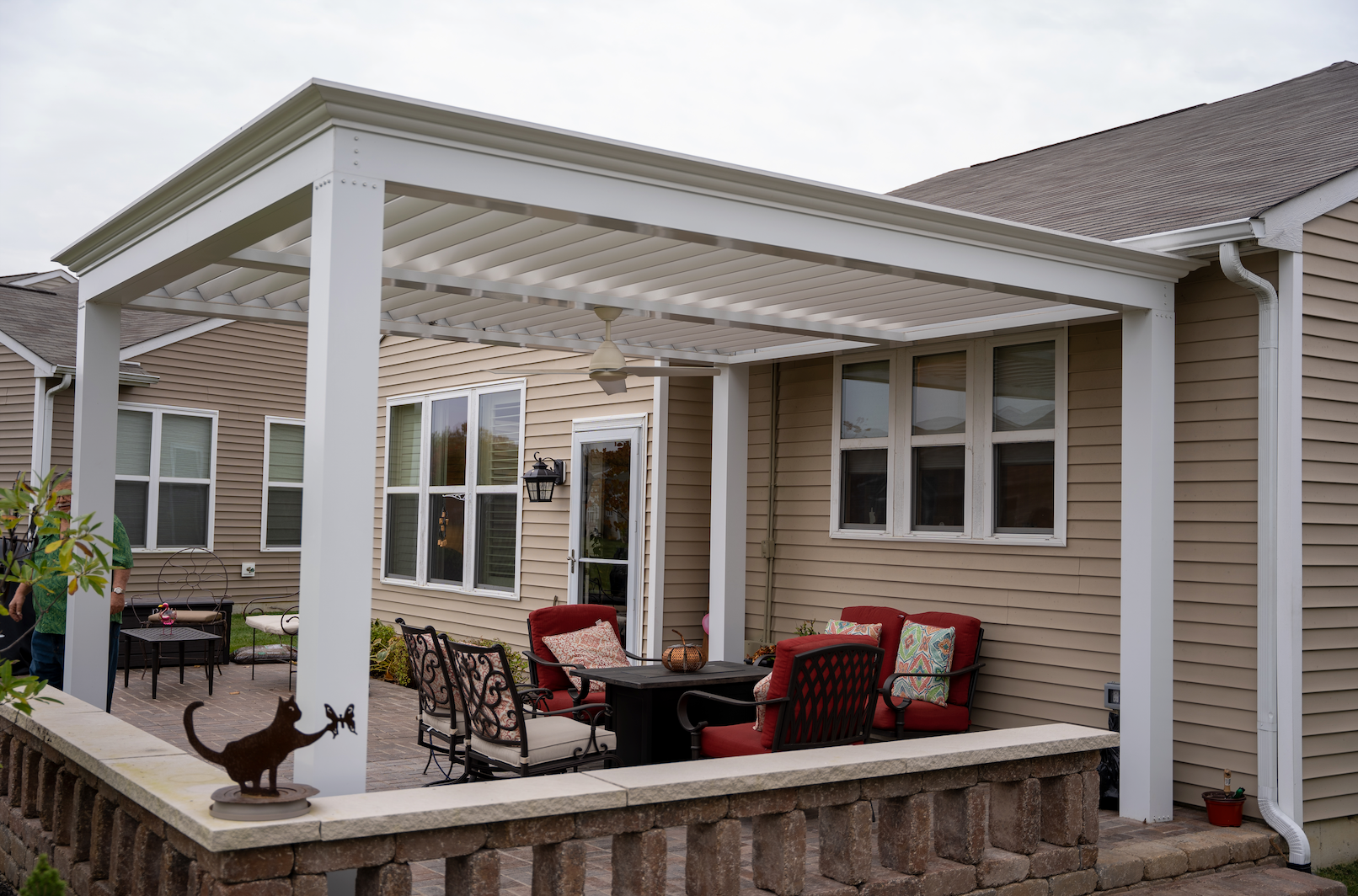
With a louvered pergola you get both. Really. Open the louvers to 130 degrees and you get the open pergola experience with the sun shining down on you. Close them down and you have a fully water proof roof on your structure like a gazebo. You get both features out of one pergola. Controlled by a remote.
Why Homeowners Are Choosing a Louvered Pergola Over Both
The Luxury Pergola designs and manufactures commercial-grade aluminum pergola kits with motorized louvered roofs that are so heavy they can weigh up to 1,800 lbs for a 10x13 structure. That's not a flimsy patio accessory. That's a permanent structure engineered to handle up to 200+ mph winds (closed) and up to 65 psf of snow load.
Here's how it stacks up against both options:
| Feature | Traditional Pergola | Gazebo | Louvered Pergola |
|---|---|---|---|
| Rain protection | No | Yes (always) | Yes (when closed) |
| Open-air sunlight | Yes (always) | No | Yes (when open) |
| Adjustable shade | No | No | Yes (130-degree rotation) |
| Wind rating | Varies (low-moderate) | 60-90 mph | Up to 200+ mph (closed) |
| Snow load | N/A (open roof) | 20-30 psf typical | Up to 65 psf |
| Maintenance | High (wood) | Moderate-High | Near zero (aluminum) |
| Warranty | 1-5 years typical | 5-10 years typical | Lifetime (frame, louvers, motor) |
| Attach to home? | Yes | No | Yes |
| Modern aesthetic | Yes | Traditional only | Yes (flat-ceiling design) |
A louvered pergola is really a combination of everything you like about a gazebo (all the shade) and everything you like about a pergola (the openness, the style, the customization). That's why the top pergola kits out there these days are aluminum louvered pergolas.
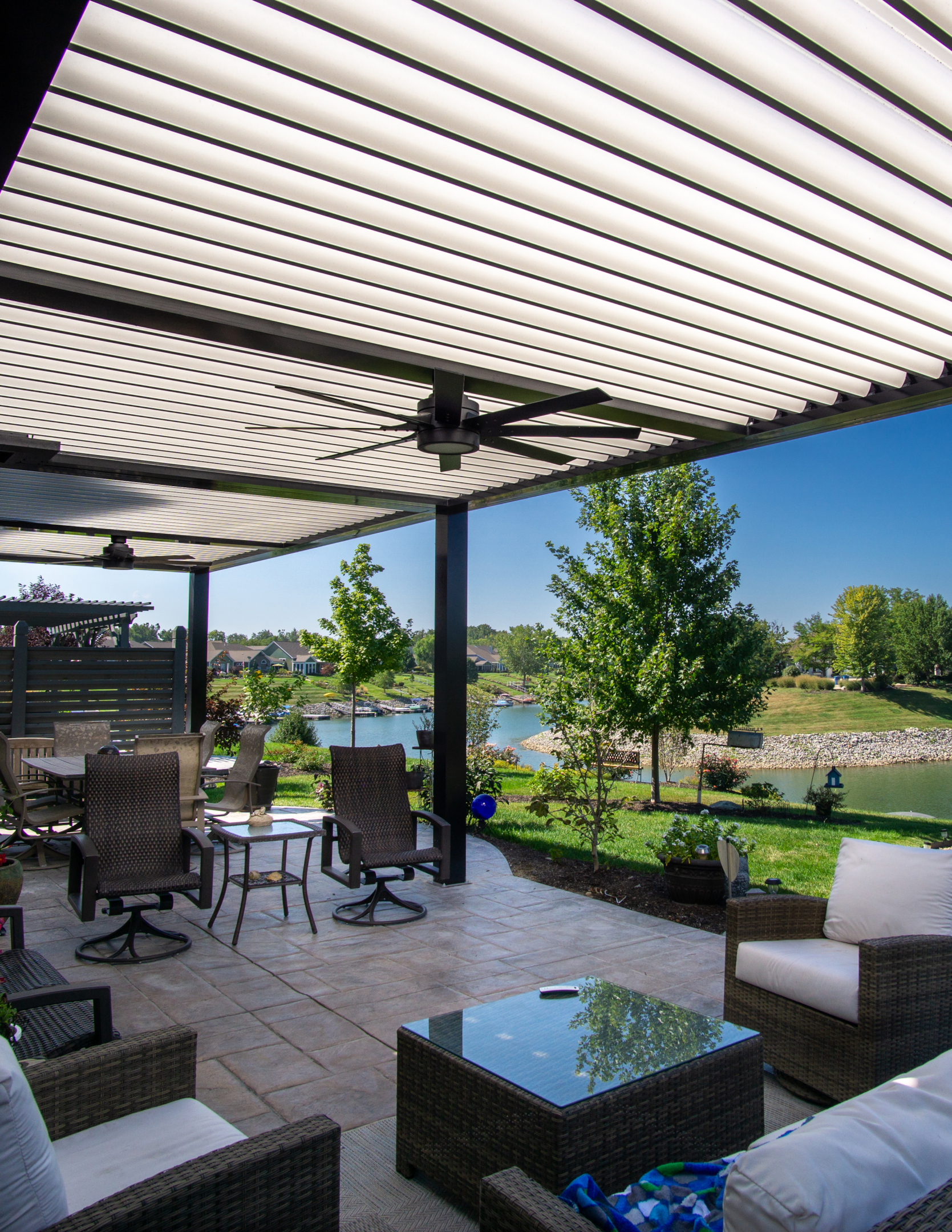
And because it ships as a kit and installs in about a day, you skip the weeks-long construction timeline and contractor headaches that come with building a custom gazebo. Ready to see what's possible? Design your custom pergola and get an instant price.
Curious how specific brands stack up? See our side-by-side StruXure vs Luxury Pergola breakdown or read the full Hansø pergola review for two of the most common alternatives homeowners compare.
Frequently Asked Questions
Is a pergola or gazebo better?
It depends on your priorities. A pergola is better for most homeowners because it's more versatile, attaches to your home, fits standard furniture layouts, and (with a louvered roof) gives you adjustable shade and rain protection. A gazebo is better only if you have a large property and want a standalone garden structure with a classic look. For the majority of people looking to cover a patio or create an outdoor living space, a pergola is the stronger choice.
Which costs more, a pergola or gazebo?
A gazebo typically costs more than a similarly sized pergola when you compare the same materials. A basic wood gazebo runs $3,000-$10,000, while a basic wood pergola runs $2,000-$8,000. The cost gap widens when you factor in the gazebo's more complex installation ($1,500-$4,000 more in labor) and the potential need for a dedicated concrete foundation. Premium aluminum louvered pergolas ($5,000-$20,000) cost more than basic wood structures but less than professionally installed alternatives, and their zero-maintenance design means lower lifetime costs.
Do pergolas provide enough shade?
Traditional open-rafter pergolas provide partial, dappled shade. That's enough for some people, but not for everyone. If you want full shade on demand, a louvered pergola is the answer. Motorized louvers close completely to block up to 100% of direct sunlight and can be angled to any position in between. Closed louvers create temperatures up to 20 degrees cooler than direct sun, which is comparable to or better than a gazebo's solid roof.
Can a pergola have a solid roof?
Yes. While traditional pergolas have open rafters, modern louvered pergolas have adjustable roofs that close into a solid, waterproof surface. When the louvers are fully closed, it functions just like a solid roof, blocking rain and sun completely. The difference is that you can also open those louvers whenever you want full sun or airflow. Some people also add polycarbonate panels or fabric canopies to traditional pergola frames for partial coverage, but a motorized louvered system is the most effective and convenient option.
Which adds more home value, a pergola or gazebo?
Pergolas generally add more resale value because they have broader buyer appeal. A well-built pergola that extends your home's living space to the outdoors reads as a premium feature in any real estate listing. Pergolas work with every architectural style, from modern to traditional. Gazebos appeal to a narrower audience and can even work against a home's value if the style clashes with the house. Industry estimates suggest a quality pergola returns 50-80% of its cost at resale, while gazebos return slightly less on average.
Do you need a permit for a pergola or gazebo?
Permit requirements vary by city and county, so always check with your local building department before you start. That said, pergolas are less likely to require a permit than gazebos. Many municipalities don't require permits for open-roof pergolas because they aren't considered enclosed structures. Gazebos, with their solid roofs and permanent foundations, are more frequently subject to permit requirements. Even louvered pergolas with closable roofs may be treated differently from gazebos in some jurisdictions because of their open-sided design. Expect to pay $50-$500 for a building permit if one is required.
Can I build a pergola or gazebo on a deck?
Pergolas are commonly built on existing decks and patios. Many pergola kit systems are specifically designed to mount on concrete or wood deck surfaces. Gazebos can technically be placed on decks, but the concentrated weight on fewer, smaller footings (compared to a pergola's four posts) can stress deck framing. You'll want to verify your deck's load capacity with a structural engineer before placing a heavy gazebo on it. If you have an existing deck or patio, a pergola is usually the easier and safer choice.
How long do pergolas and gazebos last?
Lifespan depends entirely on the material. A pressure-treated wood pergola or gazebo lasts 10-15 years with regular maintenance. Cedar and redwood structures can go 15-20 years. Vinyl gazebos last 20-30 years but can become brittle and discolor over time. Aluminum pergolas with commercial-grade powder coating last the longest, with some manufacturers offering lifetime warranties on the frame, louvers, and motor. If longevity is a priority, aluminum is the clear winner in both the pergola and gazebo categories.