

A louvered pergola is one of the fastest-growing outdoor upgrades in the US right now — and for good reason. Unlike a standard pergola that leaves you exposed to rain and harsh sun, a louvered pergola gives you full control over your outdoor space year-round. Open the louvers for a sunny afternoon. Close them when a storm rolls in. Most run off a remote or an app.
But not all louvered pergolas are built the same. The difference between a $4,000 Chinese import and a $12,000 American-made unit isn't just price. It's aluminum grade, structural engineering, warranty support, and whether your local building department will even approve a permit. This guide walks through what actually matters before you buy.
American-Made Louvered Pergola — Direct from the Manufacturer
Up to 8,000 lbs snow load. Up to 115 mph wind resistance. T6 aircraft-grade aluminum. Engineer-stamped drawings included with every order. Starting at $12,209 — no dealer, no markup.
See Sizes & PricingWhat Is a Louvered Pergola?
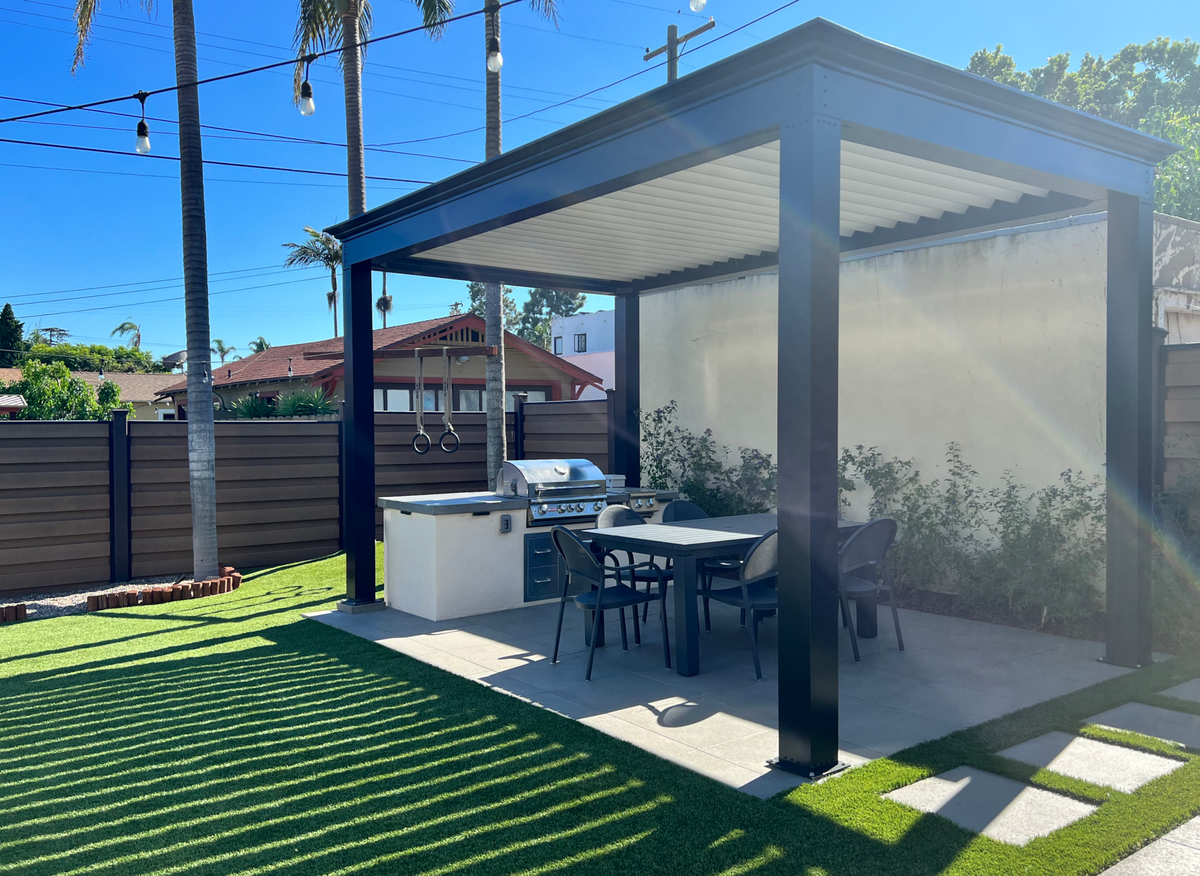
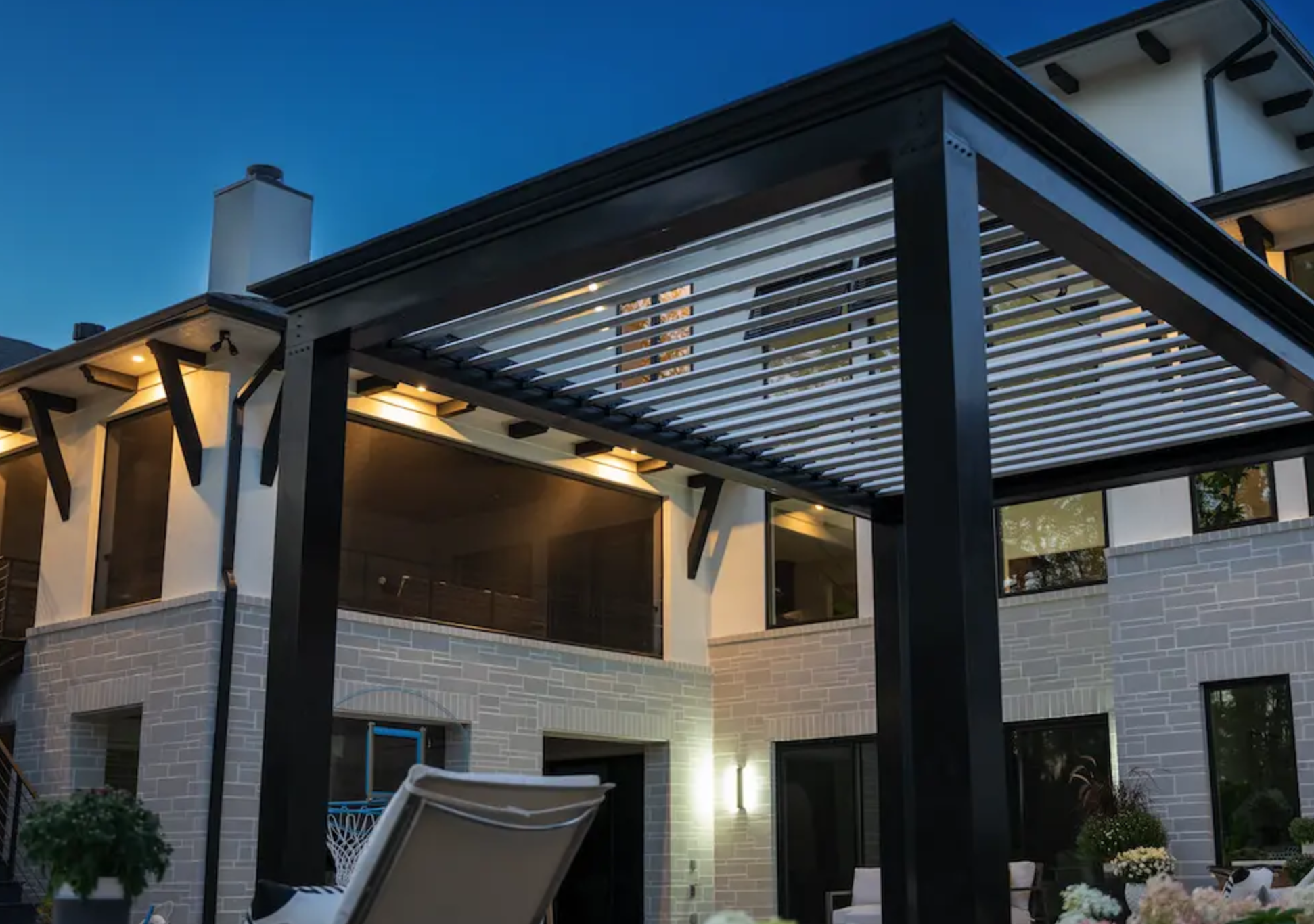
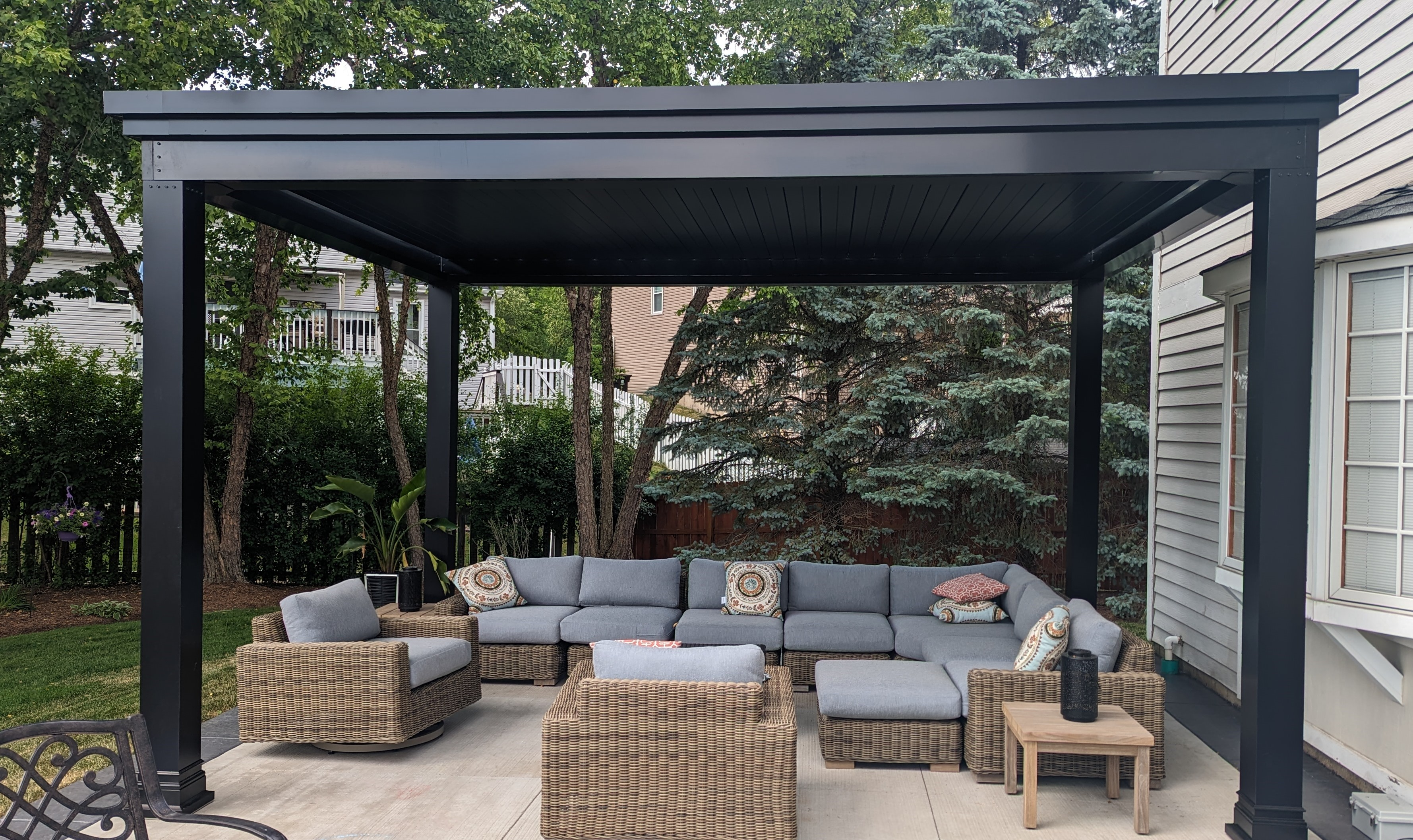
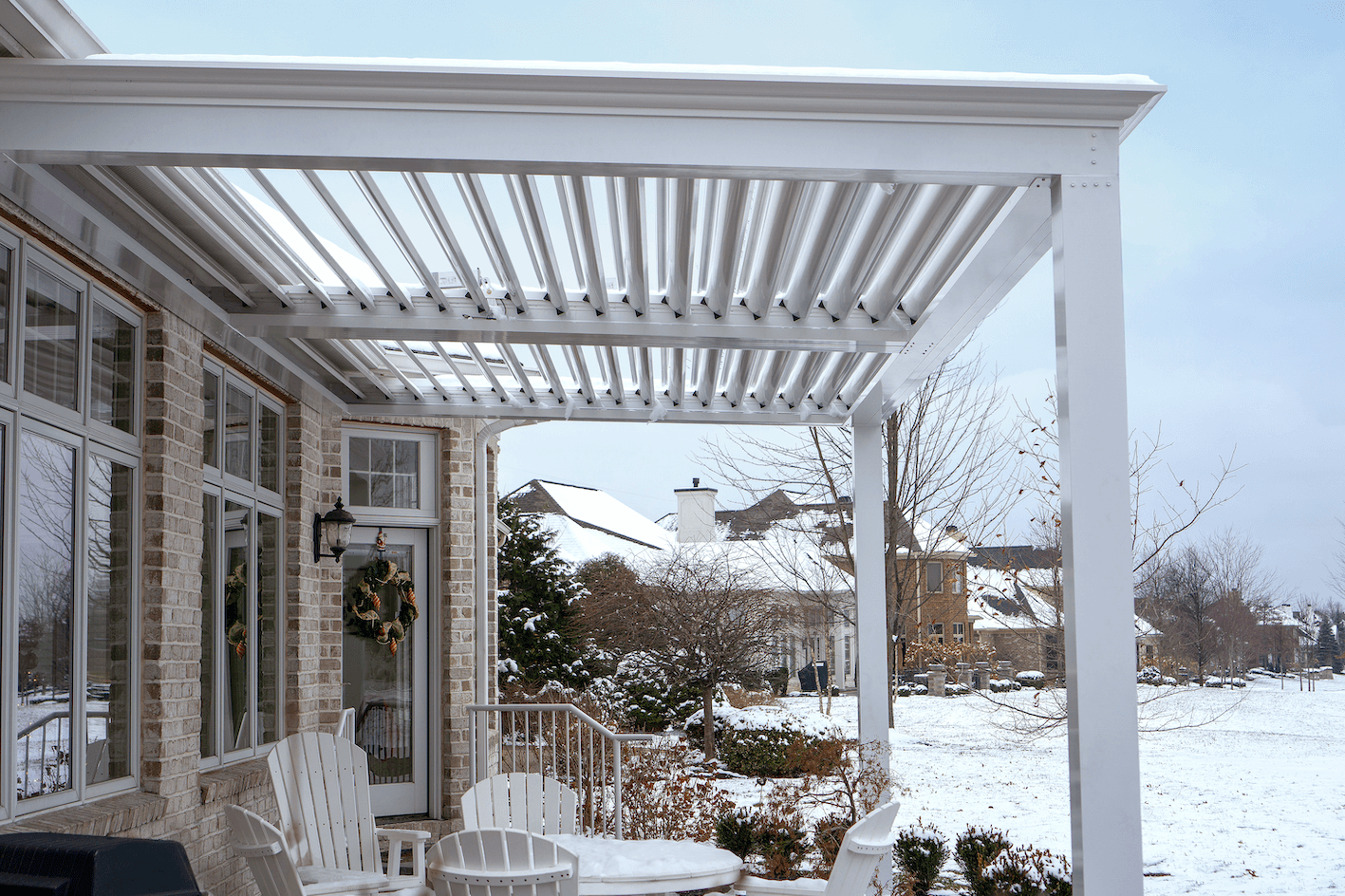
A louvered pergola is an aluminum or steel outdoor structure with a roof made of adjustable slats called louvers. The louvers rotate on a motorized axis, typically between 0 degrees (fully closed, flat) and 135 degrees (fully open, vertical). When closed, the slats overlap and shed water into an integrated gutter system. When open, they let in full sun and airflow.
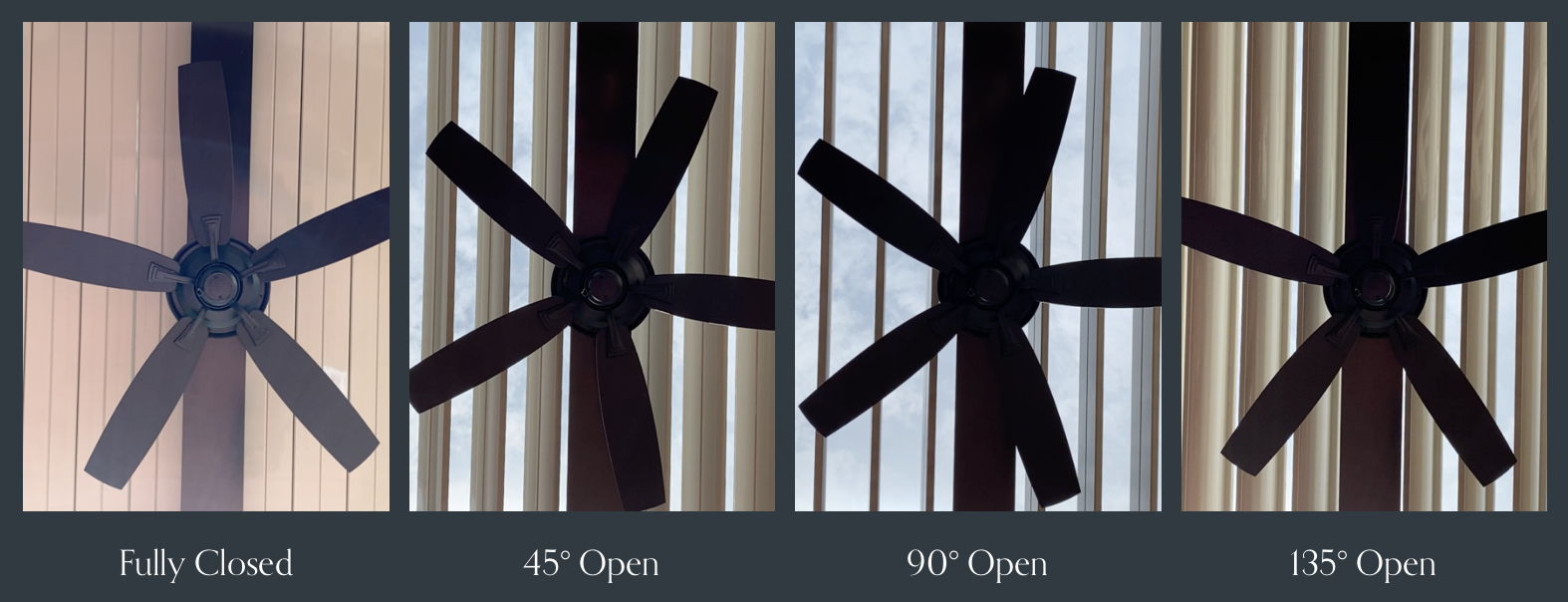
The modern louvered pergola is almost always motorized. A small motor drives all louvers simultaneously, controlled by a wall switch, remote, or smartphone app. Higher-end systems include wind and rain sensors that automatically close the louvers when weather hits.
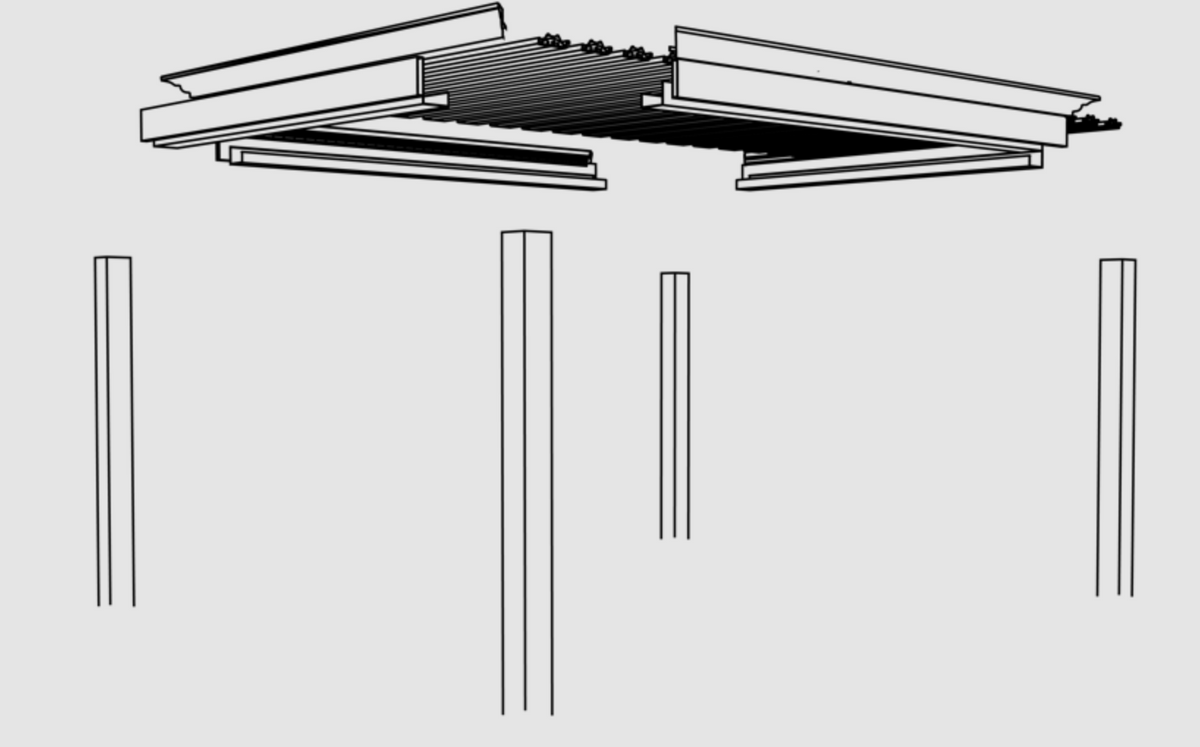
Key components of a quality louvered pergola:
- Extruded aluminum frame — the posts, beams, and rafters that hold everything together
- Motorized louver blades — the adjustable roof slats, typically 6–8 inches wide
- Integrated gutter system — channels rainwater from the louvers into the posts and away from the deck or patio
- Motor and control system — drives louver rotation; quality varies widely between brands
- Post base hardware — anchors the structure to concrete, deck, or pavers
Why Aluminum Is the Only Material Worth Considering
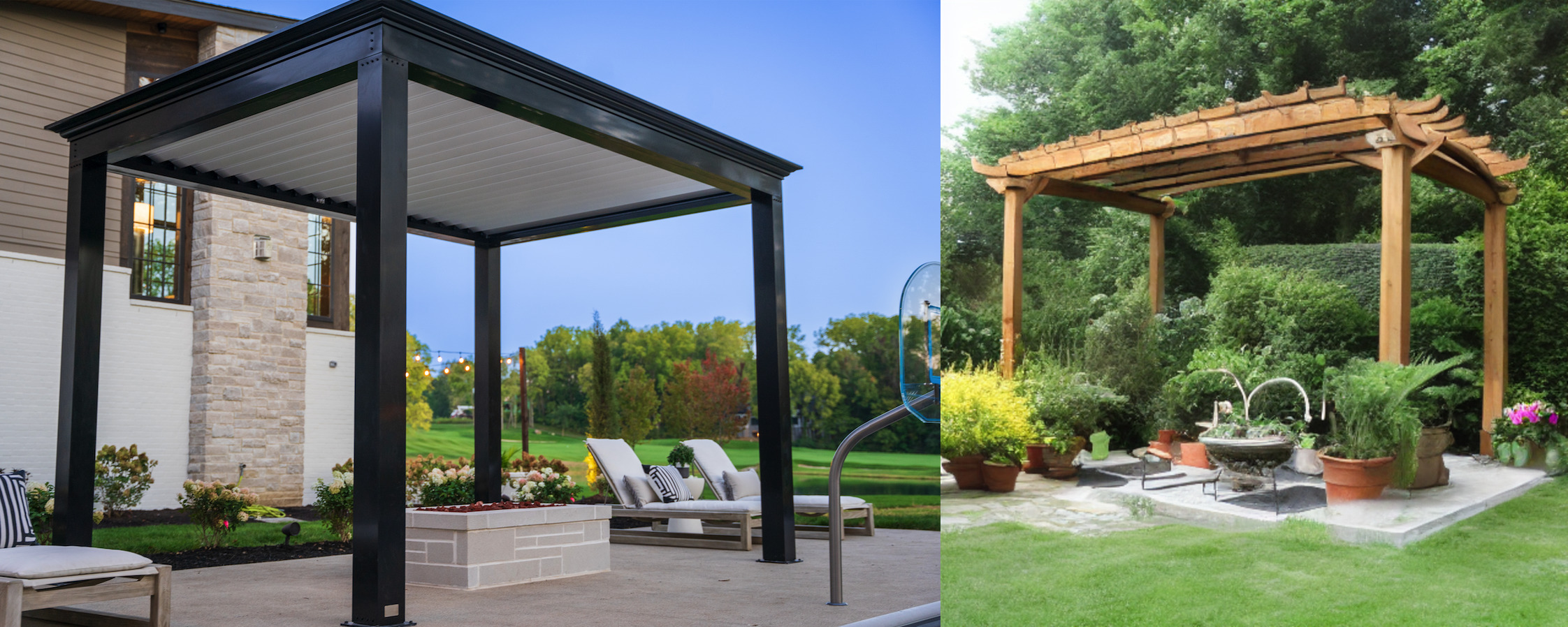
Louvered pergolas are available in aluminum, wood, and vinyl. In practice, aluminum is the only material that makes sense for a motorized louvered roof. Here's why:
Wood expands and contracts with temperature and moisture. That movement binds up louver mechanisms and warps frames over time. A wood louver system requires constant maintenance — staining or sealing every 1–2 years — and typically lasts 5–12 years before structural issues develop. Wood also can't match the precision tolerances needed for a smooth motorized system.
Vinyl is low-maintenance but brittle in extreme cold. Temperature fluctuations crack vinyl frames, and vinyl doesn't hold fasteners the same way aluminum does. A vinyl louvered roof in a northern climate is a short-term solution.
Aluminum is dimensionally stable, rust-resistant, and strong enough to handle real weather. It won't rot, warp, or corrode. A quality aluminum louvered pergola needs almost no maintenance beyond an occasional rinse. With the right aluminum grade, it can handle heavy snow loads and high winds without flexing. That's why every serious louvered pergola manufacturer builds with aluminum.
5 Things to Look For When Buying a Louvered Pergola
1. Aluminum Grade — T6 vs T5 vs Unknown
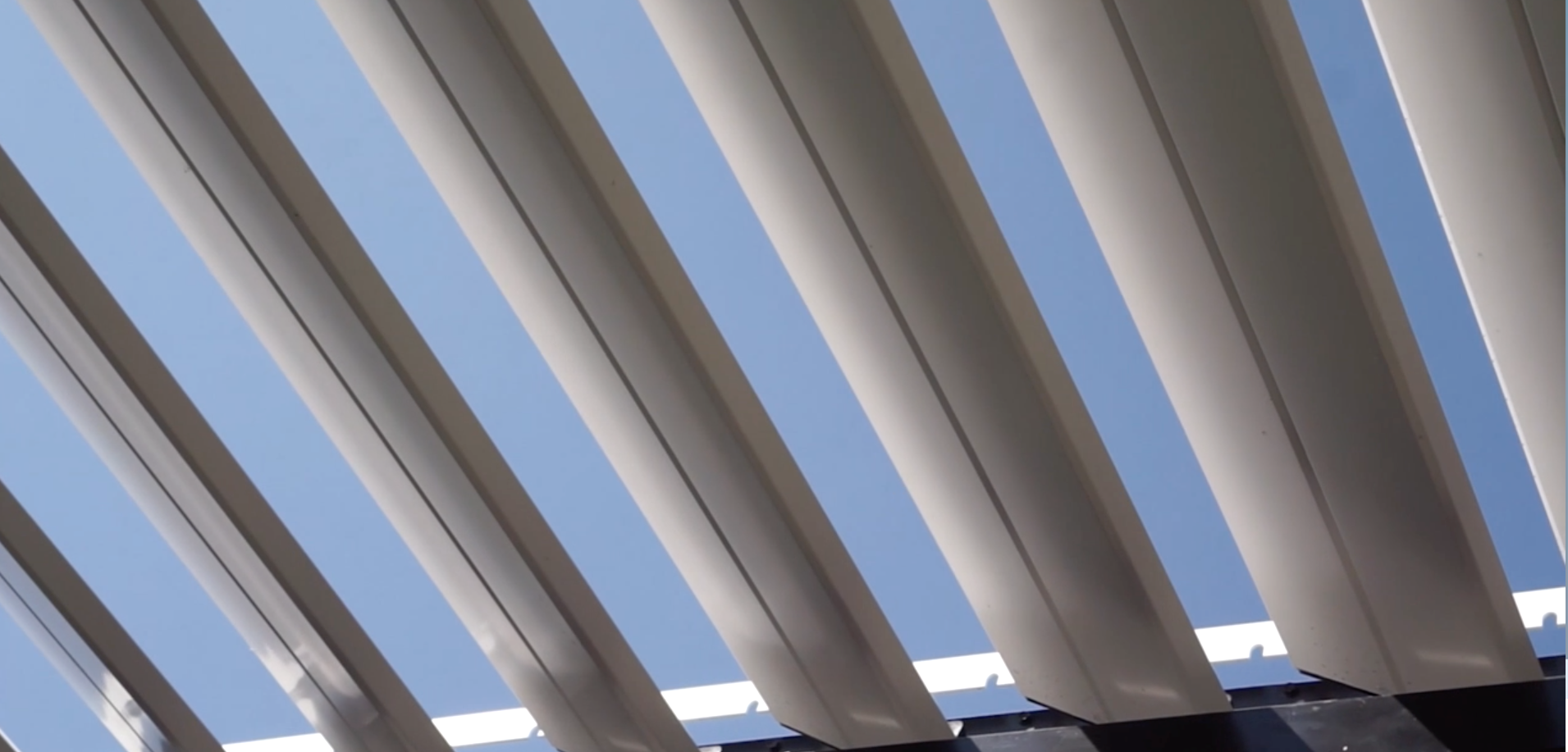
Aluminum is graded by temper. The number after "T" tells you how it was heat-treated, which determines yield strength.
- T6 aluminum — yield strength of 35,000+ psi. This is the standard used in aerospace and marine applications. It's what The Luxury Pergola uses throughout the frame and louvers.
- T5 aluminum — yield strength around 21,000 psi. Some budget import brands use T5, which sounds close but is significantly weaker under load.
- Unknown grade — many Chinese import brands don't disclose the aluminum grade at all. If a brand won't tell you the temper, assume it's the cheapest option available.
Why this matters: A 12x20 pergola carrying wet snow can put thousands of pounds of load on the frame. T6 handles it. T5 flexes. Unknown grade may fail.
2. Engineer-Stamped Drawings
Most US jurisdictions require a building permit for a permanent outdoor structure. Permit applications require engineering drawings that show how the structure handles wind and snow loads. These drawings need to be stamped by a licensed structural engineer.
The Luxury Pergola includes engineer-stamped drawings with every order. Most Chinese import brands don't offer them at all — their products haven't been engineered to any specific code. That means you're either installing without a permit (a liability if something goes wrong) or spending $500–$2,000 to hire an engineer to certify a structure that may not pass.
3. Integrated Gutter System
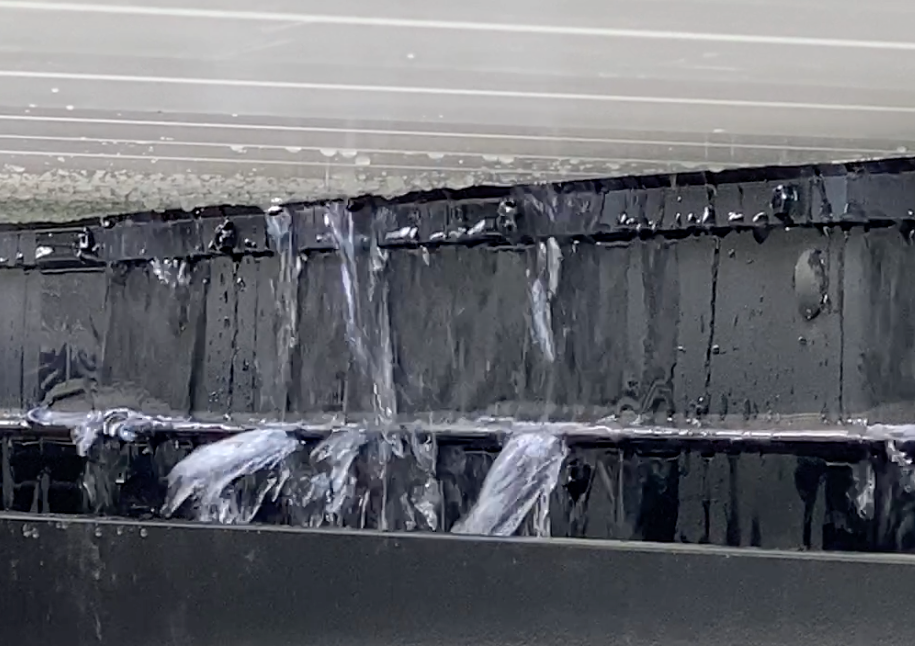
When louvers close, they need somewhere to send the rain. A well-designed louvered pergola routes water through channels built into the louver blades, into the main rafters, down through hollow posts, and out at the base. You should never see water dripping off the frame during a rainstorm.
Cheap systems have exposed gutter channels bolted onto the outside of the frame, or they simply let water drip off the ends of the louvers. That looks bad and creates drainage problems. Look for a system where the gutter is fully integrated and invisible from the outside.
4. Motor Quality and Warranty
The motor is the only moving part that can fail. A bad motor means a stuck roof during a storm, a service call, and potential warranty disputes with a company that may be overseas.
Look for:
- Motor brand transparency — who made it, what's the rated cycle count
- Warranty coverage that includes the motor, not just the frame
- US-based customer service for warranty claims
- Whether replacement parts are stocked domestically or require international shipping
5. Custom Sizing vs Fixed Sizes
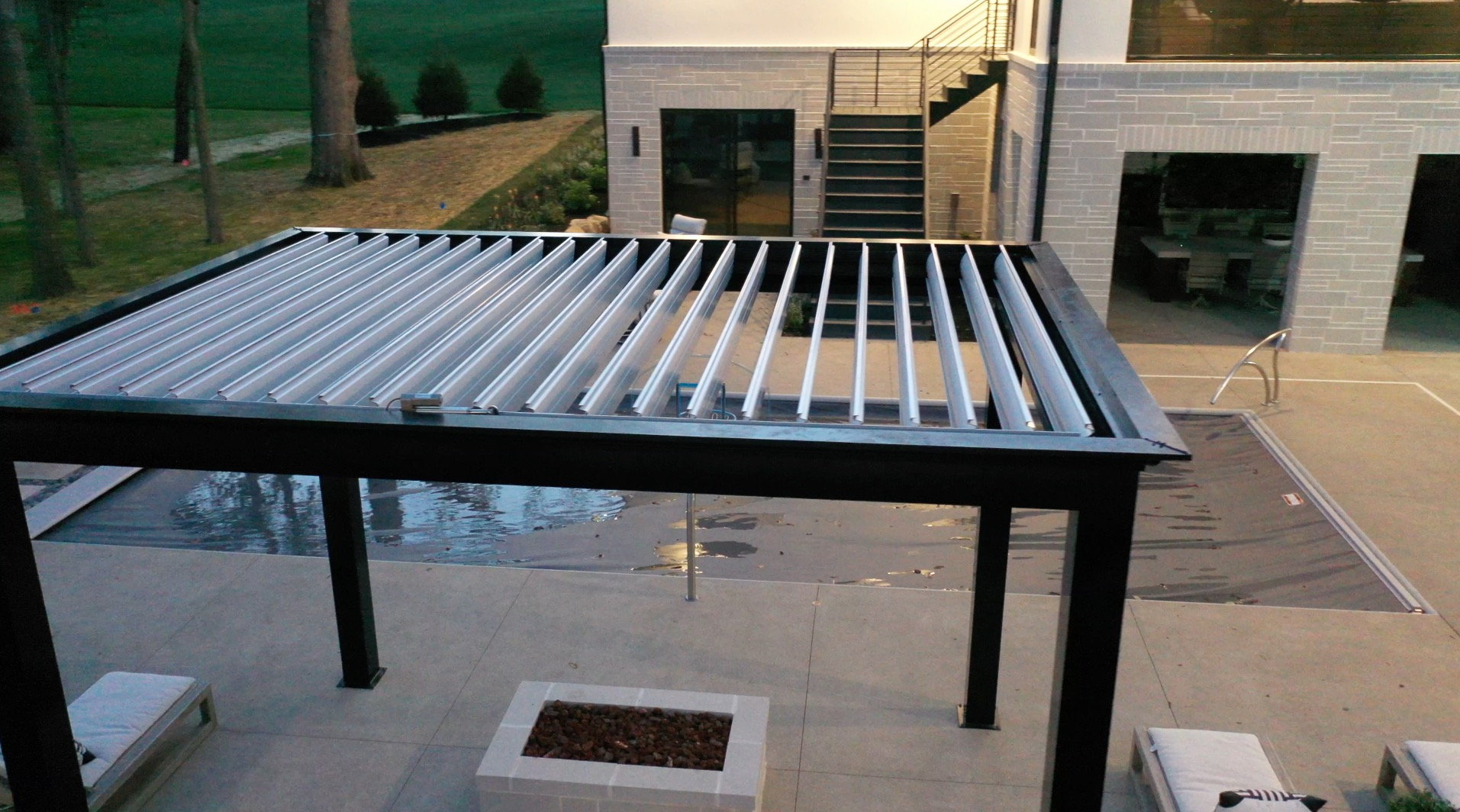
Most Chinese import brands offer 3–5 fixed sizes. If your patio is 14x22, you're either going with 12x20 (too small) or 16x24 (too big and requires a larger concrete pour). Fixed sizes also limit attachment-to-house configurations.
Custom-sized pergolas are cut to your exact dimensions at the factory. You specify the width, projection, and post height. The result fits your space perfectly, requires less workaround on the installation, and looks intentional rather than like an afterthought.
How Much Does a Louvered Pergola Cost in 2026?
Here's how the market breaks down:
Budget imports ($3,000–$8,000): Brands like Pergolux and Hanso Home import from factories in Foshan, China. The same products are sold on Alibaba for $2,000–$4,000. You get a fixed size, unknown aluminum grade, no engineering stamps, and customer support that's hard to reach. They're cheap for a reason.
American-made direct ($12,000–$20,000): This is where The Luxury Pergola sits. Custom sizes, T6 aluminum, engineer-stamped drawings, US manufacturer warranty. At $12,209 to start, you're paying for something that will pass a permit inspection and hold up for 25+ years. No dealer means no markup — you're buying directly from the people who make it.
Dealer-installed premium ($25,000–$50,000+): Brands like StruXure sell through a dealer network. The product quality is similar to the American-made direct tier, but you're adding a dealer margin of 40–60%. A 12x20 StruXure that costs $15,000 to manufacture retails for $30,000–$40,000 installed through a dealer. You're paying for the contractor relationship, not better aluminum.
TLP vs Chinese Import Brands — What's the Difference?
The most common question we hear: "Is the price difference really worth it?" Here's the honest comparison:
| Feature | The Luxury Pergola | Chinese Import Brands |
|---|---|---|
| Aluminum Grade | T6 (35,000+ psi yield strength) | T5 or unknown (~21,000 psi) |
| Engineer-Stamped Drawings | Included with every order | Not available |
| Snow Load Rating | Up to 8,000 lbs | Up to 25 PSF (may fail northern codes) |
| Wind Resistance | Up to 115 mph | Up to 80 mph |
| Made In | USA | Foshan, China (OEM factories) |
| Sold By | Direct manufacturer, no markup | Reseller / importer |
| Starting Price | $12,209 | $3,000–$8,000 |
| Warranty | Manufacturer-backed | 1–2 years (company may not exist) |
| Custom Sizing | Yes — any dimension | Fixed sizes only |
The short answer: if you're in a mild climate, don't need a permit, and plan to sell the house in 3 years, a budget import might be fine. If you want something that passes code, holds up in snow, and is still performing in 20 years, the math changes.
Installation: What to Expect
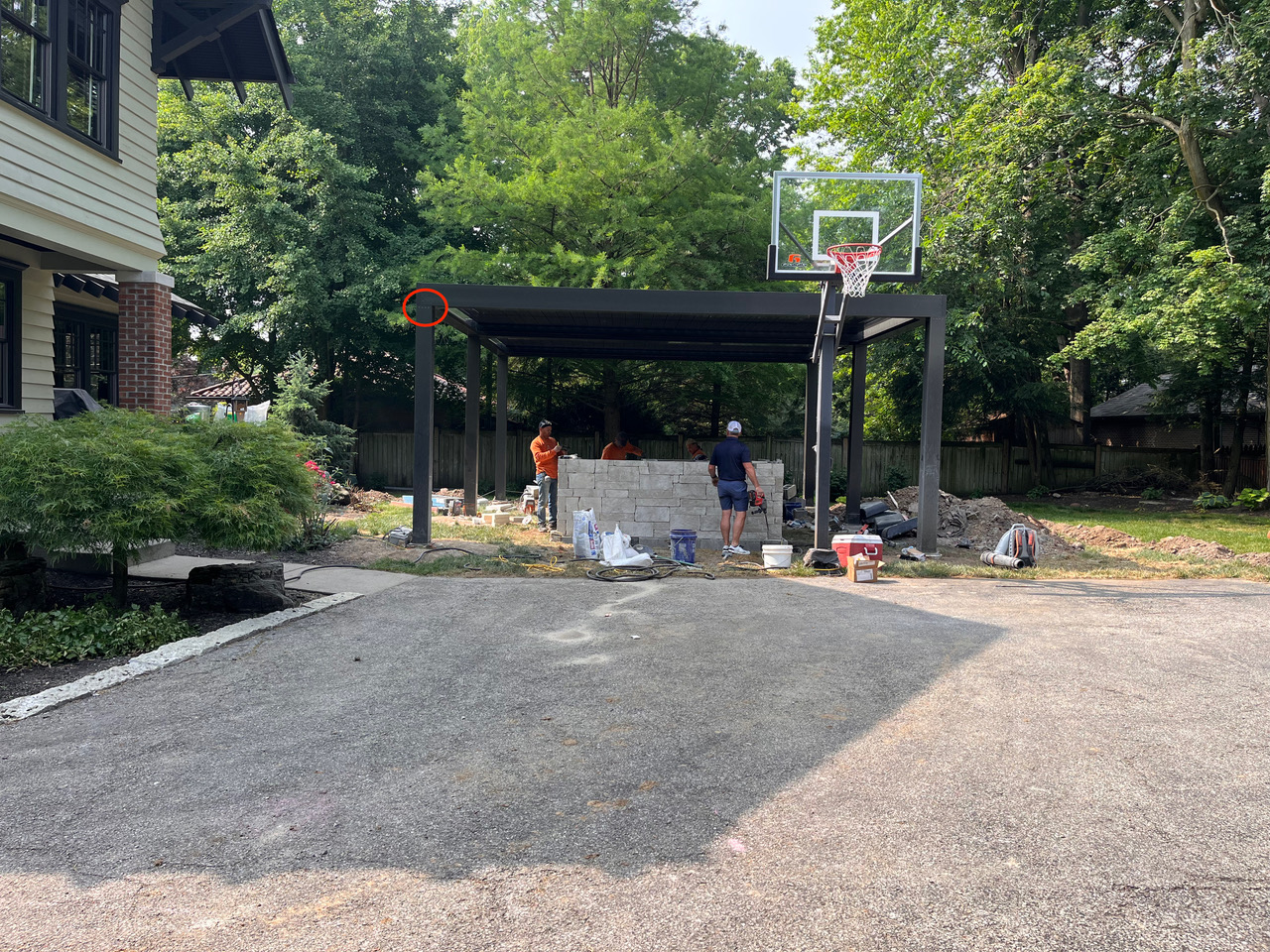
A louvered pergola installation has a few phases:
- Foundation prep — Post bases need concrete footings or an existing concrete slab. Post base hardware gets anchored to the concrete with epoxy or expansion anchors.
- Post installation — Posts go up first. They need to be plumb and square before anything else gets assembled.
- Beam and rafter assembly — Beams connect the posts at the top. Rafters run perpendicular and carry the louvers.
- Louver installation — Louver blades drop into the rafter channels and connect to the motor drive shaft.
- Motor and wiring — The motor is typically wired to a 120V outlet. Some installations use a junction box on the post; others run conduit.
The Luxury Pergola is designed for DIY assembly by two or three people. The manual is detailed and the components are numbered and labeled. Most homeowners complete a standard install in a weekend. For larger configurations or rooftop installations, hiring a local contractor for the post-setting phase is worth it.
Colors and Customization
The Luxury Pergola is available in four powder-coat colors: white, black, bronze, and silver. Powder coating is baked on at the factory, giving a finish that won't peel, chip, or fade the way paint does. You can also add accessories post-installation: LED lighting strips, integrated fans, motorized privacy screens, and heater mounts.
American-Made Louvered Pergola — Direct from the Manufacturer
Up to 8,000 lbs snow load. Up to 115 mph wind resistance. T6 aircraft-grade aluminum. Engineer-stamped drawings included with every order. Starting at $12,209 — no dealer, no markup.
See Sizes & PricingLouvered Pergola — Frequently Asked Questions
What is a louvered pergola?
A louvered pergola is an outdoor structure with an adjustable aluminum roof made of motorized slats (louvers) that rotate open and closed. When closed, they shed rain through an integrated gutter system. When open, they let in sunlight and airflow. Most modern systems are app or remote controlled.
How much does a louvered pergola cost?
Chinese import brands (Pergolux, Hanso Home) sell for $3,000–$8,000 but use lower-grade aluminum and carry no engineering documentation. American-made motorized aluminum pergolas like The Luxury Pergola start at $12,209 direct from the manufacturer. Dealer-installed premium brands like StruXure start around $25,000 for the same footprint once dealer margin is added.
Do louvered pergolas increase home value?
Yes. A permanent, permitted aluminum louvered pergola adds usable outdoor square footage and appeals strongly to buyers in markets where outdoor living is valued. Most homeowners see 50–80% of installation cost returned at resale, with higher returns in warm-climate markets like Florida, California, and Texas.
What is the best louvered pergola brand?
For American-made quality at a direct price, The Luxury Pergola offers T6 aircraft-grade aluminum, engineer-stamped drawings, and up to 8,000 lbs snow load starting at $12,209. For budget imports, Pergolux and Hanso Home are the most common options but use lower-grade aluminum and offer no engineering stamps. For contractor-installed premium builds, StruXure starts around $25,000 through a dealer network.