

The Best Aluminum Louvered Pergola: What Separates Premium From Disposable
If you are shopping for an aluminum louvered pergola, you have already made the right material choice. Aluminum does not rust, rot, warp, or require painting. It is strong enough for motorized louver systems and handles extreme weather that would destroy wood or vinyl alternatives.
But "aluminum louvered pergola" is a category that spans from $2,000 imported kits that weigh 250 lbs to $18,500+ commercial-grade structures that weigh 1,800 lbs. The aluminum is not the same. The engineering is not the same. The lifespan is not the same.
This guide explains what separates a premium aluminum louvered pergola from a disposable one, so you can make an informed decision based on the specs that actually matter.

Why Aluminum Is the Standard for Louvered Pergolas
Every serious louvered pergola manufacturer uses aluminum as the primary structural material. The reasons are straightforward:
- Corrosion resistance: Aluminum naturally forms an oxide layer that prevents rust and corrosion, even in coastal salt air environments.
- Strength-to-weight ratio: Aluminum extrusions can be engineered to achieve high structural strength without excessive weight, making shipping and installation practical.
- Precision fabrication: Aluminum can be extruded into complex profiles, which is critical for louver channels, drainage gutters, and connection systems. Each louver needs to rotate smoothly and seal tightly. Aluminum delivers the dimensional precision that wood and vinyl cannot.
- Zero maintenance: No staining, sealing, or painting. Rinse with a hose occasionally. That is it.
- Longevity: Properly coated aluminum does not degrade from UV exposure, moisture, or temperature cycling. A quality aluminum pergola is a 25+ year structure.
See our full comparison of pergola materials: wood vs. vinyl vs. aluminum.
Not All Aluminum Is Equal
Here is where most buyers get tripped up. "Aluminum louvered pergola" appears on products ranging from $2,000 to $55,000. The aluminum content and engineering quality vary enormously.
Wall Thickness and Extrusion Quality
Aluminum pergola components are made from extruded aluminum. The extrusion process pushes heated aluminum through a die to create a specific cross-section profile (posts, beams, louver slats, etc.). Two key variables:
- Wall thickness: Thicker walls mean more structural strength per component. Commercial-grade extrusions use significantly thicker walls than mass-market imports.
- Alloy grade: 6061-T6 and 6063-T5 are common alloys. The specific alloy affects strength, corrosion resistance, and how well the surface accepts powder coating.
Total Unit Weight: The Honest Spec
You can debate alloy grades and wall thicknesses all day. Or you can just compare total weight. Weight is the single most honest indicator of how much aluminum is actually in the structure.
| Category | Typical Weight (10x13) | What It Means |
|---|---|---|
| Mass-market imports | 250 - 450 lbs | Thin extrusions, minimal structural engineering. Adequate for mild weather. |
| Mid-range DTC brands | 500 - 900 lbs | Better extrusions, decent engineering. Handles moderate weather. |
| Commercial-grade | 1,500 - 1,800+ lbs | Heavy-gauge extrusions, engineered connections, built for extreme weather. |
A 1,800 lb unit contains roughly 6x the aluminum of a 300 lb unit. This is not a subtle difference. Pick up a post from each and you will feel it immediately. One is infrastructure. The other is patio furniture.
Powder Coating: Where Long-Term Quality Lives or Dies
Raw aluminum is silver-gray. Every colored aluminum pergola has a powder coat finish. The quality of that finish determines whether your pergola looks like new in year 10 or looks faded and chalky by year 4.
Standard powder coat (single-stage): Applied in one layer and heat-cured. Works initially, but the single layer begins breaking down under UV exposure in 3 to 5 years, especially in Sun Belt states. You will notice fading, chalking, and reduced scratch resistance.
Premium multi-stage coating: The aluminum goes through multiple treatment stages before the final powder coat is applied. One process, called electrophoretic deposition (e-coat), applies an electrically bonded primer layer that dramatically improves adhesion and UV resistance. The result is a finish that holds its color and gloss for 15 to 25+ years.
If you are spending $10,000+ on a pergola, ask the manufacturer specifically about their coating process. "Powder coated" tells you nothing. You want to know how many stages, whether there is an e-coat or primer layer, and what UV resistance testing they have done.

Structural Specs That Matter
Wind Rating
The wind rating tells you at what sustained wind speed the structure will fail. In most of the US, strong thunderstorms produce 60 to 80 mph gusts. Hurricanes produce sustained winds of 74 to 157+ mph.
- Import kits: 55 to 80 mph. At risk in routine thunderstorms.
- Mid-range: 90 to 120 mph. Handles most weather except hurricanes.
- Commercial-grade: 150 to 200+ mph. Hurricane-rated.
Wind rating is not just about thicker aluminum. It is about engineered connection points: how the louvers attach to the frame, how the beams connect to the posts, and how the posts anchor to the foundation. An up to 200+ mph rating requires structural engineering, not just heavier metal.
Snow Load
Measured in pounds per square foot (psf). A 10x13 pergola rated for 65 psf can support over 8,400 lbs of accumulated snow. The same footprint at 10 psf fails at around 1,300 lbs.
If you live anywhere that gets meaningful snowfall, snow load capacity should be a primary selection criterion. A collapsed pergola is not just a financial loss; it is a safety hazard.
Louver Design
Two main louver profiles exist:
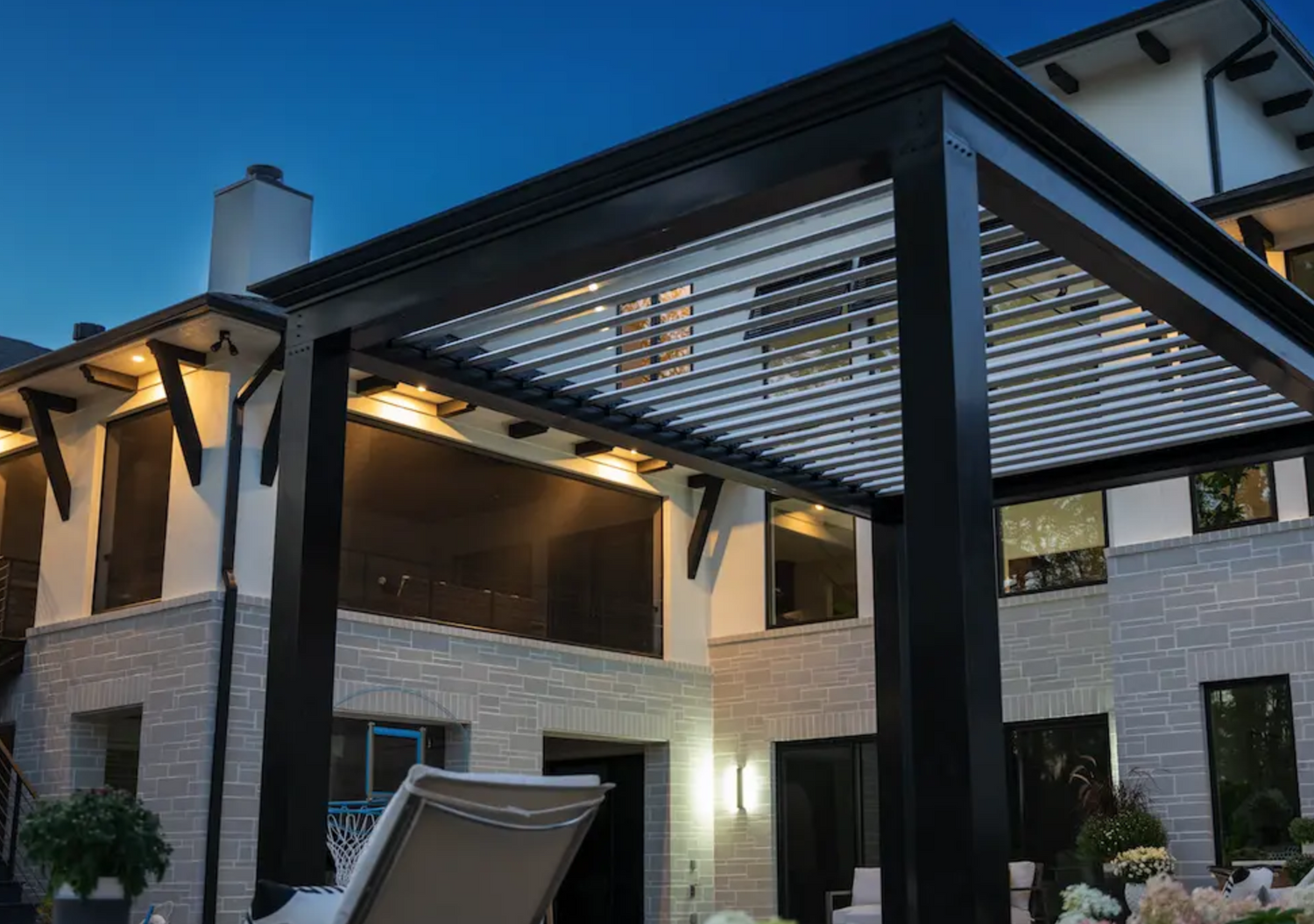
- Flat-ceiling design: When closed, the louvers sit flush to create a smooth, modern ceiling when viewed from below. This is the more desirable profile for outdoor living spaces where you sit underneath and look up.
- Curved/exposed profile: When closed, the curved underside of each louver is visible from below. Functional, but looks more industrial and less finished.
The flat-ceiling design requires more precise engineering (tighter tolerances between louvers) but creates a significantly cleaner aesthetic.
Who Makes the Best Aluminum Louvered Pergola?
Rather than ranking brands subjectively, here are the objective specs to compare:
| Spec | The Luxury Pergola | StruXure | BON Pergola | PERGOLUX | Hanso Home |
|---|---|---|---|---|---|
| Weight (10x13) For a direct comparison, full side-by-side comparison with StruXure. For a direct comparison, see our full Hansø vs Luxury Pergola comparison. | 1,800 lbs | ~1,500 lbs | ~500 lbs | ~500 lbs | ~450 lbs |
| Wind rating | Up to 200+ mph | 157+ mph | 80 mph | 85 mph | 72-165 mph |
| Snow load | Up to 65 psf | 50 psf | 15-30 psf | 24-51 psf | 25-62 psf |
| Flat ceiling | Yes | No | No | No | No |
| Coating | ElectroLayer (multi-stage) | Standard powder coat | Standard | Standard | Standard |
| Warranty | Lifetime (all components) | 15yr struct / 5yr electronics | 5yr struct / 2yr electrical | 10 years | 10-15 years |
| Made in | Indiana, USA | USA | China | China | China |
| Buying model | Factory-direct (DIY kit) | Dealer + install | DTC (DIY kit) | DTC (DIY kit) | DTC (DIY kit) |
| Price (10x13) | ~$18,500 | $30,000-55,000 | ~$5,000-$6,500 | ~$5,000-$9,000 | ~$6,000-$12,000 |
The Two Tiers
Commercial-grade (The Luxury Pergola, StruXure): Permanent structures engineered for extreme weather. The Luxury Pergola and StruXure use similar commercial-grade aluminum but have fundamentally different business models. StruXure sells exclusively through dealers with mandatory professional installation, adding $10,000 to $35,000 to the total cost. The Luxury Pergola ships factory-direct as a DIY kit, delivering equivalent (or better) engineering at a fraction of the total installed price.
Consumer-grade (BON, PERGOLUX, Hanso): Lighter, less expensive kits that work in mild climates. Adequate if you live somewhere without serious storms, heavy snow, or extreme heat. But at 450 to 600 lbs, they are fundamentally different structures than a 1,800 lb commercial-grade unit.
Freestanding vs. Attached Aluminum Louvered Pergola
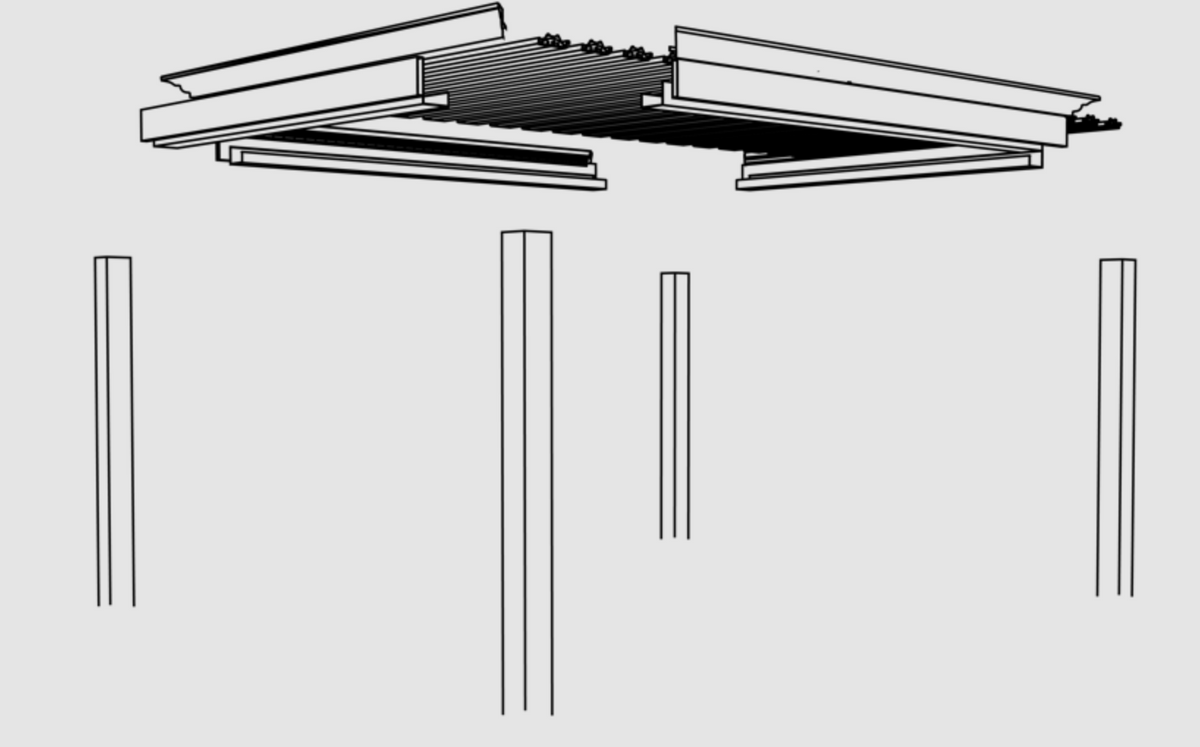
Freestanding: Stands on four posts, placed anywhere on a concrete pad. More versatile, no structural attachment to your home required. See our freestanding pergola guide.
Wall-mounted: Attaches to your home on one side, stands on two posts. Creates a seamless indoor-outdoor transition. Requires a structurally sound attachment point on your exterior wall.
Both configurations work with aluminum louvered pergola kits. The choice depends on your patio layout and how close to the house you want the structure.
Sizing Your Aluminum Louvered Pergola
Standard sizes range from 10x10 to 12x20 for single units. For larger coverage, commercial-grade brands offer connected "super pergola" configurations that span 30 to 40+ feet.
Most popular residential sizes:
- 10x13: Covers a standard patio dining set
- 12x16: Covers dining plus lounge seating
- 10x20: Covers an outdoor kitchen or long pool deck section
Measure your space and add 2 to 3 feet on each side for frame overhang and post footings. Use our size guide to choose the right dimensions.
Frequently Asked Questions
Does aluminum get hot in direct sun?
Aluminum does absorb heat, but because the louver system is motorized and adjustable, you can angle the louvers to block direct sun and create shade before the structure heats up. When the louvers are closed on a hot day, the shaded area underneath is up to 20 degrees cooler than the surrounding sun-exposed patio. The frame posts and beams may be warm to the touch in peak sun, but this does not affect the usability of the space.
Will an aluminum pergola rust?
No. Aluminum does not rust. It naturally forms an aluminum oxide layer that protects against corrosion. With a powder coat finish on top, aluminum louvered pergolas are resistant to salt air, moisture, and chemical exposure. This is one of the primary advantages over steel or iron alternatives.
How long does an aluminum louvered pergola last?
A commercial-grade aluminum louvered pergola with quality powder coating is a 25+ year structure. The aluminum itself is essentially permanent. The motor is rated for tens of thousands of cycles. The powder coating is the most variable factor: standard coatings show wear in 5 to 8 years, while premium coatings hold up for 20+ years.
Can I paint or refinish my aluminum pergola later?
Technically yes, but it should not be necessary with quality powder coating. If you have a pergola with standard powder coat that has started fading, you can have it professionally re-coated, though this is expensive and labor-intensive. Better to buy with premium coating from the start.
Choose Your Aluminum Louvered Pergola
The Luxury Pergola builds commercial-grade aluminum louvered pergolas in our Indiana factory. Every unit weighs 1,800 lbs for a 10x13, is rated for up to 200+ mph winds and up to 65 psf snow load, features our proprietary ElectroLayer powder coat, and comes with a lifetime warranty covering frame, louvers, motor, and electronics.
We ship factory-direct. No dealers. No installer markup. Same commercial-grade engineering at roughly half the price of dealer-installed alternatives.
- Configure your aluminum louvered pergola
- Read our complete louvered pergola guide
- See our best aluminum pergola picks