


Pergola Designs: 20 Styles From Modern Minimalist to Rustic Charm

The right pergola design does more than cover a patio. It defines the character of your entire outdoor space, shapes how you use it, and determines whether the structure blends with your home or fights against it. The wrong design sticks out like an afterthought. The right one looks like it was always part of the plan.
This guide breaks down 20 pergola designs across every major style category, from ultra-modern flat-ceiling aluminum to vine-draped rustic wood looks. You will see real photos, learn what materials and finishes create each aesthetic, understand how size affects proportions, and get practical guidance on matching a pergola design to your home's existing architecture. Whether you are drawn to the clean geometry of contemporary pergola design ideas or the warmth of traditional wood-beam styling, this guide will help you narrow your options and make a confident decision.
Table of Contents
- Modern Pergola Designs
- Traditional Pergola Designs
- Rustic and Farmhouse Pergola Designs
- Contemporary Minimalist Designs
- Mediterranean and Spanish Pergola Designs
- Pergola Designs by Material
- Pergola Designs by Size
- Pergola Designs for Specific Spaces
- Custom Pergola Design Options
- How to Choose Your Pergola Design
- FAQ
Modern Pergola Designs

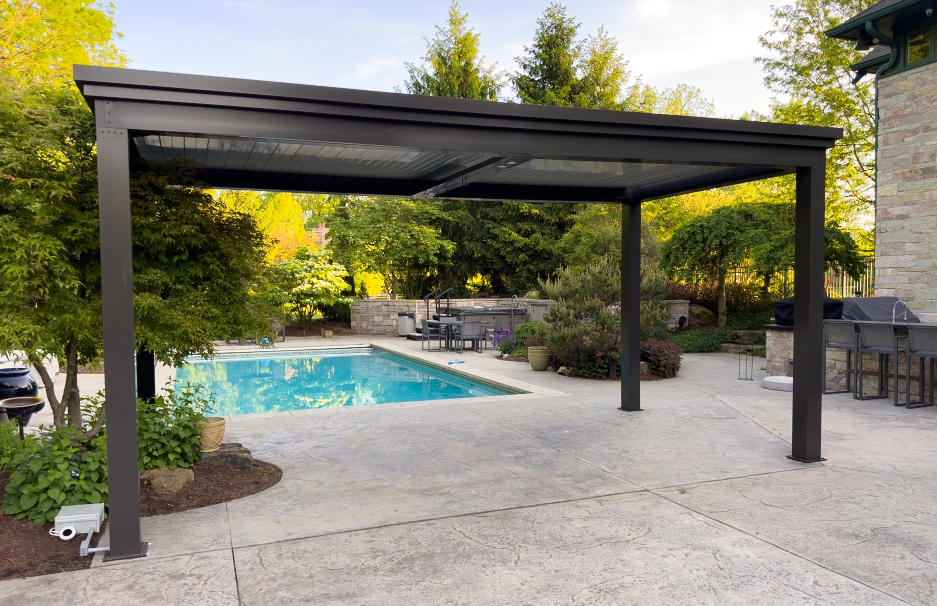
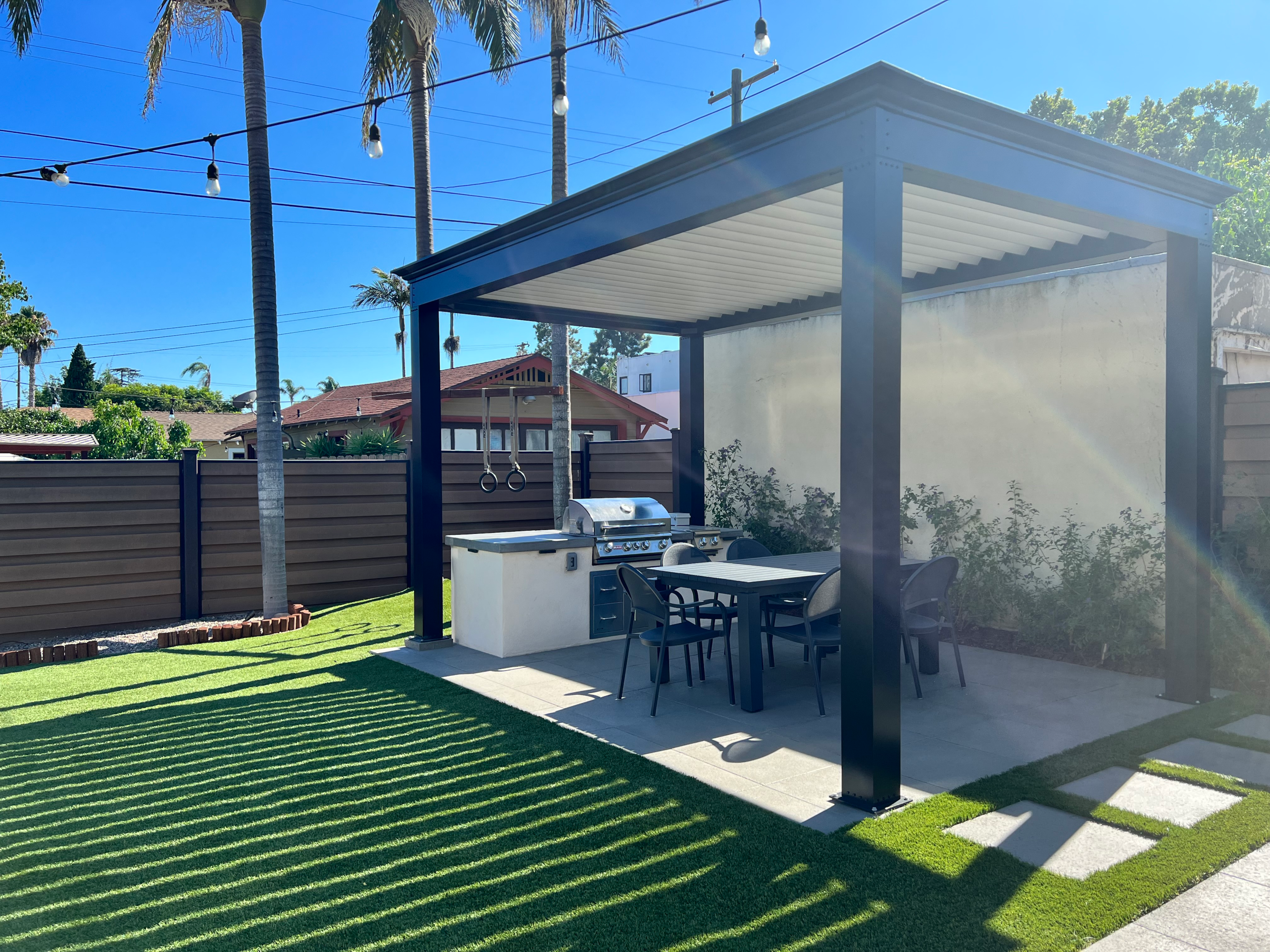
Modern pergola designs are defined by geometry, restraint, and materials that age without deteriorating. Where traditional designs lean on ornament and natural texture, modern pergola design strips everything back to essential form. Squared-off posts, flat-profile louvers, hidden fasteners, and monochromatic color schemes create a structure that looks engineered rather than decorated.
The flat-ceiling louvered roof is the signature element of a modern pergola design. Unlike curved or arched louver profiles that expose mechanical hardware from below, a flat-ceiling system sits flush, giving you a clean, uniform surface when you look up from underneath. This is the design detail that separates a high-end modern pergola from commodity shade structures. It reads as architecture, not as an accessory.

Color Palettes for Modern Pergola Designs
Black-on-black is the most popular modern pergola design for a reason. It creates visual weight and contrast against any backdrop, from light stucco to natural stone. White-on-white works for coastal and Scandinavian-inspired homes where the goal is airiness. Bronze with stone-colored louvers bridges the gap between modern and transitional, reading as current without feeling cold. All of these finishes hold up when applied through a multi-stage powder coating process like ElectroLayer, which bonds the color at the molecular level and prevents the fading and chalking that standard single-coat finishes develop within a few years.
Design Elements That Define the Modern Look
Modern pergola designs work best when paired with complementary hardscaping. Concrete or porcelain tile patios, clean-edge pavers, and low-profile planters reinforce the geometry. Avoid ornate railings, fussy trim pieces, or excessive landscaping around the base. The structure itself should be the focal point. A 12x16 or larger footprint gives modern pergola designs enough visual mass to anchor a space, while a 10x10 or 10x13 works well as a defined zone within a larger patio layout.

For homeowners who want to see what a modern pergola design looks like with different furnishing and accessory combinations, our pergola ideas guide covers dozens of real installations with photos.
Traditional Pergola Designs
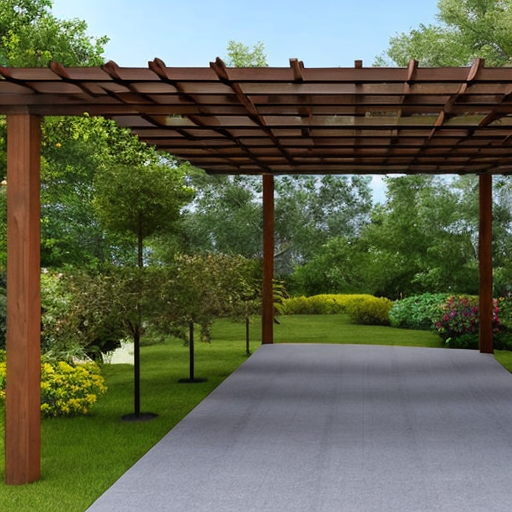
Traditional pergola designs draw from centuries of garden architecture. Think exposed rafter tails, lattice-top roofing, natural wood tones, and proportions that evoke English gardens, Craftsman bungalows, and colonial courtyards. Where modern designs minimize detail, traditional pergola designs celebrate it. Decorative end cuts on beams, notched joinery, and layered crosspiece arrangements create depth and visual richness.
The classic traditional pergola uses wood beams (typically cedar, redwood, or pressure-treated pine) arranged in an open-lattice pattern. Sunlight filters through the gaps, casting striped shadow patterns across the patio below. It is one of the most recognizable pergola styles in residential landscaping and has appeared in garden design books for over a century.
The Maintenance Reality of Traditional Wood Designs
Traditional wood pergola designs look beautiful at installation, but they require consistent upkeep to stay that way. Cedar needs re-staining every 2 to 3 years. Pressure-treated lumber can warp and split within 5 years. Redwood grays naturally and requires sealing. And none of these materials offer waterproof coverage, so rain passes straight through the lattice top.
Here is where modern materials solve a traditional design problem. A powder-coated aluminum pergola can be finished in warm bronze, stone, or wood-tone colors that capture the traditional aesthetic without any of the maintenance. The structure stays straight, the color stays true, and you get the added benefit of motorized louvers that close for rain protection. You keep the traditional look while gaining modern performance.
Where Traditional Pergola Designs Work Best
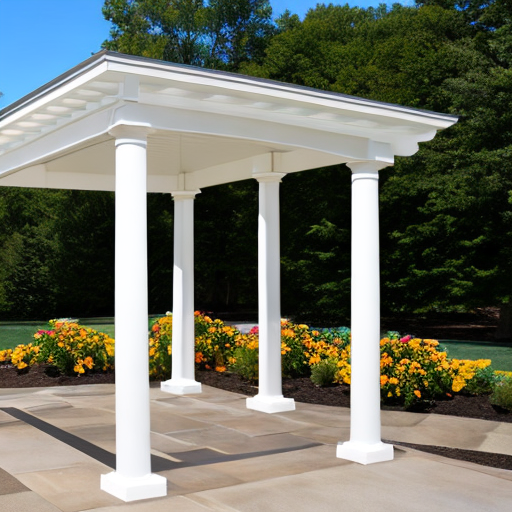
Traditional pergola designs pair naturally with Craftsman, Colonial, Cape Cod, and Tudor-style homes. They also complement established gardens with mature plantings, brick pathways, and natural stone features. If your home has detailed trim work, multi-pane windows, or a covered front porch with columns, a traditional pergola design will read as a natural extension of the existing architecture.
Rustic and Farmhouse Pergola Designs
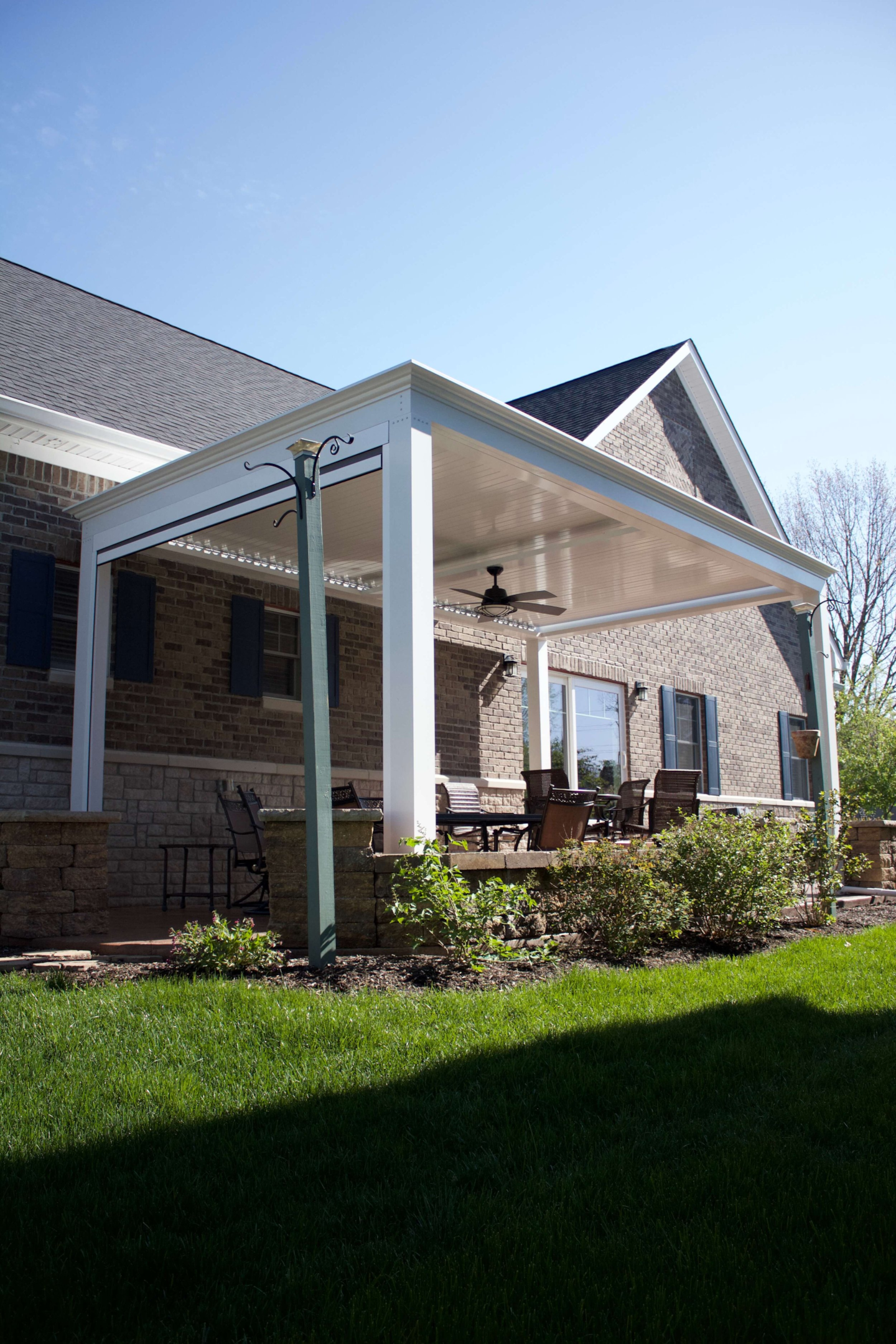
Rustic and farmhouse pergola designs lean into natural texture, imperfect character, and the look of structures that have been standing for generations. Reclaimed wood beams, rough-hewn timber posts, stone column bases, and climbing vines are the hallmarks of this design family. The goal is a pergola that feels grown rather than built, one that looks at home next to a barn door, a stone fireplace, or a gravel courtyard lined with lavender.
The farmhouse pergola design trend has exploded alongside the broader modern-farmhouse movement in residential architecture. Shiplap siding, barn-style sliding doors, and open-concept kitchens created demand for outdoor structures that carry the same vocabulary. A pergola with heavy timber proportions, visible grain patterns, and warm earth-tone colors completes the look.
Getting the Rustic Look Without the Rustic Problems
Real reclaimed wood is expensive, hard to source, structurally unpredictable, and often full of old nails, lead paint, or rot. Rough-hewn timber requires periodic treatment to prevent insect damage. And stone columns, while gorgeous, add significant cost and require a mason to build.
Aluminum pergola designs can be powder-coated in bronze, stone, and warm earth tones that read as rustic from ten feet away while delivering zero-maintenance performance for decades. A bronze frame with stone-colored louvers against a natural stone patio creates a convincingly rustic pergola design without a single piece of wood. Pair it with climbing wisteria or jasmine on the posts, string lights overhead, and farmhouse-style furniture below, and you have a rustic outdoor room that never needs re-staining.
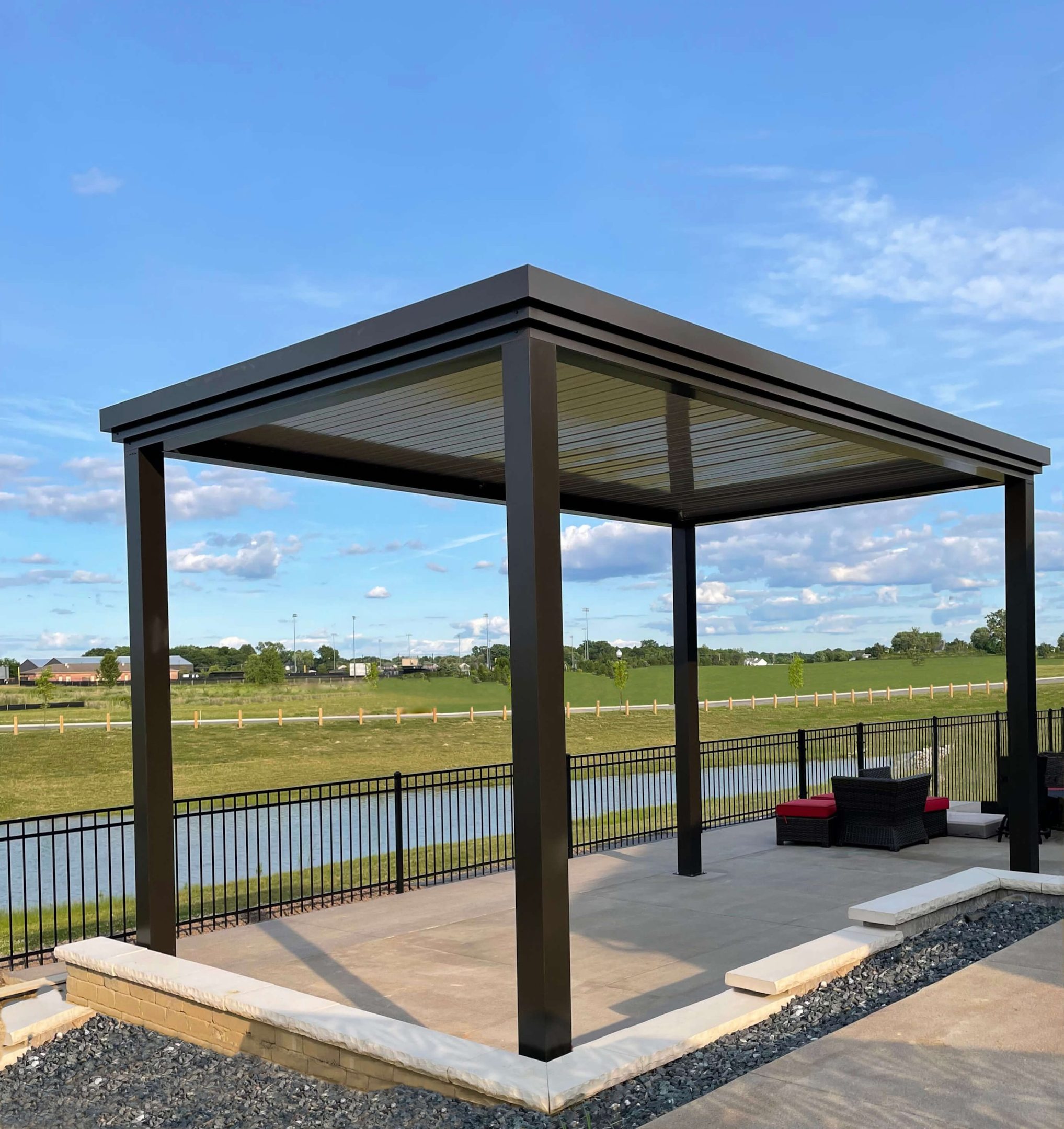
The key detail is choosing the right crown molding profile. A contemporary crown on a bronze pergola actually reads more transitional-rustic than purely modern, softening the aluminum lines and adding the kind of subtle detail that rustic designs thrive on.
Contemporary Minimalist Designs

Contemporary minimalist pergola designs push the modern aesthetic even further. If modern design is about clean lines, minimalist design is about making those lines disappear entirely. Hidden connections, flush surfaces, monochromatic palettes, and the absolute elimination of anything decorative. The structure should feel inevitable, like the simplest possible way to create shade in a given space.
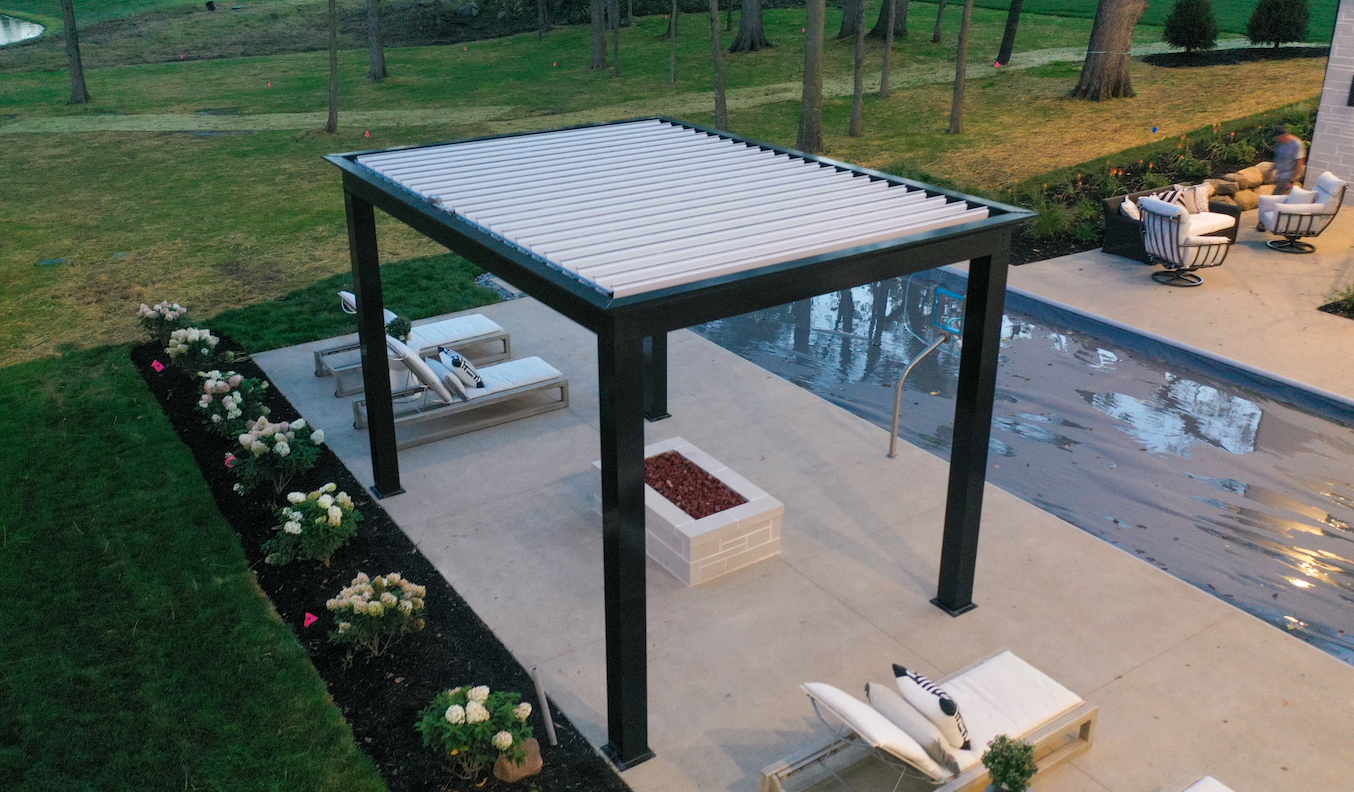
This is the pergola design for mid-century modern homes, new-construction contemporary builds, and any property where the architecture favors negative space over ornamentation. A minimalist pergola should have zero visible bolts on the exterior, no crown molding, and a color that either matches or deliberately contrasts with the house. Black-on-black is the default. White-on-white works for desert and coastal settings.
Achieving True Minimalism in Pergola Design
The difference between a "modern" pergola and a "minimalist" one comes down to details most people do not consciously notice but intuitively feel. Crown molding, even a subtle profile, adds visual noise. Exposed bolt heads create texture. Contrasting louver and frame colors introduce complexity. A truly minimalist pergola design eliminates all of these. Same color frame and louvers. No crown. Internal drainage channels instead of exposed gutters. The result is a structure that looks like a single material floating over the patio.
Minimalist pergola designs demand equally restrained furnishing. Low-profile outdoor sofas, concrete planters, and unframed glass windbreaks complement the look. The moment you add a fringed umbrella or a wicker basket, you break the aesthetic. If minimalism is your goal, commit to it across the entire outdoor space, not just the structure overhead.
For a deeper look at how the louvered pergola system creates this flat-ceiling minimalist appearance, see our detailed engineering breakdown.
Mediterranean and Spanish Pergola Designs

Mediterranean and Spanish pergola designs carry the sun-soaked warmth of Southern Europe into your backyard. Terra cotta tones, stucco-textured columns, arched details, climbing bougainvillea, and wrought-iron accents define this style family. The pergola serves as both a shade structure and a framing device for the landscape, creating the courtyard-like enclosure that Mediterranean architecture is known for.
In California, Arizona, Florida, and Texas, where Spanish Colonial and Mediterranean Revival homes dominate entire neighborhoods, the pergola design must harmonize with existing stucco walls, clay tile roofs, and arched doorways. A black modern pergola would fight the architecture. A bronze or stone-colored aluminum pergola with warm-toned louvers blends right in, picking up the earthy palette that runs through the rest of the home.
How to Create a Mediterranean Pergola Design
Start with a bronze or warm-toned frame and pair it with stone-colored louvers. This combination reads as warm and textured even though the material is precision-machined aluminum. Add climbing plants to the posts. Bougainvillea, jasmine, or grapevines are the classic Mediterranean choices. Position potted olive trees or Italian cypress at the corners. Use terra cotta planters, wrought-iron furniture, and natural stone or saltillo tile flooring underneath.
The pergola design itself does not need to be ornate. The clean lines of a well-proportioned aluminum structure actually work in Mediterranean settings because the surrounding landscape and accessories provide all the visual richness. The pergola's job is to frame the scene and provide functional shade, not compete with it.
Spanish Pergola Design Details
Spanish-style pergola designs often incorporate heavier post proportions and wider beam profiles to match the substantial feel of Spanish Colonial architecture. If your home has thick stucco walls and deep window reveals, a pergola with standard 6-inch posts may look too lightweight. Consider an aluminum pergola with oversized post wraps or stone veneer bases around the lower 3 feet of each post. This visual trick grounds the structure and ties it to the masonry language of the house.
Pergola Designs by Material
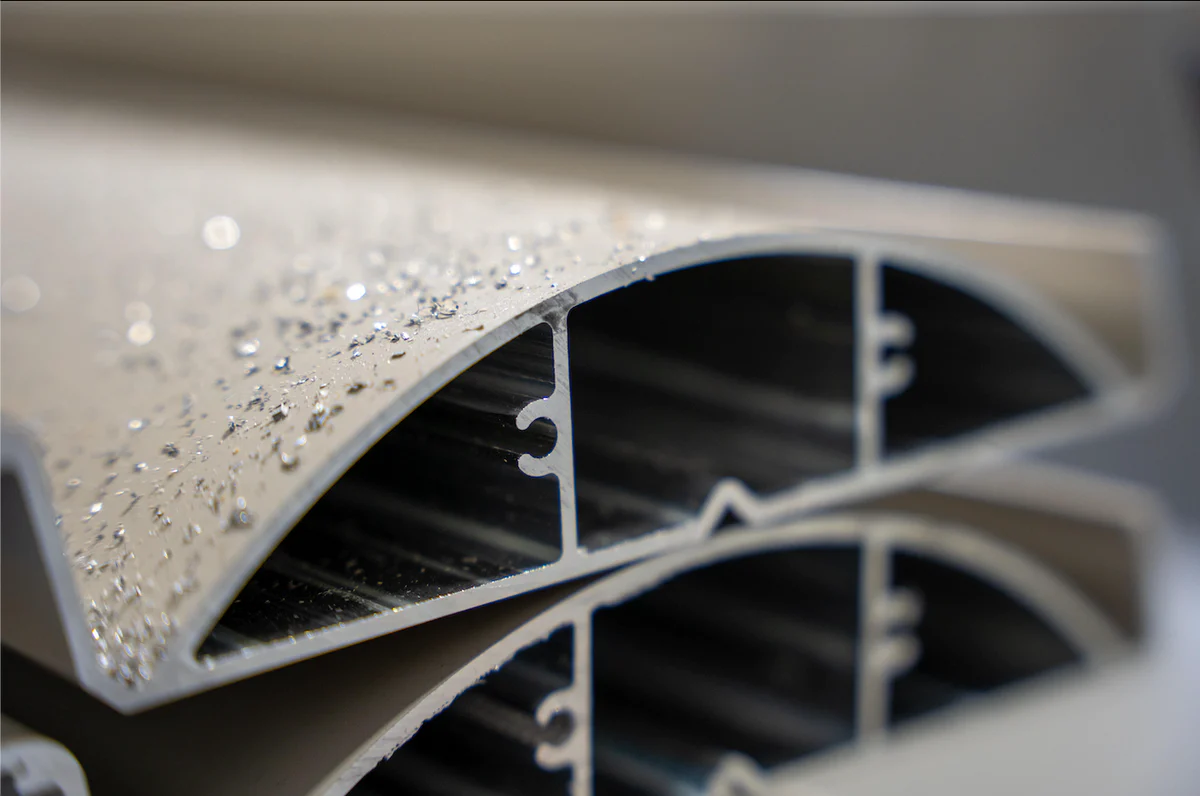
Every pergola design starts with a material decision, and that choice affects everything from the visual style to the long-term maintenance burden. Here is a direct comparison of the four most common pergola materials and how they shape the design possibilities available to you.
| Material | Visual Style | Color Options | Customization | Best Design Styles |
|---|---|---|---|---|
| Aluminum | Clean, precise lines; flat-ceiling or contemporary profiles; architectural feel | Black, white, bronze, stone, custom RAL colors via powder coat | Custom sizes to the inch; motorized louvers; integrated gutters, fans, lights, heaters | Modern, minimalist, contemporary, Mediterranean, transitional |
| Wood (Cedar/Redwood) | Natural grain, warm tones, organic texture; ages to silver-gray | Natural, stained (limited by grain acceptance), painted | Fully custom by a carpenter; limited to open-top or lattice designs; no motorized components | Traditional, rustic, farmhouse, Craftsman, cottage |
| Vinyl | Uniform, smooth finish; limited profiles; tends to look plastic in person | White, tan, gray (limited palette; color is molded in, not applied) | Limited to manufacturer's standard sizes; no motorized options; basic customization | Budget-friendly, basic backyard, simple traditional |
| Steel | Industrial, heavy, strong visual presence; thinner member profiles possible | Painted or powder coated in any color; prone to rust if coating is compromised | Highly customizable by a fabricator; very heavy; requires welding and professional install | Industrial, modern-industrial, commercial, urban loft |
Why Aluminum Dominates Modern Pergola Designs
Aluminum has become the default material for serious pergola designs because it solves every problem the other materials create. It does not rot like wood. It does not yellow like vinyl. It does not rust like steel. It holds precision lines indefinitely. And because it accepts powder coating in virtually any color, a single material can serve modern, traditional, rustic, and Mediterranean design aesthetics equally well.
The weight of the material matters for design credibility too. A commercial-grade aluminum pergola weighs around 1,800 lbs for a 10x13 unit. That mass translates to structural ratings of up to 200 mph wind resistance (closed) and up to 65 psf snow load capacity. Lightweight imported kits in the 250 to 450 lb range cannot match these numbers, and the visual difference is immediately apparent. Heavier structures have thicker posts, deeper beams, and an overall presence that reads as permanent architecture, not temporary outdoor furniture.
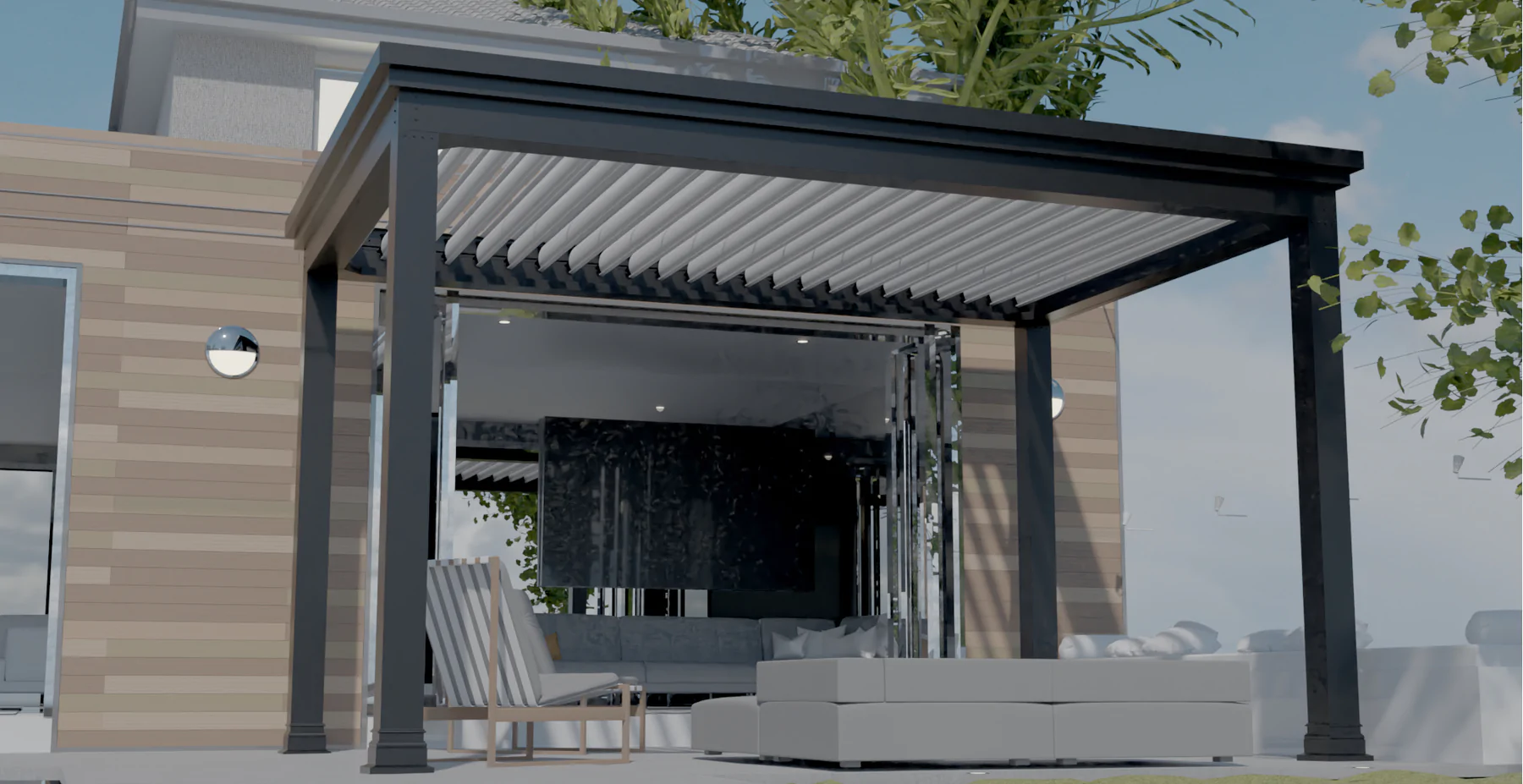
For a complete comparison of aluminum pergola kits versus other materials, including real cost breakdowns, see our dedicated guide.
Pergola Designs by Size

Pergola size is not just a practical decision about coverage area. It is a design decision that affects proportions, visual weight, and how the structure relates to your home and landscape. A pergola that is too small for the space looks like an afterthought. One that is too large overwhelms the yard and competes with the house. Getting the size right is one of the most important pergola design choices you will make.
| Size Category | Dimensions | Coverage Area | Best For | Design Impact |
|---|---|---|---|---|
| Small | 8x8 to 10x10 | 64 to 100 sq ft | Intimate seating, 2-4 person dining, reading nooks, hot tub covers, small patios | Accent piece; defines a zone within a larger space; best with clean, simple design |
| Medium | 10x14 to 12x16 | 140 to 192 sq ft | Full dining (6-8 person), outdoor living rooms, cooking + dining combos, pool deck shade | Balanced presence; anchors a patio without dominating; the most popular size range |
| Large | 14x14 to 20x20 | 196 to 400 sq ft | Full outdoor rooms, multi-zone spaces (kitchen + dining + lounge), commercial venues, event hosting | Major architectural statement; becomes the dominant feature of the yard; requires proportional landscaping |
How Size Affects Pergola Design Proportions
Small pergola designs (under 100 sq ft) should lean toward simplicity. Heavy crown molding, thick beam profiles, and dark colors can make a compact structure feel squat and heavy. A clean-line design with a flat ceiling, minimal crown, and a lighter color keeps a small pergola feeling open and proportional.
Medium pergola designs (140 to 192 sq ft) are the sweet spot where most design styles work well. This is the size range where modern, traditional, rustic, and Mediterranean pergola designs all look their best. The proportions allow for design details like crown molding, accessory beams, and multi-color frame/louver combinations without the structure feeling cluttered.
Large pergola designs (over 196 sq ft) need visual weight to match their physical footprint. A 14x20 or 20x20 pergola in a light color with minimal detail can look like a carport. At this scale, darker colors, deeper beam profiles, and multi-unit Super Pergola configurations (two or more units joined together) create the presence the structure needs. Large pergola designs also benefit from interior accessories like ceiling fans, heaters, and pendant lighting that break up the underside and make the space feel furnished rather than cavernous.

Pergola Designs for Specific Spaces

The best pergola design for your space depends on what you plan to do under it. A structure designed for poolside lounging has different requirements than one built to cover an outdoor kitchen, a front-yard entryway, or a carport. Here is how to match your pergola design ideas to specific use cases.
Dining Area Pergola Designs
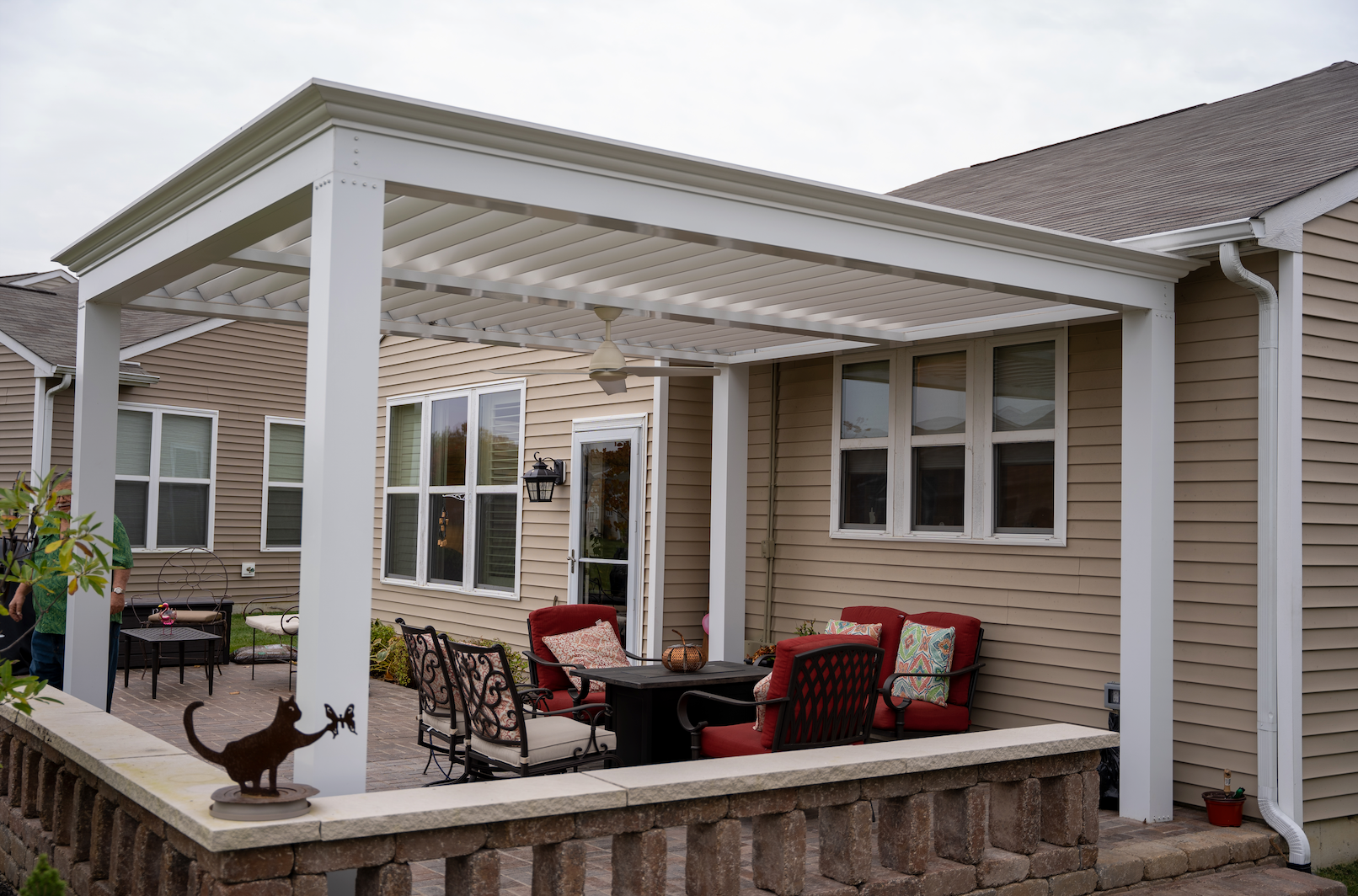
A dining-focused pergola design prioritizes coverage, headroom, and lighting. You need enough footprint to accommodate a table and chairs plus a clear path for serving. A 10x14 to 12x16 footprint handles 6 to 8 diners comfortably. Position the pergola so the table sits centered with at least 3 feet of clearance on all sides for chair pushback and foot traffic. Integrated LED lighting or a chandelier-style pendant hung from the center beam turns the space into a real outdoor dining room after dark.
Pool Deck Pergola Designs
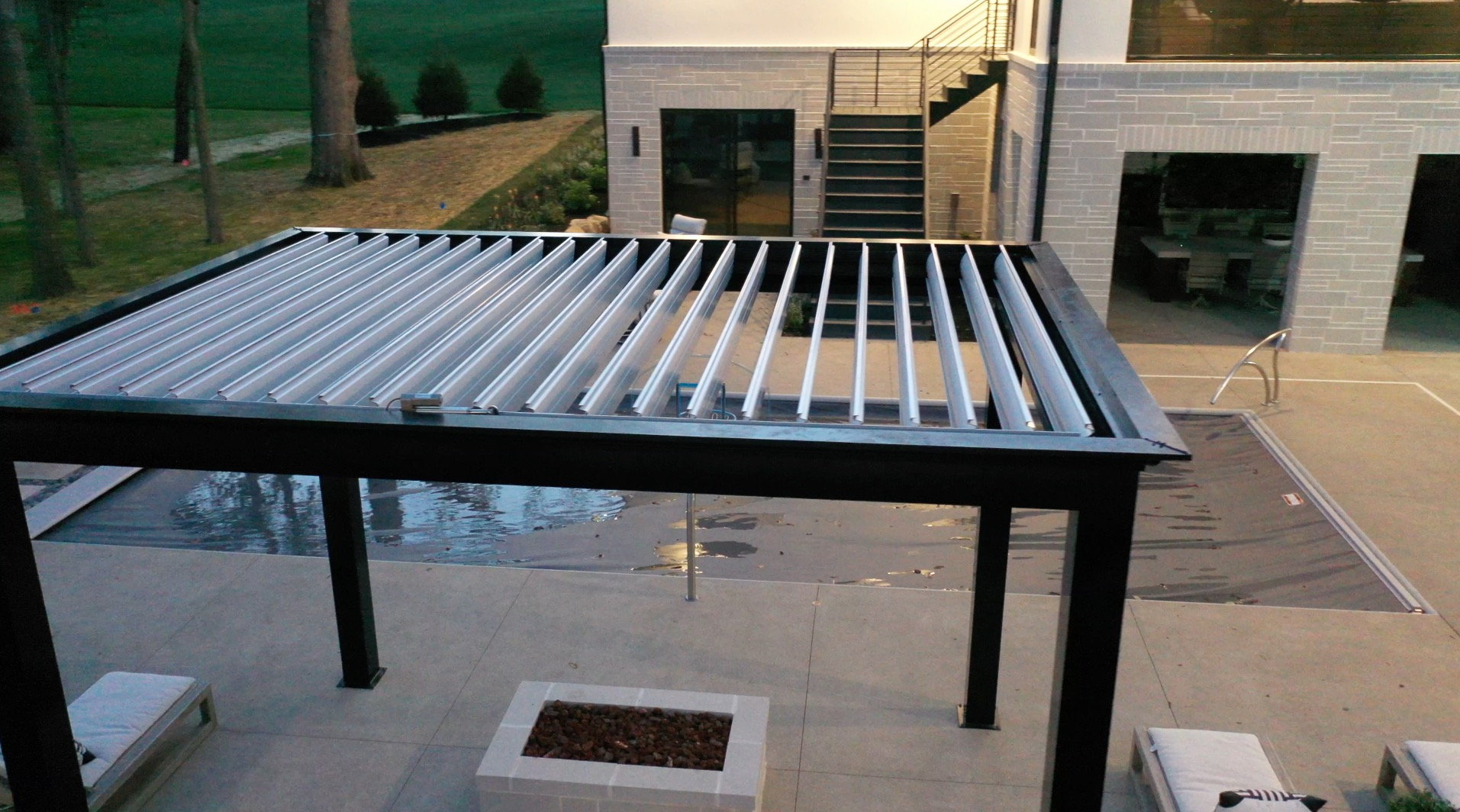
Pool deck pergola designs must resist chlorine splash, humidity, and constant UV exposure. Aluminum is the only material that makes practical sense here. Wood rots from moisture. Vinyl warps from heat. Steel rusts from chlorinated water spray. A corrosion-proof aluminum pergola design with a louvered roof lets you open the louvers to sun while swimming, then close them for shade over the lounge chairs. Place the pergola along one side of the pool rather than over it, covering the seating and towel area rather than the water itself.
Outdoor Kitchen Pergola Designs
Kitchen pergola designs need ventilation control. A louvered pergola with adjustable louvers lets you open the roof while grilling (letting smoke and heat rise through) and close it when rain arrives. The ideal kitchen pergola footprint is 12x16 or larger to accommodate a grill island, prep counter, and bar seating. Position the grill station toward one edge so smoke vents away from seated guests and does not build up on the louver undersides.
Front Yard and Entryway Pergola Designs
Front yard pergola designs serve a different function than backyard installations. They are primarily about curb appeal and architectural framing rather than daily living use. A smaller pergola (8x10 to 10x12) over a front walkway, entryway, or seating area can dramatically change how a home presents from the street. The design should match the home's front facade materials and color palette. A pergola that clashes with the front of the house hurts curb appeal rather than helping it.
Driveway and Carport Pergola Designs
A carport pergola design requires larger dimensions (typically 12x20 or wider) and maximum height to accommodate vehicle clearance. The louvered roof provides rain protection for your car while looking significantly better than a standard metal carport. This is a growing design category in upscale neighborhoods where traditional metal carports violate HOA guidelines but a louvered aluminum pergola meets architectural standards. The waterproof louver system with integrated drainage keeps your vehicle dry while the overall design adds value to the property.
Custom Pergola Design Options
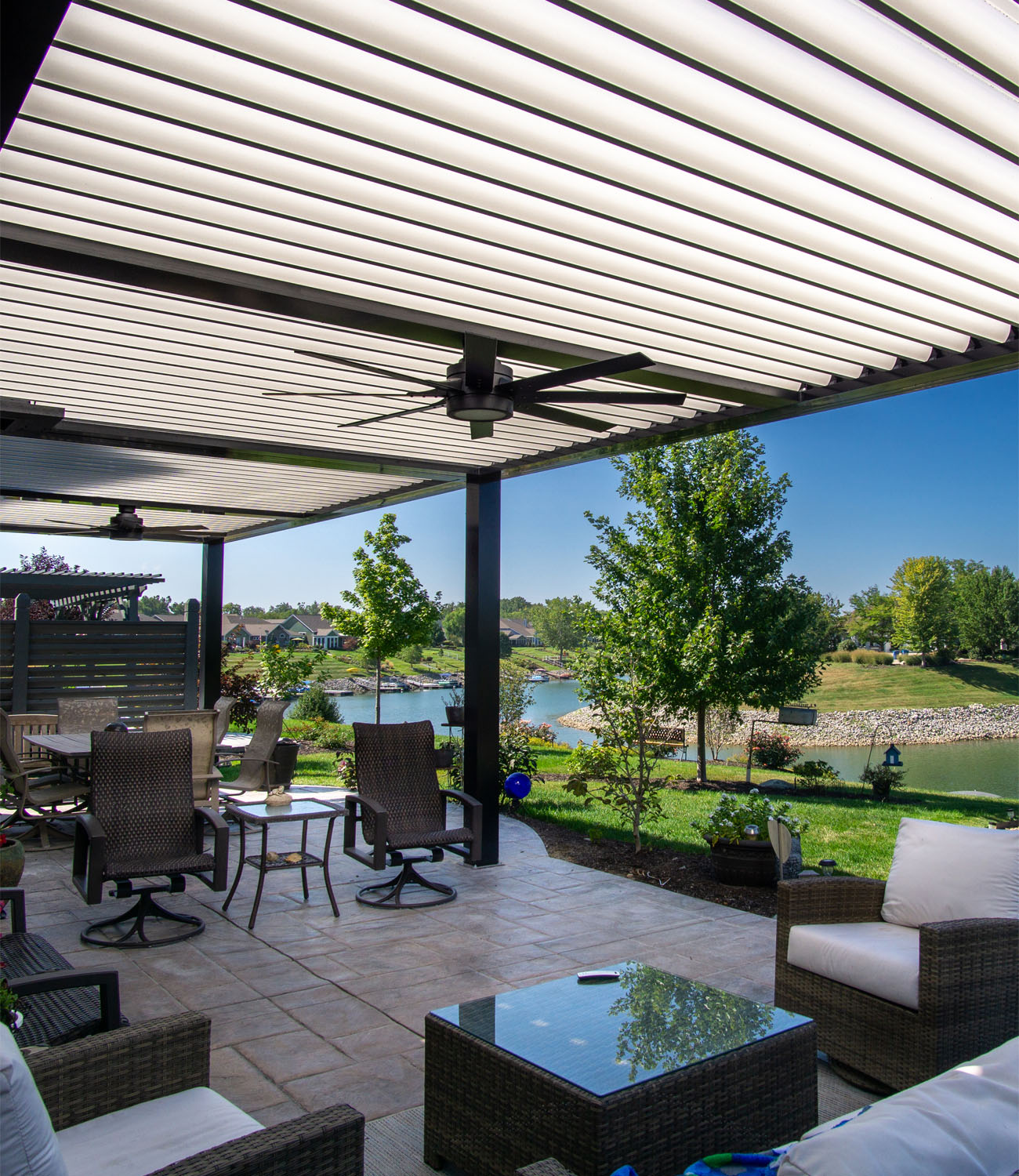
Standard pergola sizes and colors cover most homeowners, but custom pergola design options let you build something that fits your exact space, matches your precise color requirements, and integrates features that turn a shade structure into a complete outdoor room. Here are the primary customization categories.
Custom Sizing
If your patio is 11 feet 3 inches wide, you should not have to choose between a 10-foot and a 12-foot pergola. Custom sizing to the inch means the structure fits your space perfectly, with proper clearance to fences, walls, and other features. This is particularly important for attached pergola designs where the structure must align with existing rooflines, windows, and doorways.
Color Matching
Standard pergola color options (black, white, bronze, stone) cover most design situations. But if your home has a specific trim color, siding shade, or architectural detail that demands a precise match, custom RAL color powder coating lets you dial in the exact hue. This is common with Mediterranean-style homes that have unique stucco tones and with commercial properties that need to match brand colors.
Multi-Unit Configurations
When a single pergola does not cover enough area, multiple units can be joined together into a Super Pergola configuration. Two 10x13 units side by side create a 20x13 covered area. Three units in an L-shape can wrap around a pool deck or cover an outdoor kitchen plus a dining area plus a lounge zone. The connection points are engineered to look seamless, so the finished installation reads as one continuous structure rather than multiple boxes pushed together.

Integrated Features
The pergola design options that have the biggest impact on daily usability are integrated accessories:
- Ceiling fans: Mounted between the louver beams for air circulation on still days
- LED lighting: Recessed strips along beams or channels for clean, ambient evening light
- Infrared heaters: Wall-mounted or beam-mounted heaters that extend your outdoor season by 3 to 4 months in cooler climates
- Motorized shade screens: Retractable side screens for wind protection, privacy, and bug control
- Audio systems: Weather-rated speakers mounted to the frame for background music
Each of these features should be planned during the pergola design phase, not added after the fact. Running electrical through the hollow aluminum frame channels during installation is simple. Retrofitting it later means exposed conduit or expensive re-work.
To explore what configuration fits your space, use the product configurator to build your custom pergola design online and see pricing in real time.
How to Choose Your Pergola Design

With dozens of pergola styles, materials, sizes, and customization options available, narrowing down the right pergola design can feel overwhelming. Here is a practical decision framework that professional landscape designers use when specifying outdoor structures for clients.
1. Match the Pergola Design to Your Home's Architecture
This is the single most important design decision you will make. Look at your home's exterior and identify the dominant style: modern, traditional, Craftsman, Mediterranean, farmhouse, mid-century, or colonial. Your pergola design should speak the same visual language. A black flat-ceiling pergola on a Victorian home will clash. A bronze pergola with traditional crown molding next to a glass-and-steel modern house will look confused. When the pergola and the home share the same proportions, colors, and level of detail, the result looks intentional.
2. Consider Function Before Form
What will you actually do under this structure? Dining requires different dimensions than lounging. Cooking requires ventilation control. Poolside use requires corrosion-resistant materials. A hot tub pergola needs height for steam clearance. Nail down the use case first, then choose the design style that serves that function in the space available. A stunning pergola design that does not fit a dining table is just expensive shade.
3. Think About Views and Sightlines
Before choosing a size and placement, stand in the spot where you plan to install the pergola and look in every direction. What do you see from underneath? What do visitors see when they look at the pergola from the house, the yard, or the street? A well-designed pergola frames good views and screens bad ones. Positioning the structure to capture a mountain view, a garden bed, or a water feature while blocking the neighbor's garage or a utility area is a design move that pays dividends every time you sit underneath it.
4. Align Design Ambition with Budget
Pergola designs range from simple open-top wood frames at $2,000 to $5,000 to fully loaded aluminum louvered systems at $15,000 to $25,000 or more. The factory-direct model eliminates dealer and installer markups, saving roughly 50% compared to professionally installed alternatives with similar (or lower) specifications. A 10x13 commercial-grade aluminum pergola with motorized louvers, a lifetime warranty, and up to 200 mph wind rating purchased factory-direct costs about the same as a basic wood pergola built by a local contractor, but it will look better, last longer, and require zero maintenance.
For a complete cost breakdown by size and material, see our pergola cost guide.
5. Do Not Forget the Details
Crown molding profiles, louver colors, post heights, and finish types are the details that separate a thoughtful pergola design from a generic one. A bronze frame with stone louvers reads warmer than an all-bronze unit. A contemporary crown profile versus no crown versus a traditional crown creates three entirely different looks on the same frame. These are decisions best made by looking at real photos and, if possible, visiting an installation in person or requesting finish samples before ordering.
Frequently Asked Questions About Pergola Designs
What is the most popular pergola design right now?
Modern flat-ceiling aluminum pergola designs with motorized louvers dominate the current market. The clean geometry, zero-maintenance material, and ability to control sun, shade, and rain with a remote have made this the go-to pergola design for new installations. Within this category, black-on-black and bronze with stone louvers are the two most popular color combinations.
What pergola design adds the most value to a home?
Pergola designs that use permanent, weather-rated materials and integrate with the home's architecture deliver the highest return. A commercial-grade aluminum louvered pergola is viewed by appraisers and buyers as a permanent structure, similar to a deck or patio cover. Lightweight imported kits and basic wood frames are typically not valued the same way. The key is choosing a pergola design that looks like it belongs with the house, not like it was placed in the yard as an afterthought.
Can I design a pergola that looks like wood but uses aluminum?
Yes. Powder coating technology allows aluminum to be finished in wood-tone colors (brown, bronze, warm gray) that capture the visual warmth of natural wood without the maintenance. From a normal viewing distance, a bronze powder-coated aluminum pergola reads as a warm, natural structure. Up close, you will notice the smoother texture, but the color and tone are convincing. This is the approach most homeowners with traditional or rustic design preferences now take, getting the look they want with the performance they need.
What is the best pergola design for high winds?
Aluminum louvered pergola designs with engineered post connections and motorized louvers that close to a sealed position provide the highest wind resistance. Look for structures rated for up to 200 mph winds in the closed position. This is critical in hurricane zones, coastal areas, and anywhere building codes require wind-load calculations. Lightweight vinyl and thin-gauge imported aluminum kits typically max out at 72 to 120 mph, which may not meet local building code requirements in high-wind regions.
What pergola design works best for small spaces?
Compact pergola designs in the 8x8 to 10x10 range work best for small patios, townhouse yards, and urban courtyards. Keep the design minimal: flat ceiling, no bulky crown, and lighter colors (white or natural bronze) to avoid making the space feel boxed in. A small pergola should define a zone within the yard (dining for two, a reading nook, a hot tub cover) rather than trying to cover the entire area.
Do I need a permit for my pergola design?
Permit requirements vary by municipality, but most jurisdictions require a building permit for any permanent outdoor structure over a certain size (often 120 sq ft or 200 sq ft, depending on local code). Pergola designs that involve electrical work (motorized louvers, lighting, fans) typically require an electrical permit as well. Check with your local building department before ordering. A commercial-grade pergola manufacturer should be able to provide engineered drawings and structural calculations that satisfy permit requirements in most jurisdictions.
How do I choose between a freestanding and attached pergola design?
Freestanding pergola designs stand on four posts and can be placed anywhere on your property: the center of the yard, next to the pool, on a separate patio pad. Attached designs mount to the house wall with a ledger board and use two posts on the outer edge. Choose attached if your primary goal is extending the indoor living space directly outside the back door. Choose freestanding if you want a destination spot away from the house, if your home's wall construction does not support a ledger mount, or if you want maximum flexibility on placement.
What is the difference between pergola design plans and a pergola kit?
Pergola design plans are architectural drawings (often sold as PDFs or blueprints) that show dimensions, materials, and construction steps for building a pergola from raw lumber. You source the materials separately, cut everything on site, and build from scratch. A pergola kit includes all components pre-cut, pre-drilled, and ready to assemble. Everything arrives in labeled packages with hardware, instructions, and a remote control for motorized systems. Kits eliminate measuring errors, material waste, and the need for specialized tools. For most homeowners, a kit delivers a higher-quality result in a fraction of the time compared to building from plans.

